
The last line of defense between a product and environmental degradation is the integrity of a metal package. The sealing process in the production of industrial food and beverages is not just a mechanical closure but a high-precision engineering need. To understand how tin cans are sealed, one must look at the analysis of the structural change of metal and the complex equipment that performs this operation at high speeds. To manufacturers and engineers, the choice of the right sealing technique is very important in ensuring the stability of the shelf, avoiding oxidation, and protecting against contamination.
The Mechanics Behind Tin Can Sealing: Double Seams
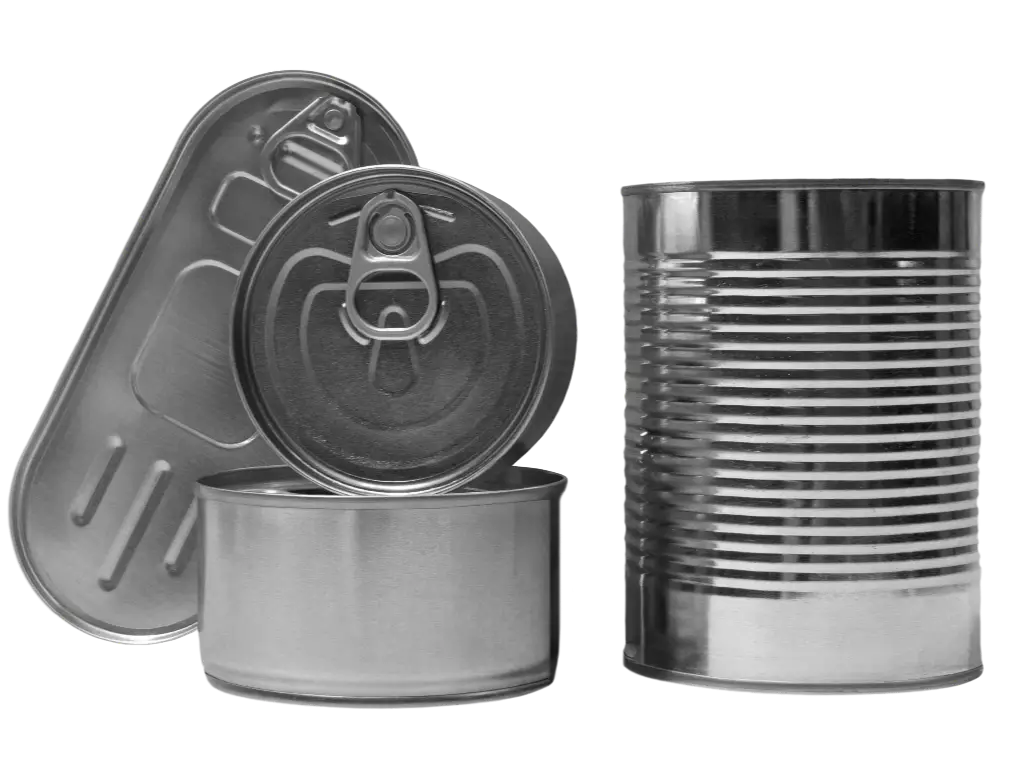
The double seam is the surest way of sealing a round metal container. A double seam is based on a mechanical interlock of the can body and the can lid (or end), unlike welding or gluing. This is done to form a five-layered structure of metal which, together with a sealing compound, forms a hermetic airtight seal. The double seaming technology is the international standard of pressurized aluminum cans and shelf-stable tin cans since it can resist a considerable amount of internal and external pressure variations.
First Operation: Forming the Interlocking Hooks
The first roller starts the sealing process. After the can body and lid of the can have been placed on the base plate of the sealer, the first operation roller comes to the rotating can. This roller has a deep and narrow profile. It is mainly used to curl the lid’s curl (the curl of the lid) beneath the flange of the can.
The lid material folds inward as the roller presses to create what is referred to as the Cover Hook. At the same time, the can body flange is forced downwards to create the Body Hook. The two components are loosely interlocked at the end of this stage. The hooks are folded, but the seal is not airtight. This step is crucial; otherwise, the flattening step will not form a safe bond, as the hooks are not made correctly.
Second Operation: Ironing and Tightening the Seal
Once the first operation roller has finished, the second operation roller picks up the seam. The roller profile of this roller is flatter and shallower than the first. It aims at the compression of the loosely interlocked hooks into a solid, gas-tight structure.
In this step, the roller fuses the metal layers. This squeeze causes the sealing compound, a gasket-like substance that has been applied previously to the inside of the lid, to seal any microscopic cracks between the metal folds. The outcome is a five-layer thickness of metal that does not allow the entry of bacteria, oxygen, or moisture. An effective second operation will leave a certain seam thickness and seam height that will have to be within rigid industrial tolerances to be deemed safe to be distributed commercially.
Step-by-Step Workflow of the Sealing Process
The real sealing is just one of the components of a can sealer’s coordinated workflow in a professional can industry setting. Automated packaging lines are used to make sure that every can is prepared, treated, and sealed under controlled conditions to maximize shelf life and throughput.
- Lidding (Clinching): The filled cans are transported to the lid feeder by the conveyor. A mechanical arm or gravity feed deposits a can lid on the can body at the correct position. A “clincher” can be used in most high-speed systems to loosely fix the lid to the can to avoid spillage as the container passes through the seaming station.
- Gas Flushing (Optional): Gas flushing is done on products that are sensitive to oxygen, e.g., infant formula, coffee, or nuts, right before the final seal. The system removes the air in a vacuum room or sealing chamber. This lowers the amount of oxygen left to less than 3 percent, which slows down the process of oxidizing fats and oils considerably and increases the shelf life of the product.
- Seaming: A lifter plate picks up the can and presses it against a seaming chuck. The chuck serves as an internal anvil, which retains the lid in position as the rollers carry out the first and second operations mentioned above. In rotary systems, this occurs as the can is moving, hence continuous production.
- Discharge: When the second operation roller retracts, the lifter plate drops, and the sealed tin can is forced onto the discharge conveyor. Here, cans may be washed in a washing station to cleanse the exterior of the cans of any product residue before proceeding to labeling or secondary packaging.
Essential Equipment: Types of Can Seamers
The choice of can sealer is based on the volume of production, type of container, and the physical characteristics of the product being packed.
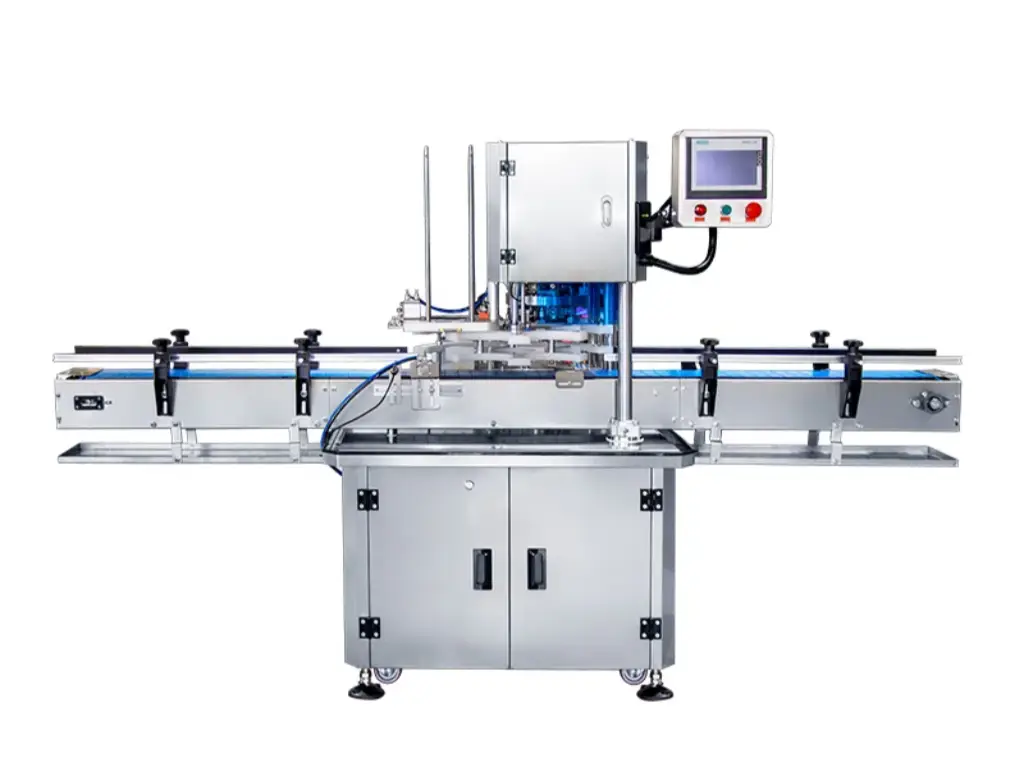
- Rotary Seamers: These are the workhorses of high-volume industrial production. There are several seaming heads attached to a rotating carousel. The sealing process is done on a can by each head as the carousel rotates. This design can be used with a speed of 50 to more than 2,000 cans per minute. Rotary seamers offer the greatest degree of uniformity and are necessary in large-scale food and beverage plants.
- Linear Seamers: Linear seamers are different from rotary systems, and the cans are processed in a straight line. They are typically slower than rotary carousels, but can be fitted into some kinds of filling lines and are commonly used with special containers or medium-volume production.
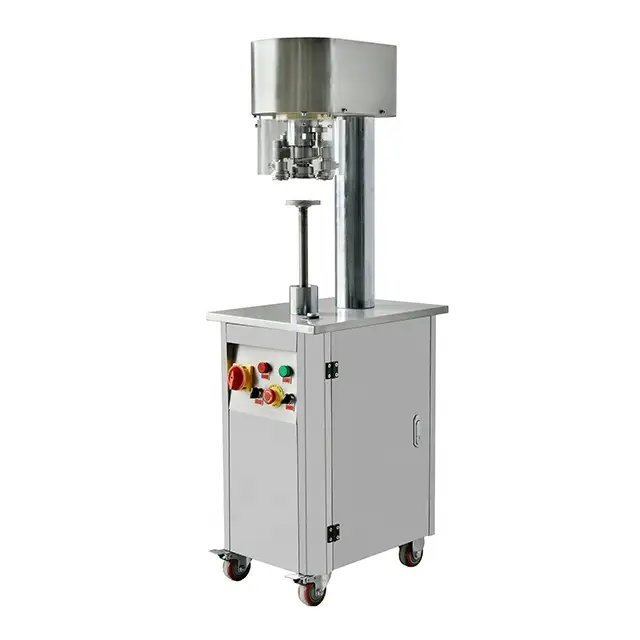
- Semi-Automatic Seamers: In these machines, the operator places the can body and lid manually in the sealing chamber. The rollers automatically repeat the cycle once the operator has switched on the machine (typically through a foot pedal or two buttons). They are best suited to laboratories, pilot plants, or small-scale craft producers who do not need high-speed automation.
Alternative Sealing Technologies for Metal Packaging
Although the most popular is the double seam, alternative sealing techniques are required due to the nature of materials and product needs. The table below is a comparison of the common industrial alternatives to the double seam:
| Sealing Method | Primary Mechanism | Common Applications | Key Advantage |
| Welded Seams | Resistance welding of the side joint | Three-piece tin can bodies | Superior structural strength |
| Cemented Seams | Organic adhesive or heat-melt glue | Industrial oil cans, dry-good cans | Protects exterior lithography |
| Heat Sealing | Thermal bonding of foil/plastic liners | Powdered milk, snack containers | Easy-open peelable interface |
| Crimp Sealing | Single-fold mechanical compression | Paint cans, friction-top cans | Resealable for multiple uses |
| Aerosol Crimping | Internal or external valve expansion | Hairspray, spray paint cans | Withstands high internal pressure |
| Spin Welding | Friction-generated heat fusion | Heavy-duty industrial containers | Permanent, molecular-level bond |
Identifying Common Defects in Can Sealing
To ensure a hermetic seal, it is necessary to monitor the sealer’s output. Small mechanical deviations in the can sealer may cause severe food safety failures. It is the duty of quality control teams to identify these defects.
False Seam is a situation where the cover hook and body hook do not interlock, despite the fact that they seem to be connected on the outside. This is usually induced by a curved can flange or an incorrectly positioned first roller. The hooks are not folded together, and therefore, the seal lacks structural integrity and will leak under pressure.
Sharp Seams and Cut-overs are flaws in which the metal is pinched or fractured at the top of the seam. This is normally a sign that the seaming chuck is too low or the rollers are being forced on too hard. These flaws may cause micro-leaks, which are small enough to be undetected at once but big enough to permit contamination to get into the can during the cooling process following sterilization.
The other problem is Droop, in which a small part of the seam is below the usual seam line. This normally occurs at the junction of the side seam of a three-piece can and the lid. Unless the seamer is modified to accommodate the additional thickness of the side seam weld, the material will pile up, which will affect the internal vacuum pressure and structural integrity.
Choosing the Right Seamer for Your Production Line
When choosing an industrial seamer, you have to objectively assess your production requirements and your future expansion objectives. The table below identifies the key technical and operational considerations that must be used to inform your procurement process:
| Key Factor | Technical Considerations | Impact on Production |
| Target Output (CPM) | Manual/Semi-Auto: 10–30 Cans Per Minute (CPM). Automatic Linear: 30–60 CPM. High-Speed Rotary: 100–500+ CPM. | Determines the level of automation required and the overall Return on Investment (ROI) based on labor costs. |
| Material Compatibility | Metal: Tinplate or Aluminum thickness. Non-Metal: Composite paper or PET cans. End Types: Standard ends, EOE (Easy Open Ends), or Peel-off foils. | Affects the choice of seaming roller profiles and the required pressure settings to avoid crushing fragile walls. |
| Atmospheric Control | Standard: Atmospheric sealing for dry goods. Vacuum: Removal of air for shelf stability. MAP: Nitrogen flushing to achieve <3% residual oxygen. | Directly impacts the shelf life, flavor profile, and nutritional integrity of sensitive products like milk powder or coffee. |
| Container Dimensions | Diameter Range: From 50mm to 150mm+. Height Range: From shallow tuna cans to tall #10 cans. | Machines must be evaluated for “changeover flexibility”—how quickly the seamer can be adjusted for different sizes. |
| Integration Capability | Stand-alone: Manual feeding. In-line: Integration with fillers, labelers, and nitrogen dosing systems. | Ensures the seamer does not become a bottleneck in a fully automated “Turnkey” production line. |
As a specialist manufacturer, Levapack provides advanced can seaming solutions engineered for precision and high-volume reliability. Our product range spans from the negative pressure vacuum seamer for retort-ready foods to the Nitrogen Filling Vacuum Can Sealer Machine, which achieves residual oxygen levels below 3% through sophisticated nitrogen flushing. Every machine is built with 2μm precision CNC-machined components and top-tier electronics from Siemens and Delta to ensure long-term stability. Whether you require bespoke seamer moulds for unique can dimensions or multi-roller systems for leak-proof metal, PET, or paper packaging, Levapack offers customized, modular designs. With a 16-month warranty and rapid 7-day delivery for standard models, we empower SMEs to achieve industrial-grade efficiency and superior product freshness.


 EN
EN  RU
RU  ES
ES  FR
FR  DE
DE  NL
NL  IT
IT  JA
JA  ID
ID  PT
PT  KO
KO  AR
AR  TH
TH  VI
VI  TR
TR  PL
PL