
Introduction to Food Can Sizes
When comparing food can sizes, start with diameter and height—not just the weight printed on the label. Common formats such as No. 300, No. 303 and No. 10 have different dimensions, while the amount of food they hold varies by product. There is no single standard tin can size for every application.
This food can sizes chart compares common round metal food cans in inches, centimetres and millimetres, with approximate food quantities listed separately. Whether you want to compare tin can sizes, understand size codes, or find out how many cups are in a number 10 can, use the tables below to find the measurements and quantities you need.
Understanding Can Size Codes and Dimensions
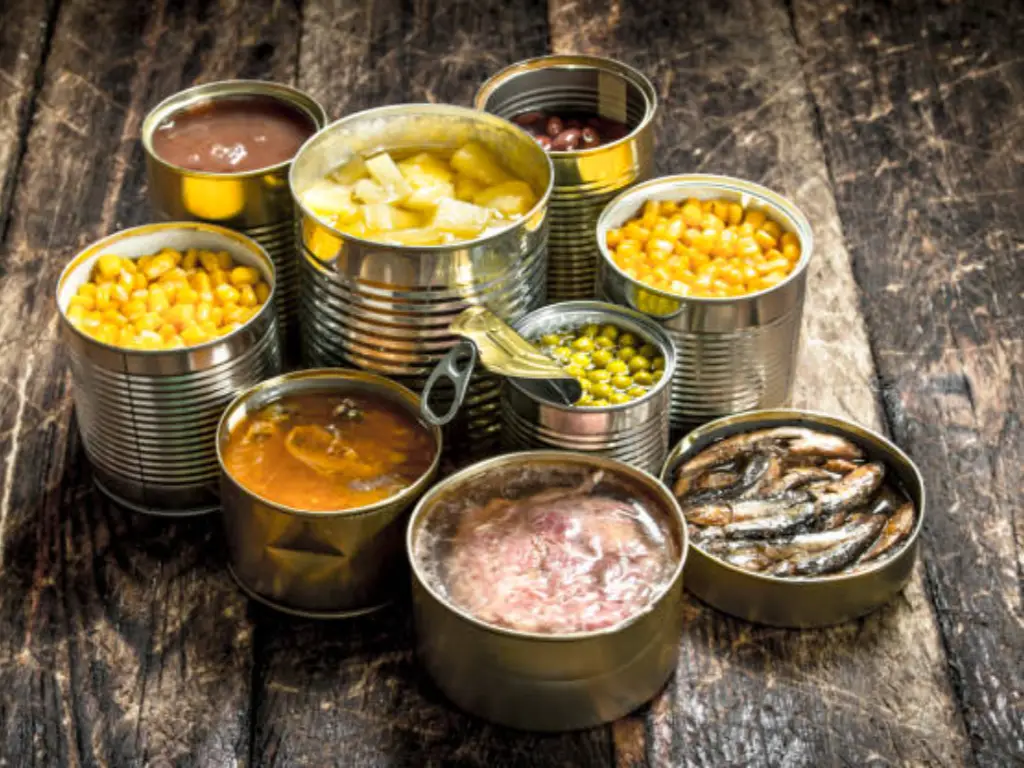
The size of cans used in the canned food industry, particularly in North America, is coded in a standard coding system that indicates the diameter and the height of the can. This coding will assist in consistency in the manufacturing, packaging, and distribution. The most common one is the #10 can that is widely used and contains approximately 12 cups or 6 lbs of food, depending on what it carries. It is also a staple in commercial kitchens where they serve mass quantities of tomatoes, beans, or sauces because of its high capacity and efficiency.
Read a round can’s dimension code as two groups: diameter first, then height. Within each three-digit group, the first digit gives whole inches and the last two digits give sixteenths of an inch. For example, 303 × 406 means a diameter of 3 + 3/16 inches and a height of 4 + 6/16 inches. It does not mean 3.03 × 4.06 inches. A familiar size name such as No. 10 is a separate designation, not a statement of weight.
Material-wise, the majority of the cans are manufactured using tin-plated steel, which is tough enough to withstand the pressure of the processing and keep the contents safe over the long term. The corrosion resistance and maintenance of food flavors are achieved through an internal coating, often BPA-free. Many canned foods can be stored effectively between 2 and 5 years, which makes them very safe and convenient to institutional buyers and foodservice operators.
Knowledge of can sizes is not only a technical issue; it has direct effects on operational efficiency, food safety, and customer satisfaction. Being familiar with the contents of a #10 can or even what a 307×512 code means can spell the difference between efficient production and an expensive loss.
Complete Food Can Sizes Chart: Tin Can Dimensions in Inches, cm and mm
Use this tin can size chart to compare selected round food can formats. These canned food dimensions help manufacturers, suppliers and home cooks distinguish physical size from the amount of food inside. Every dimension pair is written as diameter × height. The metric values are conversions of the nominal inch dimensions, rounded for reference.
| Can name | Dimension code | Inches: D × H | Approx. cm: D × H | Approx. mm: D × H |
|---|---|---|---|---|
| No. 1 (Picnic) | 211 × 400 | 2 11/16 × 4 | 6.83 × 10.16 | 68.3 × 101.6 |
| No. 300 | 300 × 407 | 3 × 4 7/16 | 7.62 × 11.27 | 76.2 × 112.7 |
| No. 303 | 303 × 406 | 3 3/16 × 4 3/8 | 8.10 × 11.11 | 81.0 × 111.1 |
| No. 2 | 307 × 409 | 3 7/16 × 4 9/16 | 8.73 × 11.59 | 87.3 × 115.9 |
| No. 2½ | 401 × 411 | 4 1/16 × 4 11/16 | 10.32 × 11.91 | 103.2 × 119.1 |
| No. 3 Cylinder | 404 × 700 | 4 1/4 × 7 | 10.80 × 17.78 | 108.0 × 177.8 |
| No. 5 | 502 × 510 | 5 1/8 × 5 5/8 | 13.02 × 14.29 | 130.2 × 142.9 |
| No. 10 | 603 × 700 | 6 3/16 × 7 | 15.72 × 17.78 | 157.2 × 177.8 |
Source: USDA Technical Procedures Manual, Dimensional Food Can Standards.
For tin can dimensions in cm, multiply inches by 2.54; for millimetres, multiply by 25.4. A matching size name alone does not confirm lid or machine compatibility: use the can and end drawings when ordering packaging or tooling.
Approximate Food Quantities by Can Size
For recipe and portion comparisons, use the food quantities below. These are approximate amounts of food, not the empty can’s weight or its guaranteed internal capacity.
| Can name | Approximate food weight | Approximate food volume |
|---|---|---|
| No. 1 (Picnic) | 10½–12 oz | 1¼ US cups |
| No. 300 | 14–16 oz | 1¾ US cups |
| No. 303 | 15–17 oz | 2 US cups |
| No. 2 | 20 oz | 2½ US cups |
| No. 2½ | 27–29 oz | 3½ US cups |
| No. 5 | 56 oz | 7 US cups |
| No. 10 | 6 lb 8 oz–7 lb 5 oz | 3 US quarts / 12 US cups |
Source: Nebraska Extension’s can-size guide. Food density, packing liquid and brand affect the amount in a can; read the product label for the actual net or drained weight. Ounces of food weight are not interchangeable with fluid ounces of volume.
How to Measure Tin Can Diameter and Height
Measure a round can straight across the centre to find its diameter, then measure vertically from the base to the top to find its height. Record both values in the same unit and in the same order: diameter × height.
For a shelf or holder, check the widest outside point, including any projecting rim. For a label, measure the usable body area. For production equipment, follow the supplier’s drawing and identify whether each measurement refers to the body, seam or opening, and whether the can is open or sealed. These measurements should not be treated as interchangeable.
Tin Can Weight in Grams: Food Weight vs. Empty Can Weight
A “400 g can” usually describes the net weight of the food, not the weight of the metal container. It does not specify a unique diameter and height, and it does not automatically mean a capacity of 400 ml. Two products with the same net weight may need different container volumes because their densities differ.
Keep three measurements separate: net weight is the contents excluding the packaging; drained weight is the food remaining after the packing liquid is removed; empty can weight, or tare weight, is the packaging itself. When weighing an empty sample, record whether the lid is included. To obtain an empty tin can’s weight in grams, weigh that sample or request the supplier’s specification rather than estimating it from the food label.
See the USDA Food Buying Guide for an explanation of why net weight varies with the contents.
Two-Piece vs. Three-Piece Cans: What’s the Difference?
Metal cans are normally constructed in two ways in the canned food industry: two-piece or three-piece construction. Although both are used with the same aim of preserving and protecting food, they differ structurally, which has a direct effect on performance, cost, and also on their specificity when it comes to product use.
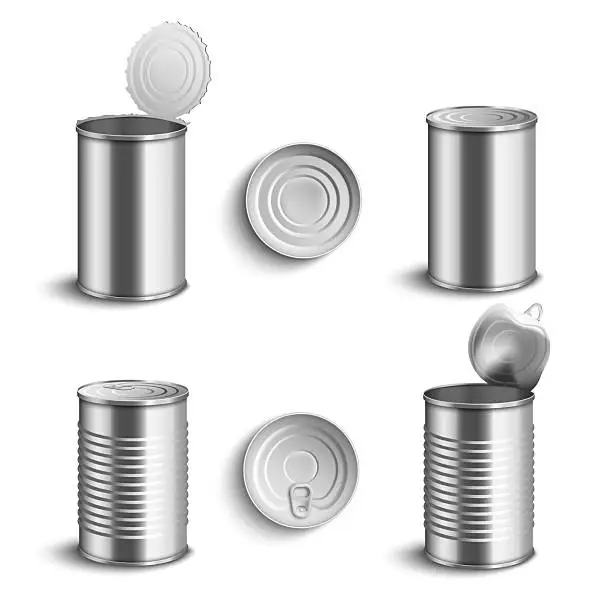
The two-piece can is made out of a single piece of metal that is drawn into the can shape and forms a seamless can with the bottom attached. It is filled, and only the top lid is added. This design does not have side seams that would provide possible corrosion spots and leakage. Due to this, two-piece cans are suitable for liquids and acidic content like soups, juices, and carbonated drinks because they require more integrity due to internal pressure and a long shelf life.
A three-piece can is built in contrast with three parts, namely a flat sheet rolled into a cylinder (with a welded or bonded side seam), and two separate top and bottom ends. This is very common with solid or semi-solid food such as vegetables, beans, and fruits. Even though it adds a side seam, high-level internal coatings are used to safeguard the food and avoid metal contact-particularly during long-term storage.
Both designs are trustworthy, and the selection depends on:
- Product uniformity (liquid or solid)
- Content corrosiveness
- Shelf-life needs
- Methods of production and sealing
Materials Used in Food Cans and Their Benefits
When we talk about “tin cans,” the term is often misleading. In contemporary food packaging, there is a multiplicity of packaging materials, all of which possess varying functional benefits, deployed on the basis of food type, shelf-life considerations, and processing conditions. The following are the most common materials in food can manufacturing and factors that make each of them fit in certain applications:
Steel
The most utilized material in food cans, particularly in North America, is steel. It is very strong and suitable for thermo processing such as retort sterilization. To avoid corrosion, most steel cans have lacquers internally to protect the can against corrosion, particularly where acidic products like tomatoes or beans are used. This set of characteristics of durability, heat resistance, and cost-effectiveness makes steel the industry standard when it comes to canned vegetables, meats, and ready-to-eat meals.
Tin (Tin-Plated Steel)
Although modern cans are often called a tin can, pure tin is hardly used. Rather, tin-plated steel, or steel with a thin coating of tin, is common as a method to enhance corrosion resistance. The tin coating is a protection between food and the metal surface that limits the metallic flavor and the risk of oxidation. Fruits and those foods that are a little bit acidic are best stored in tin-plated cans. The little tin does serve a very significant protective purpose in the increase of shelf life.
Aluminum
Aluminum cans are lightweight, naturally corrosion-resistant, and therefore well suited to beverages, low-acid processed foods, and some contemporary ready-to-eat applications. As opposed to steel, aluminum does not need a heavy internal coating to protect it against corrosion, although a liner of some sort is usually still applied. It is lighter and has the advantage of shipping and sustainability, and is typically used in two-piece can containers.
Paper-Based Composite Cans
These cans are constructed of laminated paperboard lined on the inside (usually aluminum foil or plastic) and have metal or plastic ends. They are not used to sterilize by heat but are popular in packaging such as dry or semi-moist foods as powdered beverages, snack foods, or dried soups. The lightweight feature, printable surface, and environmental friendliness of paper-based cans make it popular, yet this lacks barrier properties and, therefore, is not considered appropriate in high-moisture foods or acidic foods.
How to Choose the Right Food Can Size
Choosing the appropriate can size is not just a question of quantity; it is about efficiency, compatibility in storage, and ensuring waste is kept to a minimum. Standardised can codes, such as #2, #2.5, #10, 300, and 303 used in the food canning industry, are a fine point of reference both to the manufacturer and the bulk purchaser. Then how do you make a good choice?
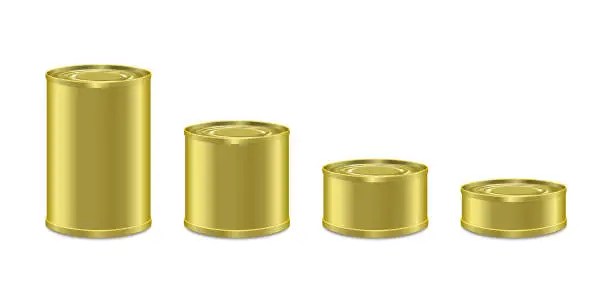
For retail packs, compare formats such as No. 300 and No. 303 with larger options such as No. 2 and No. 2½. Choose according to the intended portion and product quantity, then confirm the physical dimensions with the packaging supplier. Similar food weights do not guarantee identical can sizes. Products such as corn, beans, peas and cut fruit may be packed for single meals or family-sized portions.
For foodservice or catering, No. 10 cans can suit products consumed in larger quantities, such as vegetables, beans and sauces. Compare the labelled contents with your expected portions and consumption rate before choosing a bulk pack.
However, size is not the only thing. Also to be taken into consideration:
- Product density: Foods with high density, such as pumpkin puree, take up smaller space than light foods, such as leafy vegetables, using the same weight.
- Storage and handling: Bigger cans take up more shelf space, need more sturdy can openers, and are also better in a setting where the contents are consumed in bulk.
- Operational fit: The can dimensions should always be compared to your existing sealing/filling equipment. #10 can is not only larger, it may also need an entirely different processing line than #2.5.
The final selection of appropriate food can size is not a simple problem of the number of cups in a #10 can- it is a matter of matching the efficiency of the package to the needs of production, distribution, and consumption. The mismatch can cause not only the costs of the storage space but also shelf stability, the rate of spoilage, and customer satisfaction.
Custom Packaging Equipment for Every Can Size
Knowing can sizes is half the battle; the second step is making sure you have the right equipment to work with those cans correctly, easily, and safely. Be it a standard #2 can or a large volume #10 can, it is vital when selecting machinery that you choose machinery that fits the specific diameter, height, and material of your cans to facilitate your production and achieve your best seal.
That is where Levapack comes in. Levapack, as a professional manufacturer with more than 18 years of experience in can packaging machines, is offering:
- Adjustable sealing and filling machines that can adapt to most sizes and shapes of cans;
- Able to fit in tin cans, aluminum cans, plastic containers, and paper composite cans;
- Versatile options on different food products- liquids, powders, pastes, or solids;
- Modular designs capable of both semi-automatic work and fully automated production lines.
Whether you are looking to ramp up production, automate a small factory, or begin a new line of packaging, we at Levapack can provide the flexible, reliable, and worldwide certified packaging equipment that suits your requirements. Itching to get the ideal can packaging solution for your product? Use our contact form to receive a free consultation and equipment recommendation with Levapack today.
Conclusion
Food can sizes in the United States are important to anybody who deals with the preparation, packaging, or purchasing of food. Starting with the small household size cans, such as #2, to the bulk size of the #10 can, each size has its intended purpose to fit a volume, contents, and the purpose of use. Reading the ability to code and interpret dimensions can improve operations, minimize waste, and make recipes and production consistent. Also, the acquaintance with the material and the way of their construction, two-piece cans or three-piece cans, contributes to further insight into selecting the most appropriate one. As a manufacturer, foodservice operator, or home cook, the correct can size will provide efficiency, safety, and satisfaction on all fronts.


 EN
 RU
 ES
 FR
 DE
 NL
 IT
 JA
 ID
 PT
 KO
 AR
 TH
 VI
 TR
 PL