
Standardization is the unseen infrastructure that enables global trade in the packaging industry. To manufacturers, brand owners, and procurement managers, the knowledge of a standard can size is not just the volume capacity. It is regarding compatibility with filling lines, maximizing pallet density, and efficient use of storage space in an economical way.
A difference of a few millimeters in a can size specification may cause a lot of production downtime, seaming errors, or labeling errors. This manual offers a helpful breakdown of the different can size numbers, the rationale of identification codes, and the actual use in food, beverage, and industrial sectors.
Before diving into the technical details, here is a summary of the most prevalent can sizes used in the global market today.
| Common Name | Industry Code | Dimensions (Imperial) | Ca. Capaciteit | Typische toepassing |
| #300 Can | 300 x 407 | 3″ x 4-7/16″ | 14-15 oz | Vegetables, Beans, Soups |
| #2 Can | 307 x 409 | 3-7/16″ x 4-9/16″ | 20 oz | Fruits, Juices, RTE Meals |
| #1 Picnic | 211 x 400 | 2-11/16″ x 4″ | 10-11 oz | Condensed Soups, Pastes |
| #10 Kan | 603 x 700 | 6-3/16″ x 7″ | 96-109 oz (3L) | Restaurant/Bulk Supply |
| #3 Cylinder | 404 x 700 | 4-4/16″ x 7″ | 46 oz | Large Fruit Juices |
| Tuna Can | 307 x 113 | 3-7/16″ x 1-13/16″ | 6-7 oz | Tuna, Seafood Spreads |
| Standard | 211 x 413 | 2-11/16″ x 4-13/16″ | 12 oz (355ml) | Soda, Beer, Sparkling Water |
| Slim | 202 x 504 | 2-2/16″ x 5-1/4″ | 8.4 oz (250ml) | Energiedrankjes |
Understanding Standard Can Dimension Codes (Imperial vs. Metric)
New arrivals to the canning business are frequently faced with a series of numbers, e.g., 307 x 409, and think that they are in millimeters or some sort of direct reading in inches. This supposition causes serious mistakes in sourcing raw materials and machine calibration. These figures are a standard industry code that is mostly used in North America and areas that adhere to the US Imperial standards, utilizing a conventionalized method.
The code is not a direct measure. It is a compound value which is a combination of the number of whole inches and fractional inches (specifically sixteenths of an inch). The initial step in communicating with can suppliers and setting up seaming tooling is to understand this nomenclature.
Decoding the Three-Digit Industry Identification System
The standard nomenclature has a three-digit format for both diameter and height. The initial number is whole inches. The second and third figures indicate the number of sixteenths of an inch.
Example Analysis: The 307 x 409 Can
- Diameter (307):
- The “3” indicates 3 inches. The first digit “0” indicates 7/16 of an inch.
- The “07” indicates 7/16 of an inch.
- Total Diameter: 3-7/16 inches.
- Height (409):
- The “4” indicates 4 inch.
- The “09” indicates 9/16 of an inch.
- Total Height: 4-9/16 inches.
This system is applicable to most metal food cans. In translating these into metric to international suppliers, this should be calculated accurately. An example of this is 307 diameter (3-7/16) translated to about 87mm, although tolerance is needed in chuck and roll applications on a seamer.
How to Measure Can Diameter and Height Correctly
Precision is essential in establishing whether a can can fit in the changing parts on a production line. One of the errors is the measurement of the wrong reference points on the cylindrical body.
Measuring Diameter: The industry standard is that the diameter is measured at the outside of the body and not at the rim. But in the case of double seaming, the critical reference point is usually the size of the top lid (e.g., a 202 end vs. a 206 end). In referring to the three-digit code (e.g., 307), it means the Nominal Body Outside Diameter.
Measuring Height: The height of the can varies depending on its state; an empty can is different from that of a completed can.
- Overall Height (Open/Empty): This is the height of the can prior to the lid being fitted. The flange is flared out. This is a critical measurement of the filling station to make sure that the nozzle clearance is right.
- Finished Can Height (Sealed): This is the height of the can after the hermetic seal has been created. The seaming process takes away part of the flange and the bottom end hook, making the final shape slightly shorter.
Whenever you are sourcing machinery or negotiating specs with a supplier, always state whether you are quoting the open can height or the finished height. The three-digit code (e.g., x 409) is usually the Overall Height of the sealed container, but it is customary to confirm this with the technical drawing (the “dieline”) of the manufacturer.
Standard Sanitary Food Can Sizes by Market Application
Sanitary food cans are made to resist the thermal treatment needed to sterilize food products (retorting). This ensures food safety and extends shelf life. Although there are thousands of different versions, the market has narrowed down to a standard can size to maximize logistics and consumer recognition. These food can sizes are categorized by their end-user environment.
Retail Can Dimensions for Fruits, Vegetables, and Soups
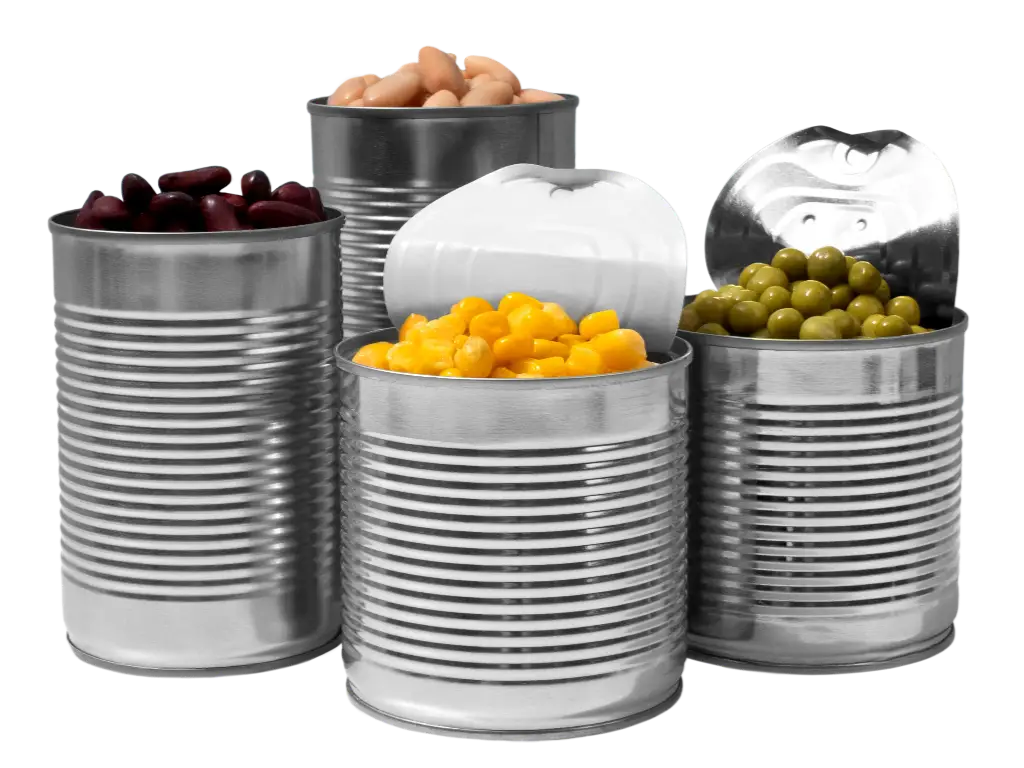
The Retail category includes cans that are sold directly to consumers in supermarkets. These sizes maximize the shelf space and offer portions that can be shared by families or individuals, while also ensuring food quality. These dimensions are very standardized to enable co-packers to operate different food products (e.g., corn, beans, soup) on the same line with minimum changeover.
Key Standard Sizes:
- #300 Can (300 x 407): This is the current standard of most vegetables and beans. It normally carries between 14 and 15 fluid ounces of product. It has mostly substituted smaller sizes with general pantry items because it has an effective height-to-width ratio. It offers excellent protection for fresh produce processed for long-term storage.
- #2 Can (307 x 409): This can is a little bigger than the #300, and it can hold about 20 ounces. It is commonly applied to larger vegetable portions, pineapple slices, and certain ready-to-eat soups.
- #1 Picnic (211 x 400): A smaller space container holding about 10 to 11 ounces. This is usually observed in condensed soups or concentrated foodstuffs, such as acidic foods like tomato paste.
- 8 oz / Buffet (211 x 304): The typical single serving of vegetables or fruit cocktails.
The net weight is usually not equal to the volume of fluid ounces. A can of peaches (density greater than 1) will have a greater weight than the same volume of dried herbs or dry goods.
Institutional Can Sizes for Restaurants and Bulk Packaging
The foodservice industry is concerned with volume efficiency and waste minimization. These cans are intended to be used in commercial kitchen operations, cafeterias, and catering, where speed and consistency matter. The idea is to reduce the number of cans that a chef has to open in order to prepare a service.
Key Standard Sizes:
- #10 Can (603 x 700): This is the standard B2B food service. It has a diameter of 6-3/16 inches and a height of 7 inches, which contains about 96 to 109 ounces (about 3 liters).
- Logistiek: These are normally loaded 6 per case.
- Machinery: Sealing a #10 can requires a heavy-duty seamer capable of handling the larger diameter and heavier gross weight without crushing the body.
- #3 Cylinder (404 x 700): This is commonly known as the 46 oz can. This is the standard of large fruit juices (apple, tomato, pineapple) in a commercial environment, in a tall, narrower format.
Specialty Sizes for Pet Food and Ready-to-Eat Meals

Special squat cans are used in the pet food and ready-to-eat (RTE) industries. The diameter of these cans is larger than their height. This geometry has two functions: it is easier to extract the product (wet pet food or luncheon meat), and due to fewer seams, it is easier to achieve rapid heat penetration during the retort process of dense meats.
Key Standard Sizes:
- 307 x 109 (Flat/Squat): This is typically used in single-serve premium cat food or tuna spreads. The height is very low, and this necessitates accurate lifter plates in the seaming station to make it stable.
- 300 x 308: A standard dog food size.
- Rectangular or Oblong Cans (Spam-style): Steel cans shaped for luncheon meats. These require specific side seam welding techniques or drawing processes to form the cylindrical side walls into a rectangle.
Standard Seafood Can Dimensions: Tuna and Sardines

The packaging of seafood is not similar to the usual sanitary metal cans of fruits and vegetables. The product is high-end, costly, and in many cases delicate, which predetermines shallow and wide containers. Also, the production of these cans frequently employs a 2-piece Draw-Redraw (DRD) technique as opposed to the conventional 3-piece welded body. This creates a smooth bottom and body, which removes one of the possible leak points.
Unique Geometry and Challenges:
- The “Tuna” Can (307 x 113): It is the same diameter as the #2 can (307), but the height is only 1-13/16 inches. This shallowness is what makes the heat of the sterilization process reach the center of the thick fish meat in a short period of time, without overcooking the outer layers.
- Club Cans: These are rectangular cans that are commonly used to store sardines or herring fillets. They are not round, and therefore, they do not use the standard 3-digit diameter code.
- Dingley Cans: Similar to Club cans but typically tapered or slightly different in aspect ratio, used for premium seafood.
- Oval Cans: Frequently used for pilchards or larger fish fillets in tomato sauce.
Special irregular seamers are needed to handle seafood cans. A typical rotary machine that is used to seal round cans with a diameter of 300 cannot seal a rectangular Dingley can. The seaming rollers have to take a cam-driven route to trace the non-round profile. Moreover, tuna cans are shallow, and thus they tend to splash out during high-speed transportation, and thus need a smoother transition between conveyors.
Common Beverage Can Dimensions and Volumes
The beverage business is governed by another set of standards. Aluminum cans are the most common material here due to their light weight and the flexibility of aluminum during manufacturing. Blikjes drank are made of lightweight aluminum 2-piece bodies, unlike food cans that are made of rigid steel. Structural rigidity is given by the pressure of the carbonated drink.
The market has moved to one standard to a portfolio of sizes that are meant to indicate product categories (e.g., energy drinks vs. traditional soda).
| Can Type | Volume (Imperial) | Volume (Metric) | Body Diameter | Height | Typische toepassing |
| Standard | 12 oz | 355 ml | 211 (66mm) | 413 (122mm) | Soda, Beer, Seltzer |
| Sleek | 12 oz | 355 ml | 204.5 (58mm) | 602 (156mm) | Hard Seltzer, Energy Drinks, Cocktails |
| Slim | 8,4 oz | 250 ml | 202 (53mm) | 504 (134mm) | Energy Drinks (e.g., Red Bull style) |
| Tallboy | 16 oz | 473 ml | 211 (66mm) | 602 (157mm) | Craft Beer, Cider |
The changeover of the machinery is high, although the amount of a Standard and Sleek can be the same (12 oz). To change a Standard 211 body to a Sleek 204 body, the star wheels, guides, and seaming chucks must be changed.
Industrial, Paint, and Aerosol Can Standards
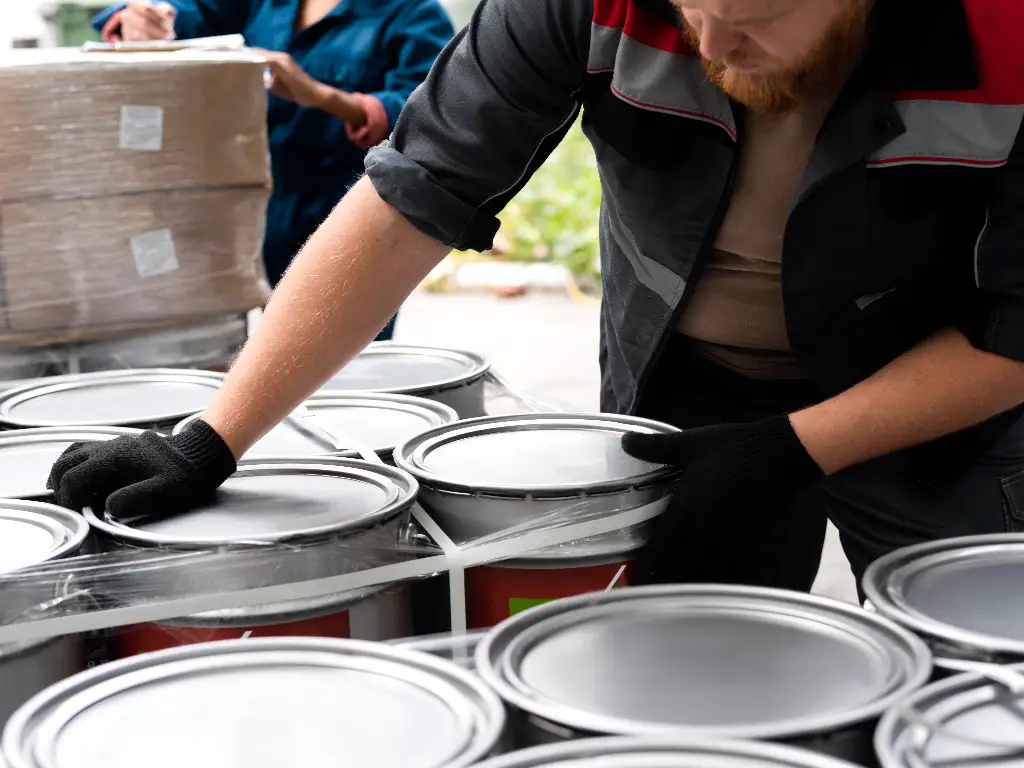
Outside the food and beverage aisles, there is the General Line of packaging, which includes chemicals, automotive fluids, paints, and aerosol products. Although such containers might resemble food cans, the engineering requirements are different.
The filling equipment of industrial cans can be spark-proof or chemical-grade, which is quite different in comparison with sanitary food packaging lines. Food machinery is hygienic (stainless steel, washdown capable), whereas industrial machinery is chemical compatible and explosion proof (ATEX/EX ratings).
| Toepassing | Common Name | Capaciteit | Typical Dimensions (Dia x H) | Opmerkingen |
| Paint/Coatings | Gallon Can | 1 Gallon | 610 x 708 | Often uses friction-fit lids (plugs) rather than seamed ends. |
| Paint/Coatings | Quart Can | 1 Quart | 404 x 414 | Standard for retail paint or wood stain. |
| Aerosol | 45mm Series | Diverse | 45mm Diameter | Necked-in top for valve assembly. |
| Aerosol | 52mm Series | Diverse | 52mm Diameter | Common for hairspray, spray paint. |
| Aerosol | 65mm Series | Diverse | 65mm Diameter | Heavy-duty industrial sprays. |
Such containers tend to use alternative closure systems. Whereas food cans have a double seam, paint cans have a triple-tight friction ring and aerosols need crimping stations on the valve cup. Thus, a typical food canning machine is not usually applicable to such purposes.
Why Standard Sizes Matter for Labeling and Logistics
To a production manager or an operations specialist, a standard can size is not only about compliance with regulatory codes, but also a plan of operational efficiency.
- Machine Changeover and Tooling
Filling and seaming machines are fine machines. They work with cans by means of changing parts, timing screws, star wheels, and guide rails, which are machined to the particular diameter of the can.
- Standard Sizes: If you use a standard #300 can, spare parts and tooling are readily available.
- Custom Sizes: If you choose a non-standard diameter (e.g., 305), you face long lead times for custom tooling and higher costs for every format change.
- Efficiënt labelen
Labeling is die-cut to a certain size. Normal can sizes are related to normal die-lines of printing houses. One efficient way to label a standard 211 beverage can is to use shrink sleeves or pressure-sensitive labels, which are already templated, saving prepress costs and possible design errors.
- Palletization and Warehousing
Standard footprints are optimized in supply chains. The design of the #10 can is such that 6 cans can fit into a corrugated case and that the cases can be stacked on a standard 40×48 inch pallet with no overhang. When standard dimensions are not followed, it leads to inefficient pallet use, more air in shipping, and a greater likelihood of load instability during transit.
Conclusie
The choice of the right standard size is a fundamental choice that will influence your whole production line, from the filler to the pallet wrapper. Although marketing might require special shapes, the convenience of standard dimensions, such as reliability, speed, and compatibility, can be more beneficial than the innovation of new formats.
Why Choose Levapack for Your Canning Line?
We know at Levapack that versatility is the pulse of contemporary packaging. You can be filling standard 10 institutional cans, or the fragile 300 fruit cans, or the high-value nitrogen-flushed powder containers; our equipment is designed to fit. Our 4000m 2 plant and a team of engineers with more than 15 years of assembly experience provide strong, CNC-precision equipment that is used with solids, powders, granules, and liquids. With 16 months warranty and an international network of services in 100-plus countries, Levapack is the power that helps your business to conquer the complexity of can sizes with confidence and efficiency. Neem contact met ons op today to customize your solution.
Frequently Asked Questions
Are there differences in standard can sizes for beverages vs. food?
Yes, they differ fundamentally in both dimension and construction. The cans of food are usually manufactured of steel (3-piece or 2-piece DRD) and are designed to resist the vacuum pressure and high temperature of the retort sterilization process. Cans of beverages are virtually entirely composed of lightweight aluminum (2-piece) and depend on the internal pressure of carbonation to hold them together. As a result, a machine that is used to seam a rigid steel food can is not normally compatible with the fragile aluminum beverage cans without major adjustments.
How big is a standard tin can?
Since the standard is relative to the application, there is no one answer. The most common standard in a consumer grocery setting (soups and vegetables) is the #300 can (3″ diameter x 4-7/16″ height). The standard in a commercial restaurant setting is the #10 can (6-3/16″ diameter x 7″ height). In the case of beverages, the 12 oz can (211 diameter) is the global standard.
Can I run different can sizes on the same packaging machine?
Yes, but it needs to change parts. The majority of modern seamers, such as the equipment of Levapack, are flexible. To change sizes, you usually have to change certain tooling parts, including the seaming chuck, turntable, and star wheels, which are of the appropriate diameter for the new can. Height adjustment is typically a less complicated procedure that does not necessarily involve new components, whereas a tooling changeover is always necessary when changing the diameter.
What do the numbers like “307” or “409” actually mean?
These are not actual millimeter measurements, but industry codes using the Imperial system. The initial number is the whole inches, and the remaining two numbers are the sixteenths of an inch. An example is that 307 diameter is 3 inches and 7/16ths of an inch. This coding is universal in food packaging specifications in North America.


 EN
EN  RU
RU  ES
ES  FR
FR  DE
DE  NL
NL  IT
IT  JA
JA  ID
ID  PT
PT  KO
KO