
Guía de tamaños estándar de latas: Dimensiones, volúmenes y códigos industriales
La normalización es la infraestructura invisible que permite el comercio mundial en la industria del envasado. Para los fabricantes, propietarios de marcas y responsables de compras, el conocimiento de un tamaño de lata estándar no es sólo la capacidad de volumen. Tiene que ver con la compatibilidad con las líneas de llenado, la maximización de la densidad de los palés y el uso eficiente del espacio de almacenamiento de forma económica.
A difference of a few millimeters in a can size specification may cause a lot of production downtime, seaming errors, or labeling errors. This manual offers a helpful breakdown of the different can size numbers, the rationale of identification codes and the actual use in food, beverage and industrial sectors.
Antes de entrar en detalles técnicos, he aquí un resumen de los tamaños de latas más utilizados actualmente en el mercado mundial.
| Nombre común | Código del sector | Dimensiones (en pulgadas) | Approx. Capacity | Aplicación típica |
|---|---|---|---|---|
| #300 Lata | 300 x 407 | 3″ x 4-7/16″ | 14-15 oz | Verduras, legumbres, sopas |
| #2 Lata | 307 x 409 | 3-7/16″ x 4-9/16″ | 20 oz | Frutas, zumos, comidas RTE |
| #1 Picnic | 211 x 400 | 2-11/16″ x 4″ | 10-11 oz | Sopas Condensadas, Pastas |
| #10 Lata | 603 x 700 | 6-3/16″ x 7″ | 96-109 oz (3L) | Restaurante/suministro a granel |
| #3 Cilindro | 404 x 700 | 4-4/16″ x 7″ | 46 onzas | Zumos de frutas grandes |
| Lata de atún | 307 x 113 | 3-7/16″ x 1-13/16″ | 6-7 oz | Atún, marisco para untar |
| Estándar | 211 x 413 | 2-11/16″ x 4-13/16″ | 12 oz (355ml) | Refrescos, cerveza, agua con gas |
| Slim | 202 x 504 | 2-2/16″ x 5-1/4″ | 250 ml (8,4 oz) | Bebidas energéticas |
Comprensión de los códigos de dimensiones de latas estándar (imperial frente a métrico)
New arrivals to the canning business are frequently faced with a series of numbers, e.g. 307 x 409, and think that they are in millimeters or some sort of direct reading in inches. This supposition causes serious mistakes in sourcing raw materials and machine calibration. These figures are a standard industry code that is mostly used in North America and areas that adhere to the US Imperial standards, utilizing a conventionalized method.
El código no es una medida directa. Es un valor compuesto que es una combinación del número de pulgadas enteras y de pulgadas fraccionarias (concretamente dieciseisavos de pulgada). El paso inicial en la comunicación con los proveedores de latas y la configuración de las herramientas de cierre es entender esta nomenclatura.
Descifrar el sistema de identificación industrial de tres dígitos
The standard nomenclature has a three-digit format of both diameter and height. The initial number is whole inches. The second and third figures indicate the number of sixteenths of an inch.
Ejemplo de análisis: La lata 307 x 409
- Diámetro (307):
- El "3" indica 3 pulgadas. El primer dígito "0" indica 7/16 de pulgada.
- The “07” indicates 7/16 of an inch.
- Total Diameter: 3-7/16 inches.
- Altura (409):
- The “4” indicates 4 inches.
- The “09” indicates 9/16 of an inch.
- Total Height: 4-9/16 inches.
Este sistema es aplicable a la mayoría de latas metálicas para alimentos. Al traducirlas al sistema métrico decimal para los proveedores internacionales, debe calcularse con precisión. Un ejemplo es el diámetro 307 (3-7/16) traducido a unos 87 mm, aunque se necesita tolerancia en aplicaciones de mandril y rodillo en una cerradora.
Cómo medir correctamente el diámetro y la altura de las latas
Precision is essential in establishing whether a can can fit in changing parts on a production line. One of the errors is the measurement of the wrong reference points on the cylindrical body.
- Diámetro de medición: The industry standard is that the diameter is measured at the outside of the body and not at the rim. But in the case of double seaming, the critical reference point is usually the size of the top lid (e.g. a 202 end vs. a 206 end). In referring to the three-digit code (e.g., 307), it means the Nominal Body Outside Diameter.
- Altura de medición: The height of the can varies depending on its state, an empty can is different to that of a completed can.
- Altura total (abierto/vacío): Esta es la altura de la lata antes de colocar la tapa. El reborde está ensanchado. Esta es una medida crítica de la estación de llenado para asegurarse de que la holgura de la boquilla es correcta.
- Altura de la lata terminada (sellada): This is the height of the can after the hermetic seal has been created. Seaming process takes away part of the flange and the bottom end hook,making the final shape slightly shorter.
Tamaños estándar de latas sanitarias para alimentos por aplicación de mercado
Sanitary food cans are made to resist the thermal treatment needed to sterilize food products (retorting). This ensures food safety and extends shelf life. Although there are thousands of different versions, the market has narrowed down to a standard can size to maximize logistics and consumer recognition. These food can sizes are categorized by their end-user environment.
Dimensiones de latas para frutas, verduras y sopas
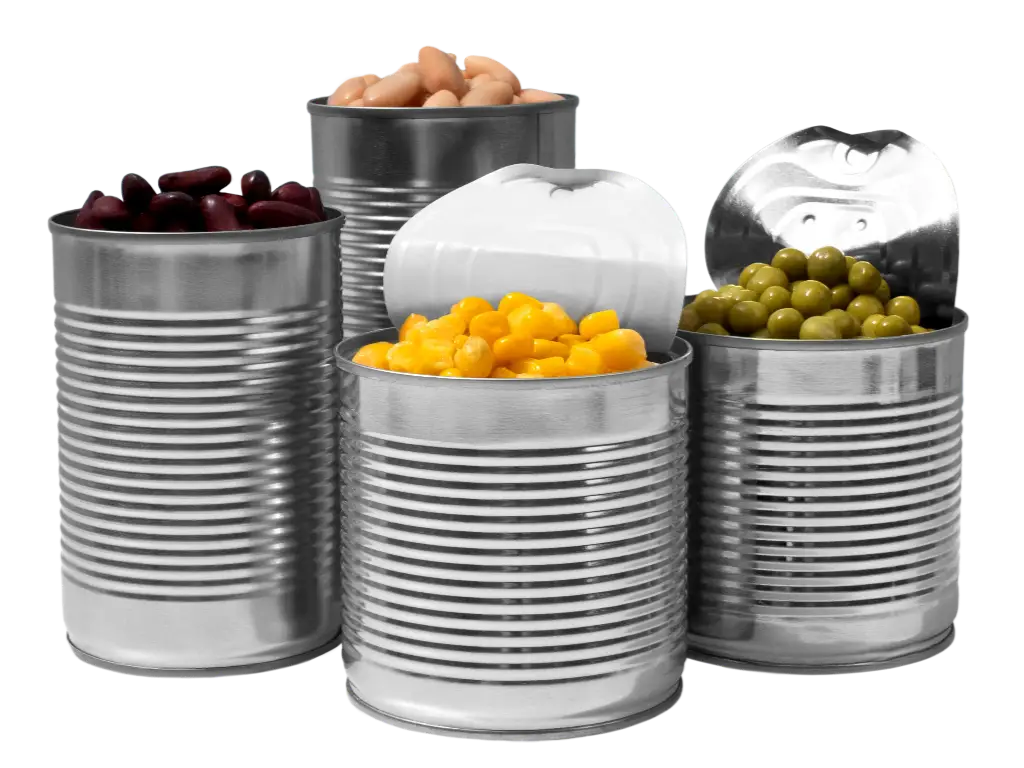
La categoría Minorista incluye latas que se venden directamente a los consumidores en supermercados. Estos tamaños maximizan el espacio en las estanterías y ofrecen porciones que pueden compartir familias o individuos, al tiempo que garantizan la calidad de los alimentos. Estas dimensiones están muy estandarizadas para permitir a los coenvasadores operar con diferentes productos alimenticios (por ejemplo, maíz, judías, sopa) en la misma línea con un cambio mínimo.
Tamaños estándar clave:
- #300 Lata (300 x 407): This is the current standard of most vegetables and beans. It normally carries between 14 to 15 fluid ounces of product. It has mostly substituted smaller sizes with general pantry items because it has an effective height-to-width ratio. It offers excellent protection for fresh produce processed for long-term storage.
- Lata #2 (307 x 409): Esta lata es un poco más grande que la #300, y puede contener unas 20 onzas. Se suele aplicar a porciones de verdura más grandes, rodajas de piña y ciertas sopas listas para consumir.
- #1 Picnic (211 x 400): A smaller space container holding about 10 to 11 ounces. This is usually observed in condensed soups or concentrated foodstuffs such as acidic foods like tomato paste.
- 8 oz / Buffet (211 x 304): La típica ración única de cócteles de verduras o frutas.
El peso neto no suele ser igual al volumen de onzas líquidas. Una lata de melocotones (densidad superior a 1) tendrá un peso mayor que el mismo volumen de hierbas secas o productos secos.
Tamaños de latas institucionales para restaurantes y envasado a granel
El sector de la restauración se preocupa por la eficiencia del volumen y la minimización de residuos. Estas latas están pensadas para su uso en cocinas comerciales, cafeterías y servicios de catering, donde la rapidez y la consistencia son importantes. La idea es reducir el número de latas que un cocinero tiene que abrir para preparar un servicio.
Tamaños estándar clave:
- Lata #10 (603 x 700): Es el estándar del servicio de comida B2B. Tiene un diámetro de 6-3/16 pulgadas y una altura de 7 pulgadas, que contiene alrededor de 96 a 109 onzas (unos 3 litros).
- Logística: Normalmente se cargan 6 por caja.
- Maquinaria: Sealing a #10 can require a heavy-duty seamer capable of handling the larger diameter and heavier gross weight without crushing the body.
- Cilindro #3 (404 x 700): Se conoce comúnmente como lata de 46 oz. Es el estándar de los zumos de frutas grandes (manzana, tomate, piña) en un entorno comercial, en un formato alto y más estrecho.
Tamaños especiales para alimentos para mascotas y platos preparados
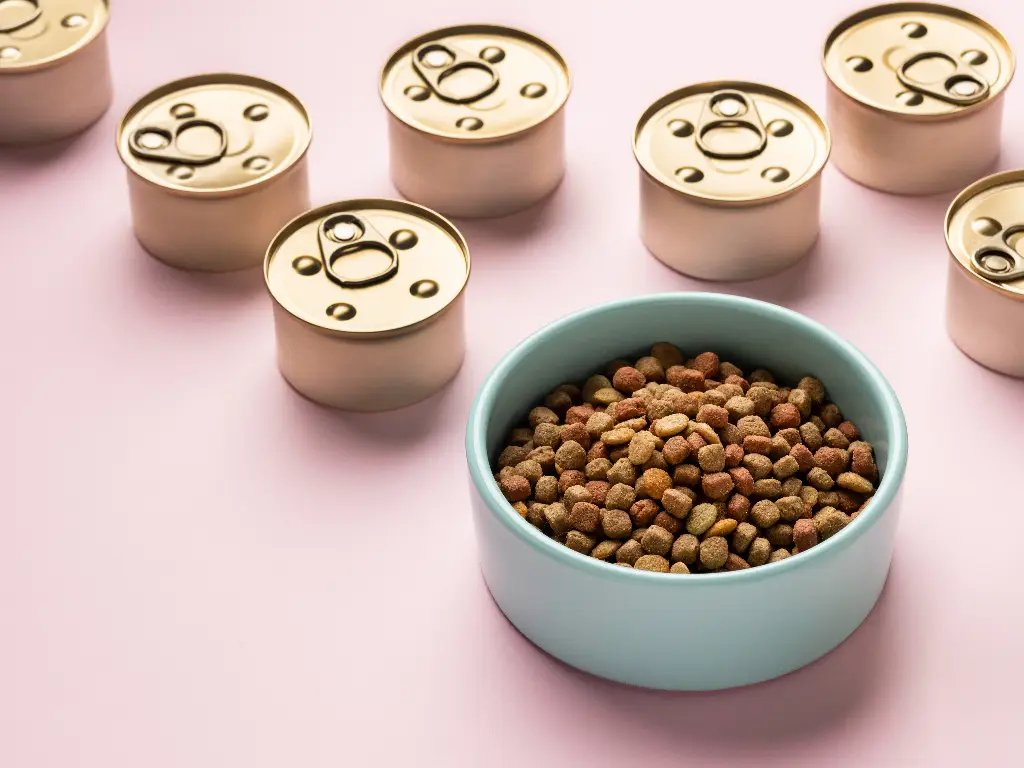
Special squat cans are used in the pet food and ready-to-eat (RTE) industries. The diameter of these cans is larger compared to their height. This geometry has two functions: it is easier to extract the product (wet pet food or luncheon meat), and due to fewer seams, it is easier to achieve rapid heat penetration during the retort process of dense meats.
Tamaños estándar clave:
- 307 x 109 (plano/en cuclillas): This is typically used in single-serve premium cat food or tuna spreads. The height is very low and this necessitates accurate lifter plates in the seaming station to make it stable.
- 300 x 308: Un tamaño estándar de comida para perros.
- Latas rectangulares u oblongas (estilo Spam): Latas de acero para embutidos. Éstas requieren técnicas específicas de soldadura de costuras laterales o procesos de embutición para dar forma rectangular a las paredes laterales cilíndricas.
Dimensiones estándar de las latas de marisco: Atún y sardinas
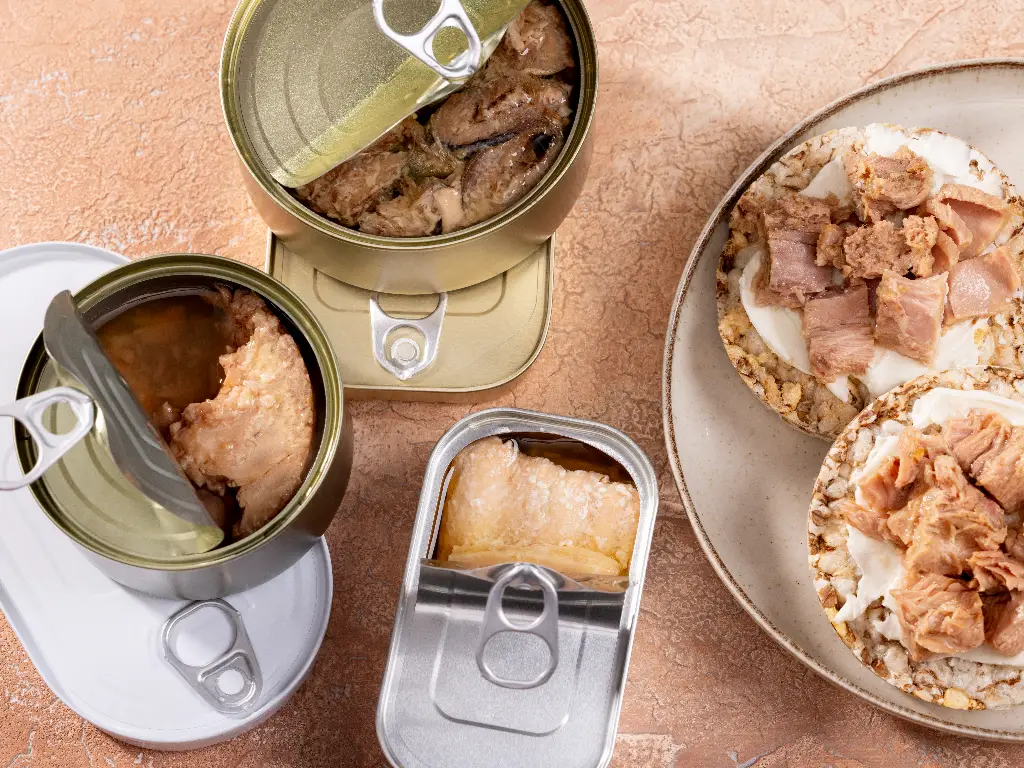
The packaging of seafood is not similar to the usual sanitary metal cans of fruits and vegetables. The product is high-end, costly and in many cases delicate, which predetermines shallow and wide containers. Also, the production of these cans frequently employs a 2-piece Draw-Redraw (DRD) technique as opposed to the conventional 3-piece welded body. This creates a smooth bottom and body, which removes one of the possible leak points.
Geometría y desafíos únicos:
- La lata "Atún" (307 x 113): Tiene el mismo diámetro que la lata #2 (307), pero la altura es de sólo 1-13/16 pulgadas. Esta poca profundidad es lo que hace que el calor del proceso de esterilización llegue al centro de la gruesa carne de pescado en poco tiempo, sin cocer en exceso las capas exteriores.
- Club Cans: These are rectangular cans that are commonly used to store sardines or herring fillets. They are not round and therefore they do not use the standard 3-digit diameter code.
- Latas Dingley: Similares a las latas Club, pero normalmente cónicas o con una relación de aspecto ligeramente diferente, se utilizan para marisco de primera calidad.
- Latas ovaladas: Se utiliza con frecuencia para las sardinas o los filetes de pescado más grandes en salsa de tomate.
Special irregular can seamers are needed to handle seafood cans. A typical rotary machine that is used to seal round cans with a diameter of 300 cannot seal a rectangular Dingley can. The seaming rollers have to take a cam-driven route to trace the non-round profile. Moreover, tuna cans are shallow and thus they tend to splash out during high-speed transportation and thus need a smoother transition between conveyors.
Dimensiones y volúmenes habituales de las latas de bebidas
The beverage business is governed by another set of standards. Aluminum cans are the most common materials here due to their light weight and the flexibility of aluminum during manufacturing. Beverage cans are made of lightweight aluminum 2-piece bodies, unlike food cans that are made of rigid steel. Structural rigidity is given by the pressure of the carbonated drink.
El mercado ha pasado de un estándar a una cartera de tamaños que pretenden indicar categorías de productos (por ejemplo, bebidas energéticas frente a refrescos tradicionales).
| Tipo de lata | Volumen (Imperial) | Volumen (métrico) | Diámetro del cuerpo | Altura | Aplicación típica |
|---|---|---|---|---|---|
| Estándar | 12 onzas | 355 ml | 211 (66mm) | 413 (122mm) | Refrescos, Cerveza, Seltz |
| Elegante | 12 onzas | 355 ml | 204,5 (58 mm) | 602 (156mm) | Seltz, bebidas energéticas, cócteles |
| Slim | 8,4 oz | 250 ml | 202 (53mm) | 504 (134 mm) | Bebidas energéticas (por ejemplo, del estilo de Red Bull) |
| Tallboy | 16 onzas | 473 ml | 211 (66mm) | 602 (157mm) | Cerveza artesanal, Sidra |
The changeover of the machinery is high, although the amount of a Standard and Sleek can may be the same (12 oz). To change a Standard 211 body to a Sleek 204 body, the star wheels, guides, and seaming chucks must be changed.
Normas para envases industriales, de pintura y aerosoles
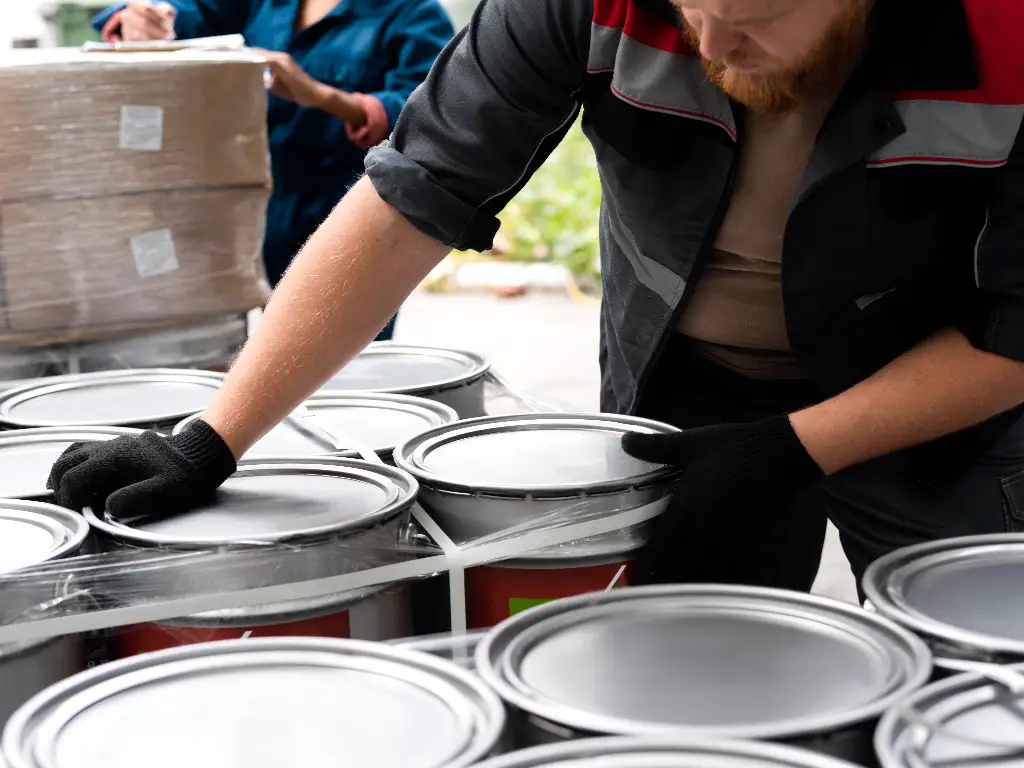
Outside the food and beverage aisles, there is the General Line of packaging which includes chemicals, automotive fluids, paints, and aerosol products. Although such containers might resemble food cans, the engineering requirements are different.
El equipo de llenado de latas industriales puede ser a prueba de chispas o de productos químicos, lo cual es bastante diferente en comparación con las líneas sanitarias de envasado de alimentos. La maquinaria alimentaria es higiénica (acero inoxidable, apta para el lavado), mientras que la industrial es compatible con productos químicos y a prueba de explosiones (clasificaciones ATEX/EX).
| Aplicación | Nombre común | Capacidad | Dimensiones típicas (Diámetro x Altura) | Notas |
|---|---|---|---|---|
| Pintura/Revestimientos | Bidón de un galón | 1 galón | 610 x 708 | A menudo utiliza tapas de ajuste por fricción (tapones) en lugar de extremos cosidos. |
| Pintura/Revestimientos | Lata de un cuarto | 1 litro | 404 x 414 | Estándar para pintura al por menor o tinte para madera. |
| Aerosol | Serie de 45 mm | Varios | 45 mm de diámetro | Parte superior con cuello para el montaje de la válvula. |
| Aerosol | Serie 52 mm | Varios | 52mm Diámetro | Común para laca para el pelo, pintura en aerosol. |
| Aerosol | Serie de 65 mm | Varios | 65 mm de diámetro | Aerosoles industriales de alta resistencia. |
Such containers tend to use alternative closure systems. Whereas food cans have a double seam, paint cans have a triple tight friction ring and aerosols need crimping stations to the valve cup. Thus, a typical food canning machine is not usually applicable to such purposes.
Por qué los tamaños estándar son importantes para el etiquetado y la logística
To a production manager or an operation specialist, a standard can size is not only about compliance with regulatory codes, but also a plan of operational efficiency.
Cambio de máquinas y utillaje
Filling and seaming machines are fine machines. They work with cans by means of change parts, timing screws, star wheels, and guide rails, which are machined to the particular diameter of the can.
- Tamaños estándar: Si utiliza una lata estándar #300, podrá adquirir fácilmente piezas de repuesto y herramientas.
- Tamaños a medida: Si elige un diámetro no estándar (por ejemplo, 305), se enfrentará a largos plazos de entrega de herramientas personalizadas y a costes más elevados por cada cambio de formato.
Eficacia del etiquetado
Labeling is die cut to a certain size. Normal can sizes are related to normal die-lines of printing houses. One efficient way to label a standard 211 beverage can is to use shrink sleeves or pressure-sensitive labels which are already templated, saving prepress costs and possible design errors.
Paletización y almacenamiento
Standard footprints are optimized in supply chains. The design of the #10 can is such that 6 cans can fit into a corrugated case and that the cases can be stacked on a standard 40×48 inch pallet with no overhang. When standard dimensions are not followed, it leads to inefficient pallet use, more air in shipping and a greater likelihood of load instability during transit.
Conclusión
The choice of the right standard can size is a fundamental choice that will influence your whole production line, the filler to the pallet wrapper. Although marketing might require special shapes, the convenience of standard dimensions, such as reliability, speed, and compatibility, can be more beneficial than the innovation of new formats.
¿Por qué elegir Levapack para su línea de conservas?
We know at Levapack that versatility is the pulse of the contemporary packaging. You can be filling standard 10 institutional cans, or the fragile 300 fruit cans, or the high-value nitrogen-flushed powder containers, our equipment is designed to fit. Our 4000m 2 plant and a team of engineers with more than 15 years of assembly experience provides strong, CNC-precision equipment that is used with solids, powders, granules, and liquids. With 16 months warranty and an international network of services in 100 plus countries, Levapack is the power that helps your business to conquer the complexity of can sizes with confidence and efficiency. Contact us today to customize your solution.
Preguntas frecuentes
¿Existen diferencias entre los tamaños estándar de las latas de bebidas y de alimentos?
Sí, difieren fundamentalmente tanto en sus dimensiones como en su construcción. Las latas de alimentos suelen ser de acero (DRD de 3 o 2 piezas) y están diseñadas para resistir la presión del vacío y la alta temperatura del proceso de esterilización por retorta. Las latas de bebidas se componen prácticamente en su totalidad de aluminio ligero (2 piezas) y dependen de la presión interna de la carbonatación para mantenerse unidas. En consecuencia, una máquina que se utiliza para cerrar una lata rígida de acero para alimentos no suele ser compatible con las frágiles latas de aluminio para bebidas sin realizar ajustes importantes.
¿Qué tamaño tiene una lata normal?
Since standard is relative to the application, there is no one answer. The most common standard in a consumer grocery setting (soups and vegetables) is the #300 can (3″ diameter x 4-7/16″ height). The standard in a commercial restaurant setting is the #10 can (6-3/16″ diameter x 7″ height). In the case of beverages, the 12 oz can (211 diameter) is the global standard.
¿Puedo envasar latas de distintos tamaños en la misma envasadora?
Yes, but it needs change parts. The majority of modern seamers, such as the equipment of Levapack, are flexible. To change sizes, you usually have to change certain tooling parts, including the seaming chuck, turntable, and star wheels, which are of the appropriate diameter of the new can. Height adjustment is typically a less complicated procedure that does not necessarily involve new components, whereas a tooling changeover is always necessary when changing the diameter.
¿Qué significan realmente números como "307" o "409"?
These are not actual millimeter measurements, but industry codes using the Imperial system. The initial number is the whole inches and the remaining two numbers are the sixteenths of an inch. An example is that 307 diameter is 3 inches and 7/16ths of an inch. This coding is universal in food packaging specifications in North America.


 EN
EN  RU
RU  ES
ES  FR
FR  DE
DE  NL
NL  IT
IT  JA
JA  ID
ID  PT
PT  KO
KO