
Waar zijn blikken van gemaakt? Een ingenieursgids voor materiaalselectie en lijnprestaties
De misvatting die heerst in de verpakkingsindustrie is dat een blikje een product is dat gestandaardiseerd is. Voor de consument is een blikje gewoon een vat, dat vaak concurreert met plastic flessen of dozen. Voor de inkoopafdeling is het een artikel dat wordt gespecificeerd in termen van kosten per duizend eenheden. Maar voor de productie-ingenieur en de fabrieksmanager is de materiaalsamenstelling van een blikje de onderliggende variabele die het hele gedrag van de vul- en naailijn bepaalt.
What are cans made of is not a chemical question, but a mechanical question. The decision to use aluminum or steel cans changes the physics of the packaging process fundamentally. It alters the behavior of the container to the axial loads during filling, the flow of the metal during the double seaming process and the calibration of the machinery to avoid disastrous downtime or piles of scrap metal.
This guide goes beyond the periodic table to discuss the engineering consequences of material choice. We will look at the way the unique mechanical characteristics of aluminum and tin-plated steel work with automated equipment and what this implies to your production efficiency.
De basis: Aluminiumlegeringen versus vertind staal
We moeten de metallurgische verschillen en hun gangbare gebruik in de markt bepalen voordat we de prestaties van de lijn analyseren. Wanneer ingenieurs vragen waarvan blikken gemaakt zijn, zijn ze op zoek naar de specifieke legering en hardheidseigenschappen.
Aluminium Blikjes
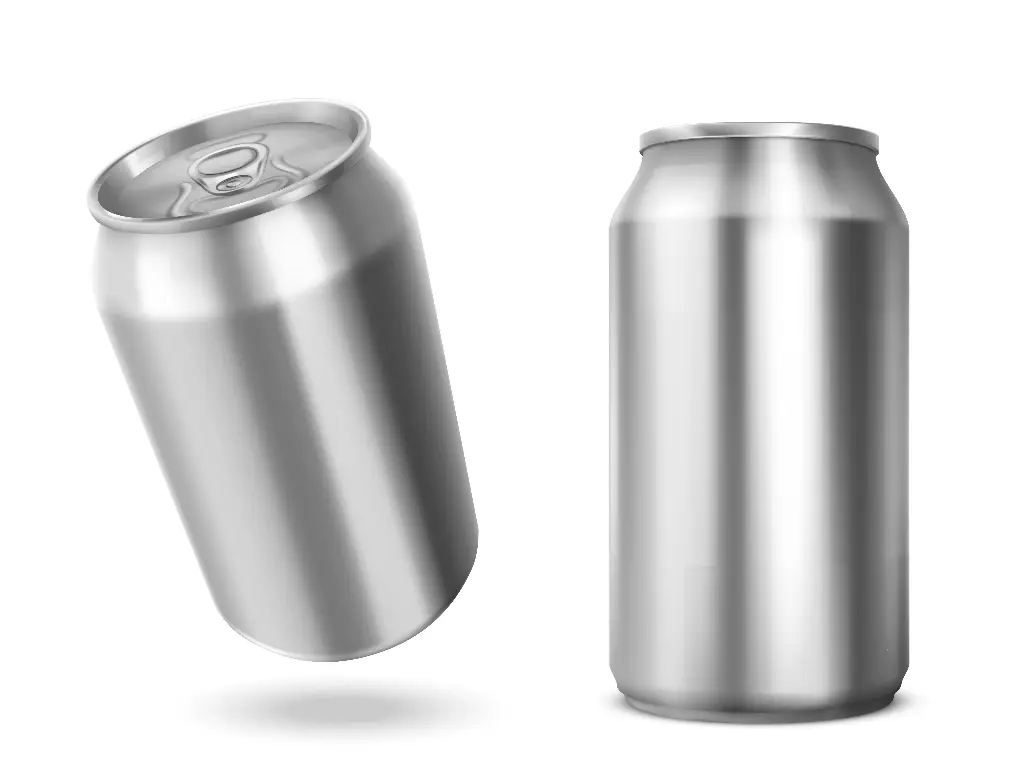
Aluminum Cans are not pure aluminum. They are complex aluminum alloys that are meant to be highly formable. Aluminum beverage cans are the most dominant in the beverage industry (carbonated soft drinks, beer, energy drinks) because of their lack of rigidity but high ductility. They are also being applied in high-end nitrogen-flushed snacks and ready-to-drink (RTD) coffees where internal pressure helps to hold the structure. Interestingly, recycled aluminum plays a key role here, as it can be re-melted and reformed repeatedly with minimal loss of properties.
- Het lichaam: Het is meestal samengesteld uit legering 3004, met mangaan (ongeveer 1%) en magnesium (ongeveer 1%). Deze samenstelling biedt de vereiste sterkte-gewichtsverhouding en maakt het mogelijk om het plaatmetaal te trekken en te strijken tot een dunwandige, tweedelige cilinder.
- Het deksel (Einde): Deze is meestal gemaakt van een 5182 legering die meer magnesium bevat. Dit maakt het deksel stijver en taaier dan de behuizing om de stijfheid te geven die nodig is om de klinknagels en de scorelijn op het openingslipje te houden, waardoor er vaak geen traditionele blikopener meer nodig is in moderne gemaksontwerpen.

Steel cans, formerly known as tin cans
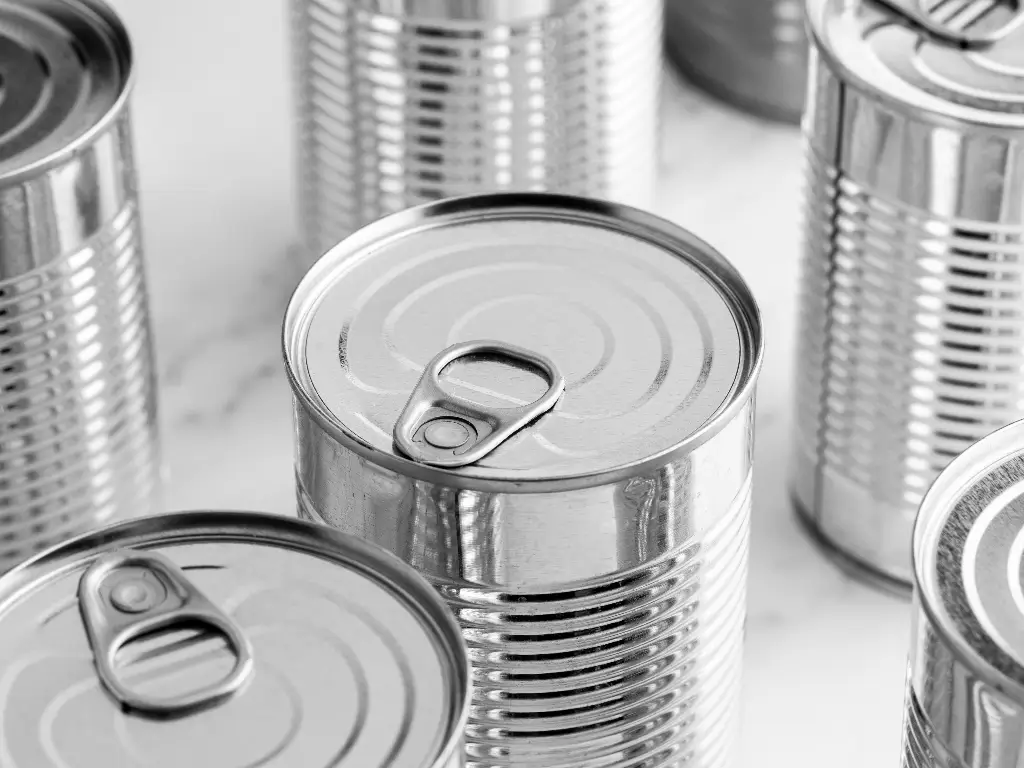
Steel cans, formerly known as tin cans, are mostly low-carbon steel. It is necessary when the food products need high-temperature retorting (soups, tuna, vegetables, meat) or vacuum sealing (milk powders, infant formula, dry nutraceuticals), and the container should be able to retain its shape under vacuum or thermal pressure.
- Vertind blik (ETP): Het is een stalen plaat die bedekt is met een dunne laag tin (meestal wordt de gewenste dikte van de tinlaag bereikt via elektrolyse) om corrosie van het metaal te voorkomen. Het is nog steeds de maatstaf voor metalen conservenblikken vanwege de structurele sterkte.
- Tinvrij staal (ECCS): It is an electrolytic chromium coated variant. It is a great adhesive of lacquers and polymers but does not have the aesthetic brightness of tin.
Raadpleeg de onderstaande vergelijking om het verschil in techniek te visualiseren:
| Functie | Aluminiumlegering (meestal 2-delig) | Vertind staal (meestal 3-delig) |
|---|---|---|
| Materiaalsamenstelling | Aluminium-mangaan (3004/5182) | Koolstofarm staal met tincoating (ETP) |
| Mechanisch eigendom | High Ductility (Soft & Malleable) | High Stiffness & Hardness (Rigid) |
| Interne omgeving | Positieve druk vereist (carbonatatie/N2) | Handles Vacuum & High Heat (Retort) |
| Het naaien Kenmerk | Easy to fold, risk of “Sharp Seams” | Hoge "terugvering", risico op "valse naden". |
| Uitdaging voor machines | Buiging door axiale belasting (precisie vereist) | Gereedschapsslijtage (geharde onderdelen nodig) |
Als we het hebben over waar blikjes van gemaakt zijn, moeten we ook kijken naar de binnenkant van de metalen conservenblikken. Om corrosie van het blik of interactie met het voedsel te voorkomen, wordt vaak een harde laag hars of een polymeercoating aangebracht. Dit fungeert als een effectieve barrière die ervoor zorgt dat de buitenkant van het metalen conservenblik ongerept blijft terwijl de binnenkant zuur en droog zout weerstaat.
De chemische samenstelling is interessant, maar ondergeschikt aan de operationele realiteit. Het productieproces is afhankelijk van deze mechanische eigenschappen. De factoren die het verschil maken tussen een productielijn die 99% efficiënt werkt en een productielijn die 5% uitval heeft, zijn de vloeigrens, de vervormbaarheid en de rekhardingscoëfficiënt van het metaal. De dynamica van de machine wordt bepaald door de grondstoffen.
Stijfheid van het materiaal: Invloed op opvul- en naaddynamica
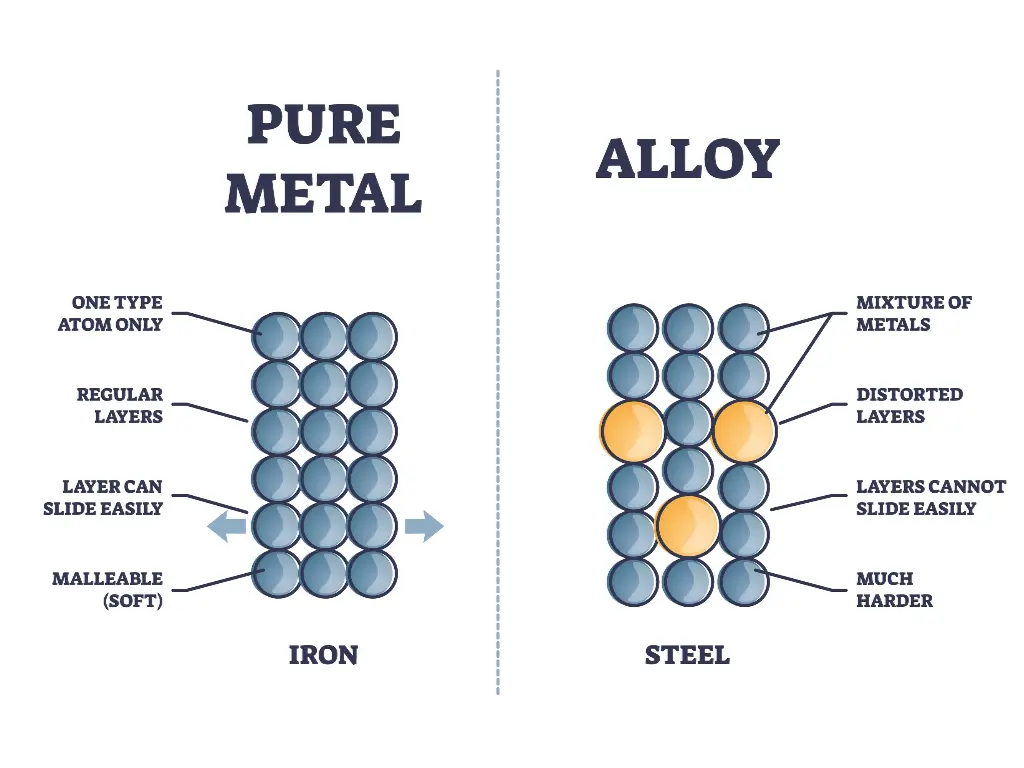
Siffness is the most important operational difference between metal cans made of aluminum versus steel. This variance demands radically different methods of handling, filling and sealing. A machine that is adjusted to the rigidity of steel will squash aluminum; a machine adjusted to the compliance of aluminum will not seal steel.
Uitdagingen voor aluminium: Lage stijfheid en axiale buigbelasting
Het aluminium drankblikje in de moderne wereld is een technisch wonder van lichtgewicht. Fabrikanten hebben de wanden van het blikje steeds dunner gemaakt, meestal tot ongeveer 90 micron (ongeveer de dikte van een mensenhaar) om de materiaalkosten en het gewicht van de zending te minimaliseren. Hoewel dit kosteneffectief is, brengt het een grote structurele zwakte met zich mee.
Voordat ze onder druk worden gezet, hebben aluminium blikjes, vooral 2-delige drankblikjes, een lage kolomsterkte. Het blik moet de verticale druk tijdens het vul- en naaiproces kunnen weerstaan, vooral aan de onderkant. Dit wordt axiale belasting of bovenbelasting genoemd.
- Vulling: Het vulventiel daalt en sluit af tegen de rand van het blik om een vacuüm te creëren of tegendruk te regelen.
- Naaien: De naaimachinehefplaat duwt het bliklichaam tegen de klauwplaat om het deksel vast te zetten.
Wanneer de kracht van de vulklep naar beneden of de kracht van de sluitplaat naar boven groter is dan de rekgrens van het aluminium, zullen de zijwanden bezwijken. Dit staat bekend als knikken. Een knik leidt niet alleen tot productverlies, maar heeft ook de neiging om de revolver vast te zetten, waardoor de machine handmatig opnieuw moet worden ingesteld.
Om dit te verhelpen is nauwkeurigheidscontrole nodig. Conventionele nokkengestuurde lifters hebben de neiging om lineaire en niet-vasthoudende kracht te gebruiken. Bij een kleine verandering in de hoogte van het blikje piekt de mechanische kracht en verbrijzelt het blikje.
Uitdagingen voor staal: Hoge hardheid en terugveringseffect
The reverse engineering problem is steel. It is inflexible, tough and uncompromising. Although you will hardly squash metal food cans when filling it, the material resists when forming.
De elasticiteitsmodulus van staal is hoog. Wanneer de felsrollen de stalen flens buigen om een afdichting te vormen, zal het metaal de neiging hebben om terug te veren naar zijn oorspronkelijke vorm. Dit effect wordt terugvering genoemd.
- Integriteit afdichting: To defeat springback and provide a hermetic seal, the seaming machine needs to exert much greater force than is needed with aluminum. Without rigidity in the machine, the force that is supposed to bend the metal will bend the arms or shafts of the machine. This diversion causes a False Seal a seal that appears right on the eye but does not have the required compression to keep out bacteria. This is critical for food cans containing acidic foods, where leakage could spoil the freshness of the food product.
- Standtijd: Hardness of steel is a machine component abrasive. Seaming rollers and chucks wear much more quickly when handling steel than when handling aluminum. The seaming profile is changed by worn tooling resulting in loose seams and possible leakage.
Het werk met staal vereist brute kracht en nauwkeurigheid. De apparatuur moet bestand zijn tegen cyclische vermoeidheid en processen met hoge belasting. Dit wordt door hoogwaardige apparatuur op twee manieren aangepakt:
- Structurele stijfheid: Het frame en de kop van de machine moeten gemaakt zijn van zware materialen. Het frame kan bijvoorbeeld worden gemaakt van 1,5 tot 2 mm dik 304 of 316 roestvrij staal om ervoor te zorgen dat de machine niet buigt onder de zware belasting van het naaien van staal.
- Geharde gereedschappen: Om slijtage tegen te gaan, moeten de dichtdrukrollen gemaakt zijn van hoogwaardig gereedschapsstaal met speciale warmtebehandelingen of keramische afwerkingen. Deze onderdelen moeten nauwkeurig worden bewerkt, meestal tot op 2um (micrometer) om het profiel van de rol op de juiste plaats van druk te voorzien om de nodige kracht te leveren om het staal naar zijn vloeipunt te duwen zonder de coating te beschadigen. Dit is de enige manier om op een consistente manier terugvering te voorkomen, door middel van deze combinatie van een stijve structuur en gehard precisiegereedschap.
Dubbele naadvorming: Scherpe naden vs. losse naden
The hermetic seal is the double seam created by interlocking the can body (Body Hook) and the lid (Cover Hook) at the end of the tube. This is where the ends meet. Although the geometry of a double seam is standardized, the route to the same varies radically depending on the ductility of the material.
The Risk of Sharp Seams
Aluminum is very ductile; it is easily flowing under pressure.
- Het fenomeen: Aluminum is soft and therefore, it is easy to over-tighten the seam. When the second operation roller exerts excessive pressure, it may flatten the metal to form a sharp edge on the top of the seam.
- Het defect: This is referred to as a Sharp Seam or even a Cut-over. The sharp edge may crack the metal or peel off the protective lacquer exposing the metal to oxidation. The aluminum seaming curve should be accurate but smooth.
The Risk of Loose Seams
Staal verzet zich tegen stroming. Het vereist overtuigingskracht.
- Het fenomeen: Als de eerste bedieningsrol niet genoeg kracht uitoefent, zal de lichaamshaak niet voldoende onder de dekhaak vallen.
- Het defect: This causes a Loose Seam or Low Overlap. At the visual examination, the seam might appear thick and rounded, but inside, the hooks are not hooked. The steel seaming curve needs a high pressure first pass to press the rigid metal into the proper geometry.
Dit verschil is de reden waarom een universele naadverbinding nauwelijks effectief kan zijn. De rolprofielen en de nokaanvalshoeken moeten worden afgestemd op de vervormingsbereidheid van het materiaal.
De productierealiteit: Overschakelen van staal naar aluminium
The competitive advantage in the present market is versatility. SMEs and co-packers frequently have to alternate between steel cans (e.g., pet food or powder) and aluminum cans (e.g., beverages or nitrogen-flushed snacks). Some are even exploring hybrid containers or hybrid containers of aluminum composites. Nevertheless, this switch should not be treated as a mere change of mould, which is a formula of failure in operation.
Kritische aanpassingen: Naadafstand en revolversnelheid
Omschakelen tussen staal en aluminium betekent dat de machine opnieuw gekalibreerd moet worden wat betreft de fysieke instellingen.
De opruimfactor
The Pin Height (the distance between the base plate and the chuck) and the Seaming Clearance (the distance between the roller and the chuck) are important. Aluminum is thinner. When you use aluminum cans with settings that are set to compress thicker tinplate, the rollers will not compress the metal enough to make it leak. On the other hand, operating steel on aluminum environments will clog the machine and break the bearings.
De fysica van massa
Een andere belangrijke productievariabele is het gewichtsverschil. Een stalen blikje is zwaar; het staat stevig op de transportband en de hefplaat. Een blikje aluminium is een vedergewicht als het leeg is.
- Omvallen: Wanneer de machine op hoge snelheid draait, kunnen de centrifugale kracht en luchtweerstand van de draaiende machine er gemakkelijk voor zorgen dat een leeg aluminium blikje instabiel wordt.
- Stabiele overdracht: The transfer star-wheels should be in perfect synchronization. Any slap of the guide rail which a steel can would absorb would shoot an aluminum can flying. The turret speed usually requires modulation when changing to aluminum, and the acceleration ramp-up should be less jagged to be more stable.
De oplossing: Geautomatiseerde recepten voor snelle omschakeling
De handmatige afstelmethode, waarbij voelermaten en moersleutels worden gebruikt om de spelingen af te stellen, is langzaam en onderhevig aan menselijke fouten. Het veroorzaakt langdurige stilstand die ten koste gaat van de winstgevendheid.
De huidige productie vereist intelligente servo-integratie. In plaats van mechanische aanpassingen worden de geavanceerde metalen verpakkingslijnen aangestuurd door PLC-gebaseerde systemen om deze variabelen te regelen.
- Digitaal receptenbeheer: Operators kunnen bepaalde koppelinstellingen, snelheidsprofielen en servo-hefhoogtes opslaan in de HMI (Human-Machine Interface). Bij het wijzigen van het recept van "3004 Aluminium" in vertind staal, kiest de operator het recept.
- Servoprecisie: The servo motors will automatically regulate the lifting speed and pressure to the profile stored. Although physical tooling (chucks and rollers) might still require replacement, the manual process of calibration of forces and speeds is computerized. This guarantees that the first off the line following a changeover is as good as the last and the startup scrap and changeover time is greatly minimized.
Conclusie: Machines afstemmen op materiaalwetenschap
A complex engineering decision tree begins with the question what are cans made of. Aluminum is lightweight efficient and requires delicate handling and accurate axial load control. Steel is structurally rigid and requires strong machinery that can withstand high wear and resist strong forces of springback. Whether you are dealing with a different material or a variety of shapes, the best ways to understand the principle remains the same.
Effective production is not achieved by making a machine work with a material but by choosing equipment that is sensitive to the special mechanical characteristics of the material.
At Levapack, we believe that exceptional packaging machinery starts with a profound understanding of the package itself. We don’t just assemble components; we engineer solutions that respect the distinct physical behaviors of aluminum and steel. This material-first philosophy is why we insist on using heavy-gauge 304/316 stainless steel for our frames—not just for durability, but to provide the absolute rigidity required to seam steel without deflection. It is why we machine our components to 2μm precision and integrate intelligent HMI and servo systems—because handling lightweight aluminum demands a delicate, programmable touch. With over 18 years of experience, we translate material science into mechanical reliability, ensuring your equipment is not just a tool, but a perfectly matched partner to your packaging needs.
Are you struggling with high scrap rates or complex changeovers? Don’t let material properties dictate your efficiency. We can help you analyze canning foods processes to a greater degree.
Contact our engineering team to assess which machine configuration will maximize your line’s performance.


 EN
EN  RU
RU  ES
ES  FR
FR  DE
DE  NL
NL  IT
IT  JA
JA  ID
ID  PT
PT  KO
KO