
Gids voor standaard blikmaten: Afmetingen, volumes en industriecodes
Standaardisatie is de onzichtbare infrastructuur die wereldwijde handel in de verpakkingsindustrie mogelijk maakt. Voor fabrikanten, merkeigenaren en inkoopmanagers gaat het bij de kennis van een standaard blikformaat niet alleen om de volumecapaciteit. Het gaat om compatibiliteit met afvullijnen, maximaliseren van palletdichtheid en efficiënt gebruik van opslagruimte op een economische manier.
A difference of a few millimeters in a can size specification may cause a lot of production downtime, seaming errors, or labeling errors. This manual offers a helpful breakdown of the different can size numbers, the rationale of identification codes and the actual use in food, beverage and industrial sectors.
Voordat we in de technische details duiken, volgt hier een overzicht van de meest voorkomende blikformaten die vandaag de dag wereldwijd worden gebruikt.
| Gebruikelijke naam | Industriecode | Afmetingen (Imperiaal) | Approx. Capacity | Typische toepassing |
|---|---|---|---|---|
| #300 Kan | 300 x 407 | 3″ x 4-7/16″ | 14-15 oz | Groenten, Bonen, Soepen |
| #2 Kan | 307 x 409 | 3-7/16″ x 4-9/16″ | 20 oz | Fruit, sappen, kant-en-klaarmaaltijden |
| #1 Picknick | 211 x 400 | 2-11/16″ x 4″ | 10-11 oz | Gecondenseerde Soepen, Pasta's |
| #10 Kan | 603 x 700 | 6-3/16″ x 7″ | 3L | Restaurant/Bulklevering |
| #3 Cilinder | 404 x 700 | 4-4/16″ x 7″ | 46 oz | Grote vruchtensappen |
| Kan Tonijn | 307 x 113 | 3-7/16″ x 1-13/16″ | 6-7 oz | Tonijn, zeevruchtenpasta's |
| Standaard | 211 x 413 | 2-11/16″ x 4-13/16″ | 12 oz (355ml) | Frisdrank, Bier, Sprankelend Water |
| Slank | 202 x 504 | 2-2/16″ x 5-1/4″ | 250 ml | Energiedrankjes |
De standaard maatcodes voor blikjes begrijpen (Imperial vs. Metric)
New arrivals to the canning business are frequently faced with a series of numbers, e.g. 307 x 409, and think that they are in millimeters or some sort of direct reading in inches. This supposition causes serious mistakes in sourcing raw materials and machine calibration. These figures are a standard industry code that is mostly used in North America and areas that adhere to the US Imperial standards, utilizing a conventionalized method.
De code is geen directe maat. Het is een samengestelde waarde die een combinatie is van het aantal hele inches en fractionele inches (specifiek zestienden van een inch). De eerste stap in de communicatie met blikleveranciers en het instellen van naaigereedschap is het begrijpen van deze nomenclatuur.
Het uit drie cijfers bestaande industrie-identificatiesysteem decoderen
The standard nomenclature has a three-digit format of both diameter and height. The initial number is whole inches. The second and third figures indicate the number of sixteenths of an inch.
Voorbeeldanalyse: De 307 x 409 blik
- Diameter (307):
- De "3" geeft 3 inch aan. Het eerste cijfer "0" geeft 7/16 inch aan.
- The “07” indicates 7/16 of an inch.
- Total Diameter: 3-7/16 inches.
- Hoogte (409):
- The “4” indicates 4 inches.
- The “09” indicates 9/16 of an inch.
- Total Height: 4-9/16 inches.
Dit systeem is van toepassing op de meeste metalen voedselblikken. Bij het vertalen naar metrisch naar internationale leveranciers moet dit nauwkeurig worden berekend. Een voorbeeld hiervan is 307 diameter (3-7/16) vertaald naar ongeveer 87 mm, hoewel er tolerantie nodig is bij spankop- en roltoepassingen op een naaimachine.
De diameter en hoogte van blikjes correct meten
Precision is essential in establishing whether a can can fit in changing parts on a production line. One of the errors is the measurement of the wrong reference points on the cylindrical body.
- Diameter meten: The industry standard is that the diameter is measured at the outside of the body and not at the rim. But in the case of double seaming, the critical reference point is usually the size of the top lid (e.g. a 202 end vs. a 206 end). In referring to the three-digit code (e.g., 307), it means the Nominal Body Outside Diameter.
- Hoogte meten: The height of the can varies depending on its state, an empty can is different to that of a completed can.
- Totale hoogte (open/leeg): Dit is de hoogte van het blikje voordat het deksel erop zit. De flens is uitlopend. Dit is een kritische meting van het vulstation om er zeker van te zijn dat de sproeikopspeling goed is.
- Hoogte afgewerkt blik (verzegeld): This is the height of the can after the hermetic seal has been created. Seaming process takes away part of the flange and the bottom end hook,making the final shape slightly shorter.
Standaard Sanitaire Voedselblikken Maten per Markttoepassing
Sanitary food cans are made to resist the thermal treatment needed to sterilize food products (retorting). This ensures food safety and extends shelf life. Although there are thousands of different versions, the market has narrowed down to a standard can size to maximize logistics and consumer recognition. These food can sizes are categorized by their end-user environment.
Conservenblikafmetingen voor fruit, groenten en soepen
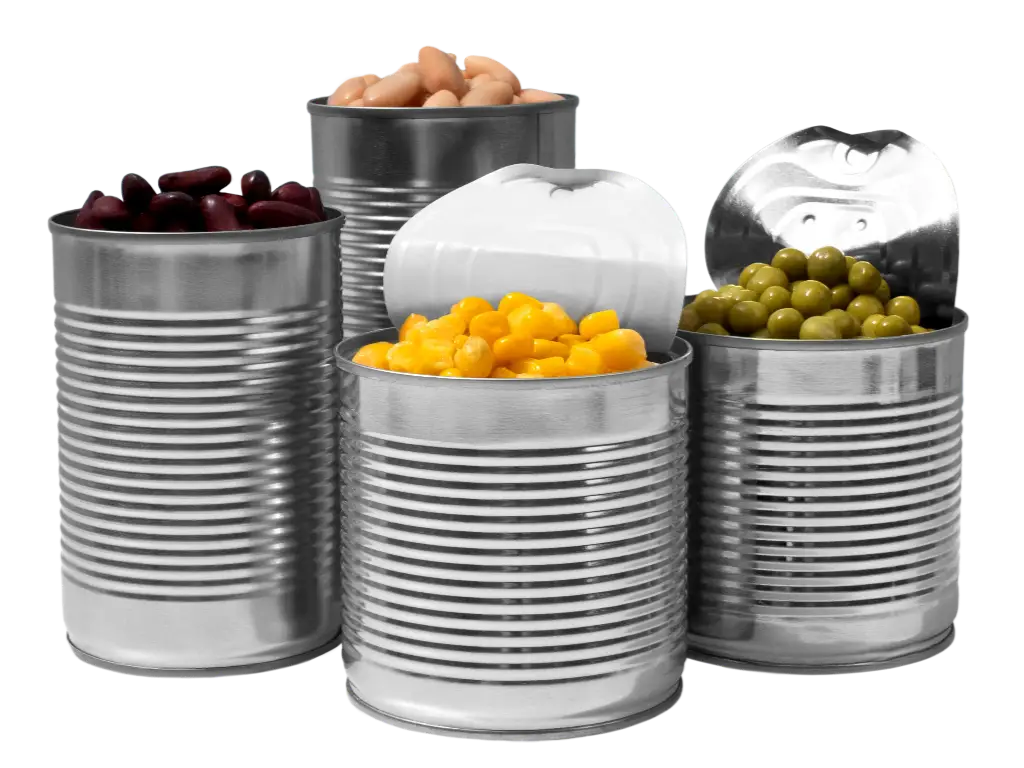
De categorie Detailhandel omvat blikjes die rechtstreeks aan consumenten in supermarkten worden verkocht. Deze formaten maximaliseren de schapruimte en bieden porties die door gezinnen of individuen gedeeld kunnen worden, terwijl de voedselkwaliteit gewaarborgd blijft. Deze afmetingen zijn zeer gestandaardiseerd zodat co-packers verschillende voedingsproducten (bijv. maïs, bonen, soep) op dezelfde lijn kunnen gebruiken met minimale omschakelingen.
Belangrijkste standaardmaten:
- #300 Blik (300 x 407): This is the current standard of most vegetables and beans. It normally carries between 14 to 15 fluid ounces of product. It has mostly substituted smaller sizes with general pantry items because it has an effective height-to-width ratio. It offers excellent protection for fresh produce processed for long-term storage.
- #2 Blik (307 x 409): Dit blik is iets groter dan de #300 en er past ongeveer 20 ons in. Het wordt vaak gebruikt voor grotere porties groenten, ananasschijven en bepaalde kant-en-klare soepen.
- #1 Picknick (211 x 400): A smaller space container holding about 10 to 11 ounces. This is usually observed in condensed soups or concentrated foodstuffs such as acidic foods like tomato paste.
- 8 oz / Buffet (211 x 304): De typische enkele portie groente- of fruitcocktails.
Het nettogewicht is meestal niet gelijk aan het volume in vloeibare ounces. Een blik perziken (dichtheid groter dan 1) zal een groter gewicht hebben dan hetzelfde volume gedroogde kruiden of droge waren.
Institutionele blikformaten voor restaurants en bulkverpakkingen
De foodservice-industrie houdt zich bezig met volume-efficiëntie en het minimaliseren van afval. Deze blikken zijn bedoeld voor gebruik in commerciële keukens, cafetaria's en catering, waar snelheid en consistentie belangrijk zijn. Het idee is om het aantal blikken te verminderen dat een kok moet openen om een dienst voor te bereiden.
Belangrijkste standaardmaten:
- #10 blik (603 x 700): Dit is de standaard B2B voedingsservice. Hij heeft een diameter van 6-3/16 inch en een hoogte van 7 inch, en bevat ongeveer 96 tot 109 ounces (ongeveer 3 liter).
- Logistiek: Deze worden normaal per 6 geladen.
- Machines: Sealing a #10 can require a heavy-duty seamer capable of handling the larger diameter and heavier gross weight without crushing the body.
- #3 Cilinder (404 x 700): Dit staat algemeen bekend als het 46 oz blik. Dit is de standaard voor grote vruchtensappen (appel, tomaat, ananas) in een commerciële omgeving, in een hoog, smaller formaat.
Speciale maten voor diervoeding en kant-en-klare maaltijden
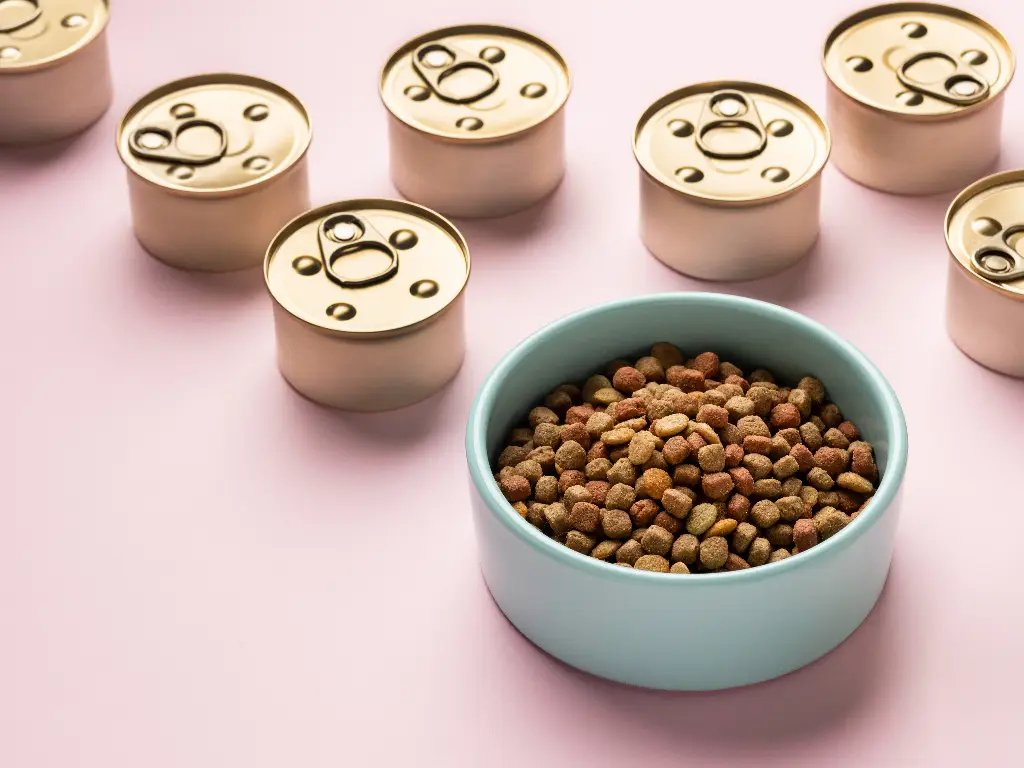
Special squat cans are used in the pet food and ready-to-eat (RTE) industries. The diameter of these cans is larger compared to their height. This geometry has two functions: it is easier to extract the product (wet pet food or luncheon meat), and due to fewer seams, it is easier to achieve rapid heat penetration during the retort process of dense meats.
Belangrijkste standaardmaten:
- 307 x 109 (plat/zittend): This is typically used in single-serve premium cat food or tuna spreads. The height is very low and this necessitates accurate lifter plates in the seaming station to make it stable.
- 300 x 308: Een standaard formaat hondenvoer.
- Rechthoekige of langwerpige blikken (Spam-stijl): Stalen blikjes voor lunchgerechten. Deze vereisen specifieke lastechnieken of trekprocessen om de cilindrische zijwanden tot een rechthoek te vormen.
Afmetingen standaardblik zeevruchten: Tonijn en sardines
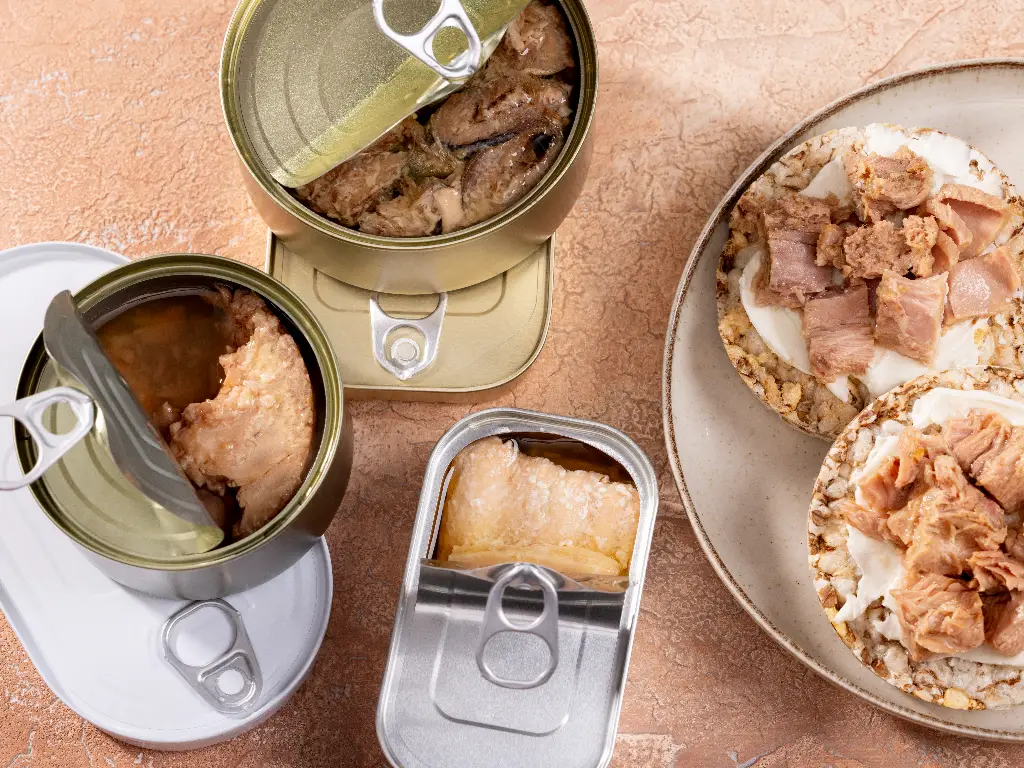
The packaging of seafood is not similar to the usual sanitary metal cans of fruits and vegetables. The product is high-end, costly and in many cases delicate, which predetermines shallow and wide containers. Also, the production of these cans frequently employs a 2-piece Draw-Redraw (DRD) technique as opposed to the conventional 3-piece welded body. This creates a smooth bottom and body, which removes one of the possible leak points.
Unieke geometrie en uitdagingen:
- Het blikje "Tonijn" (307 x 113): Het heeft dezelfde diameter als het #2 blik (307), maar de hoogte is slechts 1-13/16 inch. Deze geringe hoogte zorgt ervoor dat de hitte van het sterilisatieproces het midden van het dikke visvlees in korte tijd bereikt, zonder dat de buitenste lagen overkoken.
- Clubblikken: These are rectangular cans that are commonly used to store sardines or herring fillets. They are not round and therefore they do not use the standard 3-digit diameter code.
- Dingley Blikken: Vergelijkbaar met Club-blikjes, maar meestal taps toelopend of met een iets andere hoogte-breedteverhouding, gebruikt voor eersteklas zeevruchten.
- Ovale blikken: Vaak gebruikt voor sardines of grotere visfilets in tomatensaus.
Special irregular can seamers are needed to handle seafood cans. A typical rotary machine that is used to seal round cans with a diameter of 300 cannot seal a rectangular Dingley can. The seaming rollers have to take a cam-driven route to trace the non-round profile. Moreover, tuna cans are shallow and thus they tend to splash out during high-speed transportation and thus need a smoother transition between conveyors.
Algemene afmetingen en volumes van drankblikjes
The beverage business is governed by another set of standards. Aluminum cans are the most common materials here due to their light weight and the flexibility of aluminum during manufacturing. Beverage cans are made of lightweight aluminum 2-piece bodies, unlike food cans that are made of rigid steel. Structural rigidity is given by the pressure of the carbonated drink.
De markt is overgestapt van één standaard naar een portfolio van maten die bedoeld zijn om productcategorieën aan te duiden (bijv. energiedrankjes vs. traditionele frisdrank).
| Type blik | Volume (Imperiaal) | Volume (metrisch) | Diameter behuizing | Hoogte | Typische toepassing |
|---|---|---|---|---|---|
| Standaard | 12 oz | 355 ml | 211 (66 mm) | 413 (122mm) | Frisdrank, Bier, Seltzer |
| Slank | 12 oz | 355 ml | 204,5 (58 mm) | 602 (156 mm) | Harde Seltzer, Energiedrankjes, Cocktails |
| Slank | 8,4 oz | 250 ml | 202 (53 mm) | 504 (134mm) | Energiedrankjes (zoals Red Bull) |
| Tallboy | 16 oz | 473 ml | 211 (66 mm) | 602 (157mm) | Craft Bier, Cider |
The changeover of the machinery is high, although the amount of a Standard and Sleek can may be the same (12 oz). To change a Standard 211 body to a Sleek 204 body, the star wheels, guides, and seaming chucks must be changed.
Normen voor industriële, verf- en spuitbussen
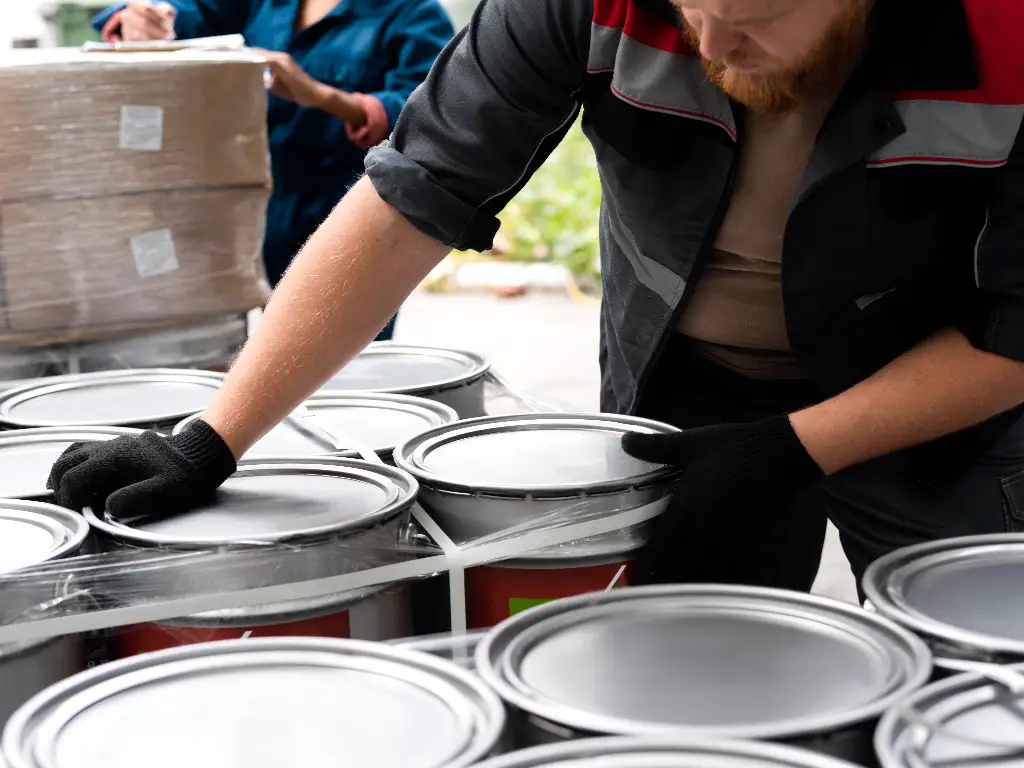
Outside the food and beverage aisles, there is the General Line of packaging which includes chemicals, automotive fluids, paints, and aerosol products. Although such containers might resemble food cans, the engineering requirements are different.
De vulapparatuur van industriële blikken kan vonkvrij of chemisch geschikt zijn, wat heel anders is in vergelijking met sanitaire verpakkingslijnen voor voedingsmiddelen. Machines voor voedingsmiddelen zijn hygiënisch (roestvrij staal, geschikt voor afspoelen), terwijl industriële machines bestand zijn tegen chemicaliën en explosies (ATEX/EX-classificaties).
| Toepassing | Gebruikelijke naam | Capaciteit | Typische afmetingen (dia x h) | Opmerkingen |
|---|---|---|---|---|
| Verf/coatings | Kan | 1 gallon | 610 x 708 | Gebruikt vaak friction-fit deksels (pluggen) in plaats van gefelste uiteinden. |
| Verf/coatings | Kwart blik | 1 Kwart | 404 x 414 | Standaard voor verf of houtbeits voor de detailhandel. |
| Aerosol | Serie 45 mm | Diverse | 45 mm diameter | Ingesneden bovenkant voor klepmontage. |
| Aerosol | 52 mm serie | Diverse | 52 mm diameter | Gebruikelijk voor haarlak, verfspray. |
| Aerosol | Serie 65 mm | Diverse | 65 mm diameter | Industriële sprays voor zwaar gebruik. |
Such containers tend to use alternative closure systems. Whereas food cans have a double seam, paint cans have a triple tight friction ring and aerosols need crimping stations to the valve cup. Thus, a typical food canning machine is not usually applicable to such purposes.
Waarom standaardmaten belangrijk zijn voor labeling en logistiek
To a production manager or an operation specialist, a standard can size is not only about compliance with regulatory codes, but also a plan of operational efficiency.
Omschakelen van machines en gereedschappen
Filling and seaming machines are fine machines. They work with cans by means of change parts, timing screws, star wheels, and guide rails, which are machined to the particular diameter of the can.
- Standaardmaten: Als je een standaard #300 bus gebruikt, zijn reserveonderdelen en gereedschap gemakkelijk verkrijgbaar.
- Aangepaste maten: Als je een niet-standaard diameter kiest (bijvoorbeeld 305), heb je te maken met lange doorlooptijden voor aangepast gereedschap en hogere kosten voor elke formaatverandering.
Efficiënt labelen
Labeling is die cut to a certain size. Normal can sizes are related to normal die-lines of printing houses. One efficient way to label a standard 211 beverage can is to use shrink sleeves or pressure-sensitive labels which are already templated, saving prepress costs and possible design errors.
Palletiseren en opslag
Standard footprints are optimized in supply chains. The design of the #10 can is such that 6 cans can fit into a corrugated case and that the cases can be stacked on a standard 40×48 inch pallet with no overhang. When standard dimensions are not followed, it leads to inefficient pallet use, more air in shipping and a greater likelihood of load instability during transit.
Conclusie
The choice of the right standard can size is a fundamental choice that will influence your whole production line, the filler to the pallet wrapper. Although marketing might require special shapes, the convenience of standard dimensions, such as reliability, speed, and compatibility, can be more beneficial than the innovation of new formats.
Waarom Levapack kiezen voor uw inbliklijn?
We know at Levapack that versatility is the pulse of the contemporary packaging. You can be filling standard 10 institutional cans, or the fragile 300 fruit cans, or the high-value nitrogen-flushed powder containers, our equipment is designed to fit. Our 4000m 2 plant and a team of engineers with more than 15 years of assembly experience provides strong, CNC-precision equipment that is used with solids, powders, granules, and liquids. With 16 months warranty and an international network of services in 100 plus countries, Levapack is the power that helps your business to conquer the complexity of can sizes with confidence and efficiency. Contact us today to customize your solution.
Veelgestelde vragen
Zijn er verschillen in de standaardafmetingen van blikjes voor drank en voedsel?
Ja, ze verschillen fundamenteel in zowel afmeting als constructie. Levensmiddelenblikken zijn meestal gemaakt van staal (3-delig of 2-delig DRD) en zijn ontworpen om de vacuümdruk en hoge temperatuur van het retortsterilisatieproces te weerstaan. Drankblikken bestaan vrijwel volledig uit lichtgewicht aluminium (2-delig) en zijn afhankelijk van de interne druk van de koolzuur om ze bij elkaar te houden. Als gevolg hiervan is een machine die wordt gebruikt voor het naaien van stijve stalen voedselblikken normaal gesproken niet compatibel met de fragiele aluminium drankblikjes zonder grote aanpassingen.
Hoe groot is een standaard blikje?
Since standard is relative to the application, there is no one answer. The most common standard in a consumer grocery setting (soups and vegetables) is the #300 can (3″ diameter x 4-7/16″ height). The standard in a commercial restaurant setting is the #10 can (6-3/16″ diameter x 7″ height). In the case of beverages, the 12 oz can (211 diameter) is the global standard.
Kan ik verschillende blikformaten op dezelfde verpakkingsmachine gebruiken?
Yes, but it needs change parts. The majority of modern seamers, such as the equipment of Levapack, are flexible. To change sizes, you usually have to change certain tooling parts, including the seaming chuck, turntable, and star wheels, which are of the appropriate diameter of the new can. Height adjustment is typically a less complicated procedure that does not necessarily involve new components, whereas a tooling changeover is always necessary when changing the diameter.
Wat betekenen getallen als "307" of "409" eigenlijk?
These are not actual millimeter measurements, but industry codes using the Imperial system. The initial number is the whole inches and the remaining two numbers are the sixteenths of an inch. An example is that 307 diameter is 3 inches and 7/16ths of an inch. This coding is universal in food packaging specifications in North America.


 EN
EN  RU
RU  ES
ES  FR
FR  DE
DE  NL
NL  IT
IT  JA
JA  ID
ID  PT
PT  KO
KO