
Fill accuracy is one of the many fundamentals of master automation for packing and production lines. How liquid, powder, or granules are controlled is critical for the operational level, production efficiency, and profitability of a production facility. Missing specifications regarding filling parameters leads to material cycles dissipating product waste or leaving the manufacturer open to lawsuits. The choice of the right filling machine, monitoring environmental conditions, and the implementation of preventive maintenance must be aligned to ensure the dispensed material matches the target specifications and minimizes product loss.
What is Fill Accuracy and Why Does It Matter?
Fill accuracy is a measure of how close the actual dispensed weight or fill volume of product in a container compares to the target weight specified on the product label. In industrial packaging, this measure is specified in one of two ways. In absolute-varied measure, a target weight of 500 grams is issued with an accuracy of ±2g. In relative percentage, a target volume of 1000 milliliters is issued with an accuracy of ±0.5%.
The high-speed mechanical production systems mean that zero error systems are not possible; small variations are inevitable. Engineering aims to manage the mechanical and material variations that are certain to occur during the filling process, and manage the resultant dispensation variation within a very small compliance and tolerance window to ensure high product quality. Certain risk management measures and quality control checks are both operationally and fiscally necessary, as well as compliance-driven, to maintain brand reputation and customer satisfaction.
The Hidden Cost of Product Giveaway
When a manufacturer of liquid detergent sells their product, it is an overfill to their liquid filling machines that are set to dispense a small amount more than the label states. This overfill is a legally defensible strategy to ensure that not a single bottle falls below the legally declared weight. However, this added volume is given to the customer for free, which translates to an operational loss and inflates overall production costs.
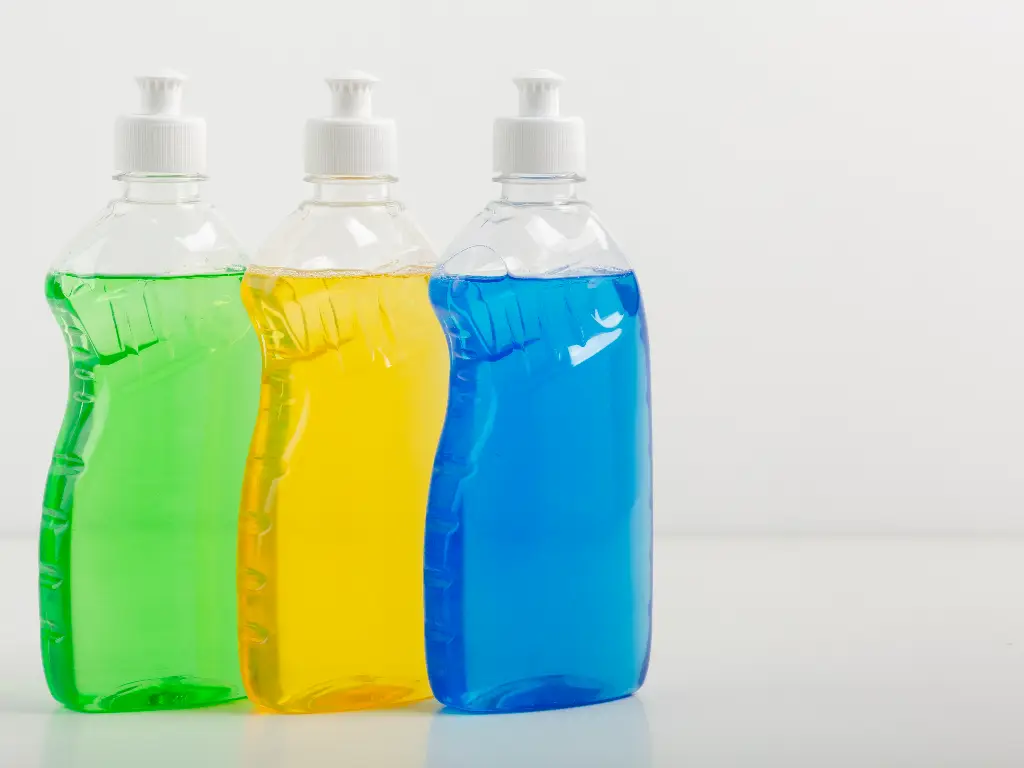
The liquid is overfilled for every bottle to avoid penalties for underfilling which results in a high cost for operationally high-speed production lines attempting to guarantee the correct amount of product. For a liquid detergent line in a chemical processing plant, let’s imagine a case of overfilling every bottle by exactly 3 grams due to poor machine performance.
| Calculation Metric | Formulas & Values | Cumulative Result |
| Hourly Output | 100 bottles/minute × 60 minutes | 6,000 bottles/hour |
| Daily Output | 6,000 bottles/hour × 16 hours (2 shifts) | 96,000 bottles/day |
| Annual Output | 96,000 bottles/day × 250 operating days | 24,000,000 bottles/year |
| Annual Material Waste | 24,000,000 bottles × 3 grams overfill | 72,000,000 grams (72 metric tons) |
| Annual Financial Loss | 72 metric tons × $5,000/ton (Assuming $5/kg) | $360,000 / year |
As demonstrated, a minor inaccuracy does not merely represent a technical flaw; it translates directly to $360,000 in lost net profit every year.
Compliance and Underfilling Risks
Operating at the other end of the variance spectrum, underfilling, brings significant legal and compliance challenges. All regulatory authorities around the world have implemented strict regulatory standards regarding weights and measures to prevent consumers from being tricked by false packaging. In the U.S., these regulations have been established by the National Institute of Standards and Technology (NIST) in Handbook 133. In the European Union, it’s the Measuring Instruments Directive (MID) that serves as the body of law.
The guidelines here are based on Maximum Allowable Variance (MAV). MAV describes the amount of weight legally permitted to be less than the labeled claim before becoming noncompliant. Should batch testing reveal containers less than MAV, or the average weight of the tested batch is less than the declared weight, there is a loss of compliance, and the warrant is immediate. The loss of compliance draws the attention of authorities, as it is accompanied by significant fines, mandatory product recalls, and the seizure of production lines, severely impacting the production process. Underfilled products also circulate to the public, resulting in customer complaints and negative customer feedback that erode the market and the confidence in the brand. Achieving high levels of accuracy is essential for maintaining product integrity.
Key Factors That Impact Your Fill Accuracy
Equipment is not the only thing that can be a cause of inconsistent dispensing and improper fill levels. There are many external and environmental factors that may be at play, and troubleshooting them is key to optimizing the production setting and ensuring product consistency.
Product Characteristics (Viscosity, Density, Foaming)
The flow behavior of packaged materials is influenced by pack material characteristics such as viscosity and density and the potential for foaming. Viscosity is the extent to which a liquid resists flow, and it is responsive to changes in temperature. For example, a manufacturing plant may be cooler in the a.m. shift, causing the liquid to be thicker. As the day progresses, increased ambient temperature will result in a thinner liquid, changing the flow rate. In the case of volumetric technology, the liquid will fill a certain volume, but the weight will change as density changes.
Products that contain solids or particulates introduce unique mechanical issues. For example, fruit juice or pulp and seed sauce will require liquid path construction design. Standard valves will clog or bind with particulates, and as a result, the valve will never close completely causing the machine to dispense liquid in varying amounts, leading to inconsistent fills.
Foamed products increase in volume drastically and present unique dispensing issues. For example, highly aerated liquids such as shampoo, soap, and industrial liquid detergent will create foamed volumes in the liquid container. These foams create false levels in the liquid container, causing the level sensors to shut off the dispensing process before the correct weight is achieved, or will cause the liquid to overflow the container edges.

Environmental Conditions (Temperature, Humidity)
The building’s construction and layout affect how the different automated systems can be configured and how well they are able to work in conjunction with each other under various environmental conditions. Most filling machines use pneumatics, which means they depend on the factory’s central compressed air supply. The precision of the filling machine’s dispensing valves depends on the air pressure being constant and at a specific level. When other large machines in the factory are running, they may cause a temporary shift in the compressed air supply, which can cause closing delays of the pneumatic filling valves and subsequently cause immediate inaccuracies in the weight of the products being filled, contributing to equipment issues.
The higher the humidity in a space, the more the environment will promote destruction of the dry products being used. Powdered products are especially vulnerable to the environment in that instance. In high humidity conditions, the powders can stick together due to moisture, which can change the powder’s bulk density and affect material flow. In turn, this alters the weight and volume ratio. In this instance, screw mechanisms used to dispense the dry powders will be affected negatively, because a fused mass of powder will be dispensed in a different quantity than the amount of loose powder that is contained in the machine.
Machine Wear and Tear
The wear and tear of equipment is a slow, and often imperceptible, process that is causing a slow introduction of unknown inaccuracies and common errors. In order to maintain the pressurized closed systems of automated equipment, each one will have components that are designed to be consumable, often requiring replacement parts. These may include guide rails, O-rings, rubber seals, and specific gaskets.
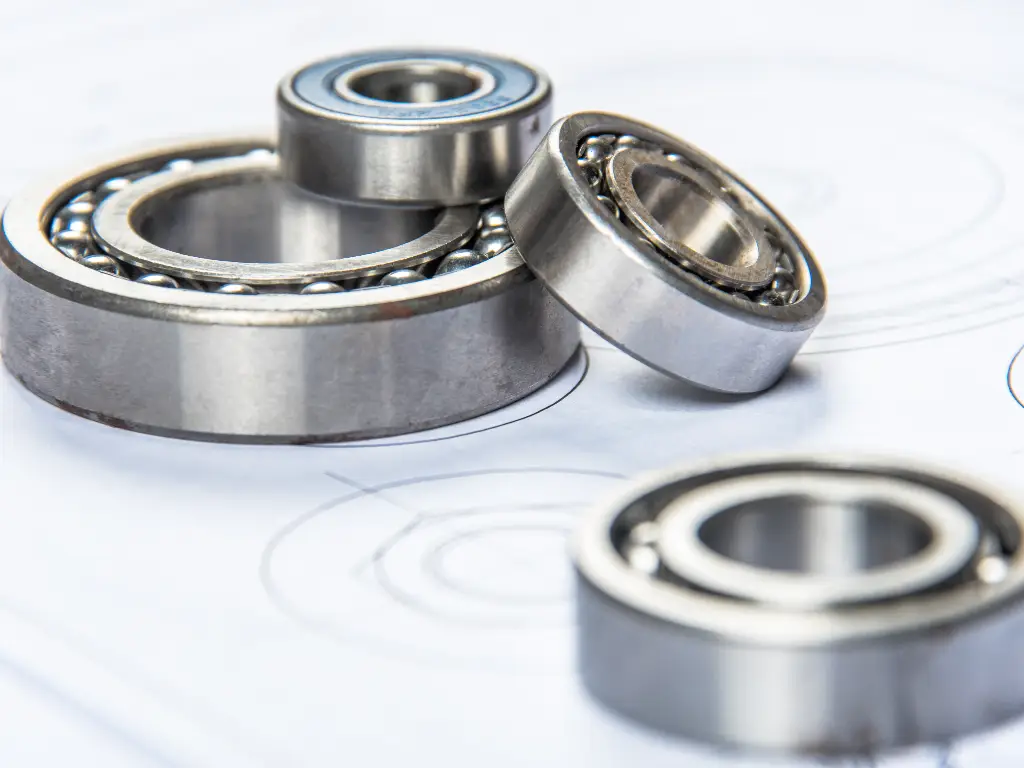
Repeated mechanical cycling will cause soft materials to gradually wear down and deform. An O-ring that is only slightly worn will not result in a catastrophic failure, but it will develop a gap that is small enough to allow air to get sucked into the fluid channel or reduce the vacuum pressure enough to permit fluid to pass in the intervals. This situation will result in decreased suck-back power, which will lead to the pump cylinder not drawing the anticipated volume during the dispensing cycle, drastically affecting filling accuracy.
How to Calculate Fill Accuracy and ROI
The move from mechanical observation to statistical process control within a modern control system is the primary data driver for the justification of new machinery and comprehensive quality control.
Understanding Your Fill Weight Distribution
Manufacturing engineers adopt a normal distribution (bell curve) for evaluating the performance of a manufacturing system. The distribution shape is all that is needed to define the system.
A wide, flat distribution is a sign of imprecision in the machine. The weights that were dispensed are all over the place. We will need to move the average of this entire wide curve to the right, which will result in a massive product giveaway.
Distribution curves that are tall and narrow show that the measuring equipment used is highly accurate, providing real-time insights into machine performance. The weights on the containers are closely grouped together. With the variation so small, the facility can move the entire curve closer to the declared label weight and not worry about underfill fines, eliminating excess waste.
To find the current operational curve (without having to get into complicated software), conduct the following on the factory floor:
- Step 1: Take 50 consecutive filled and sealed containers from the active production line.
- Step 2: Use an industrial scale with a high level of calibration to weigh each unit, subtract the tare weight of the empty container and lid.
- Step 3: Determine the heaviest and the lightest container of the 50 sampled containers. The difference between these two numbers is the value of your true accuracy spread.
When a facility purchases more precise equipment with high filling accuracy, it allows them to get a narrow distribution curve. This means they can set the average target weight to a lower value and still retain the raw material.
Total Cost of Ownership (TCO) vs. Precision
When evaluating machinery, the TCO must be compared to the value of the precision. With the material being processed, there is a point of balance that can be considered optimal for it.
If a company is packaging commodities like purified drinking water, the raw material value is negligible. An error of 1% is acceptable, and so using a high-speed, low-cost volumetric filling machine would be a rational choice. The cost to upgrade to a gravimetric system would far exceed the value of the saved water.
On the other hand, when a facility is processing high-value raw materials, such as cosmetic serum, agrochemical, or pharmaceutical, the raw material cost is the major concern. In this case, it becomes justifiable to acquire a gravimetric system that costs 3 times more than a volumetric system. The high cost of the volumetric system becomes justifiable because the value of the materials saved quickly pays off the investment, sometimes resulting in a complete ROI within a few months, avoiding unnecessary production delays.
Comparing Filling Technologies: Which is Most Accurate?
Achieving an ideal dosing technology involves the right combination of the machine’s engineering principles, the product’s physical characteristics, and the economic objectives of the business.
Volumetric vs. Gravimetric Filling Systems
Volumetric filling systems work by capturing a specific liquid volume in a container as it measures liquid volume in milliliters or fluid ounces. Each container gets sealed in order to trap liquid and push it into the container. One of the main pros is that they have faster speeds of operation and lower costs, reducing overall filling time. One of the main cons is that they are unresponsive to changes in density. If changes occur in the temperature of the containers, the product’s density will change, and the machine will dispense the same volume, but the weight will be incorrect in the container.
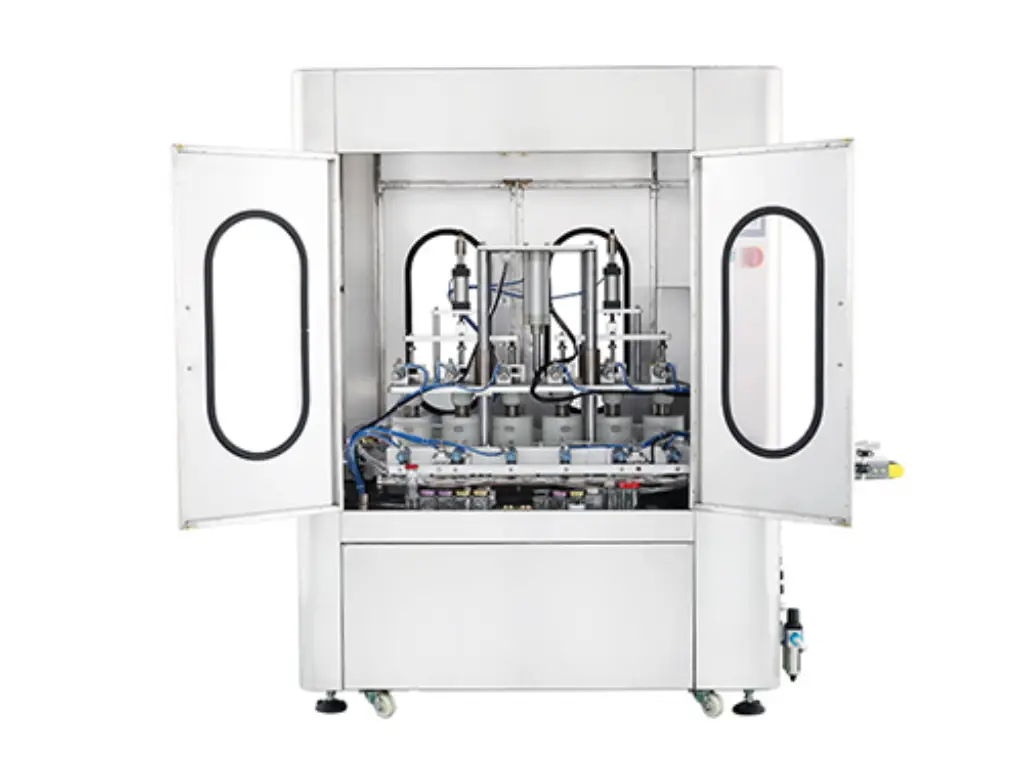
Gravimetric filling systems, also known as net weigh fillers, operate on absolute mass. They dispense products to load cells which are sensitive and measure weight in grams or kilograms. They also measure the weight in real time. Once the flow of material reaches the weight designated, the system will cut it off. The main drawback is that the process takes time. It also means the flow of material will be cut off and will result in slower speeds of operation. These filling systems are also more highly priced than the other systems.
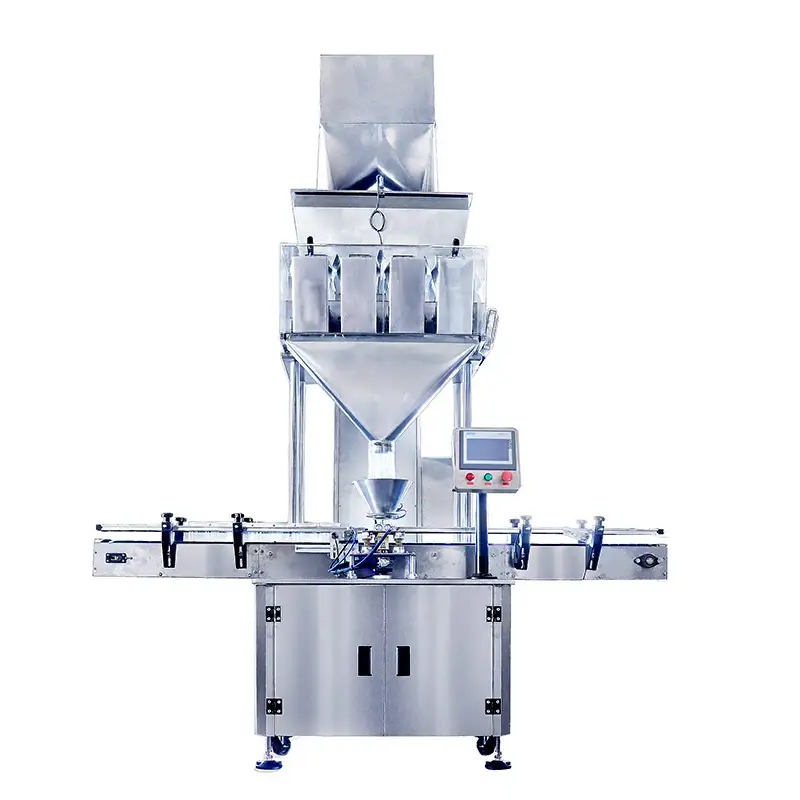
Piston, Auger, and Peristaltic Pump Performance
Supply of different product viscosities and materials requires different pumping systems. Using the wrong pump design will lead to incorrect filling and costly downtimes.
The matrix below categorizes the three main pump technologies, each of their mechanical principles, and the materials they are designed to pump.
| Pump Technology | Operating Mechanism | Ideal Product / Material | Key Accuracy Advantage |
| Kolbenfüller | A retreating cylinder draws product in; a forward stroke pushes it out. The stroke length dictates the volume. | High-viscosity liquids, heavy pastes, chunks (e.g., peanut butter, lotions, wet pet food). | Generates immense mechanical force; highly repeatable stroke ensures thick materials are dispensed consistently. |
| Schneckenfüller | A precision-machined screw rotates vertically inside a hopper. Volume is controlled by the exact number of rotations, driven by precise servo motors controlling the auger speed. | Powders and granular dry goods (e.g., milk powder, protein powder, spices). | Specifically engineered for dry goods; controls flow without crushing delicate particles, ensuring tight density control. |
| Peristaltische Pumpe | Rotating rollers compress a flexible external tube, pushing the fluid forward without contacting mechanical parts. | Pharmaceuticals, high-purity chemicals, thin liquids (e.g., reagents, eye drops). | Fluid only touches the tubing (zero cross-contamination); capable of achieving micro-liter (μL) precision. |
Troubleshooting Common Fill Accuracy Problems
When accuracy parameters leave the established boundaries, it is time for systematic troubleshooting. Guessing will only increase downtime. Operators and maintenance engineers must logically determine if the cause is mechanical, environmental, or related to material flow.
The following information on the most common issues and common errors in filling discrepancies and how to resolve them quickly will help you.
| Phenomenon | Root Cause Analysis | Solution & Optimierung |
| Dispensed weights fluctuate erratically with no predictable pattern. | The product volume inside the supply hopper is constantly rising and falling, which changes the gravitational head pressure pushing down on the valves. | Install automated level control sensors inside the hopper, integrated with the supply pump, to maintain a constant, static product height. |
| Product drips from the nozzle after the dispensing cycle is complete. | The internal seals of the anti-drip nozzle are compromised, or the liquid’s surface tension is incompatible with the nozzle geometry. | 1. Access the PLC control panel and adjust the “suck-back” parameters. 2. Replace standard nozzles with specialized capillary or shut-off designs. |
| Weights are consistent initially but systematically drift higher or lower after hours of production. | Ambient temperature changes or mechanical friction is heating the product, altering the density inside the hopper (a standard limitation of volumetric systems). | 1. Install a jacketed hopper with integrated temperature control to maintain thermal stability. 2. Transition to a gravimetric (weighing) system. |
Best Practices to Maintain Consistent Precision
Standing precision with the help of state-of-the-art techniques over the years is a product of discipline, operational manuals, and a maintenance system.
- Regular Calibration: The calibration of the machine sensors must be done daily. Failure to do so will result in dirty calibration and results. Every facility must have a set of obligatory and traceable weights to assist in the zero and full span calibration of the load cells and systems. Every shift and before product changes, gauges must be set to zero and span calibrated.
- Vorbeugende Maßnahmen Wartung: If a component is allowed to operate until it fails, the cost to the production will be losses that are unacceptable. This means that there must be a balancing act between the maintenance logs and the machine’s cyclic state. In any maintenance cycle involving regular inspections, visually good O-rings, gaskets, and seals are to be replaced, and electrical connections are to be verified. Before a visible leak arises, a worn seal creates tiny gaps that destroy the vacuum, pressure, and volume accuracy.
- Operator Training: During disassembly and cleaning, the potential for human error increases significantly. Operators are required to be trained in the specific mechanical criteria involved in reassembly. Incorrect torquing of pump housings, loose connections, or assembly of components in the wrong sequence, lead to problematic internal friction or air gaps. For reassembly to preserve the machine’s baseline accuracy, there must be extreme compliance with standard operating procedures.
Conclusion: Protecting Your Profit with Precision
The most straightforward and easily managed way for manufacturing facilities to stop hemorrhaging money is to improve fill accuracy. The engineering gap between a wide and controlled, narrow distribution curve is a matter of dollars and cents. The precise dosing technology’s implementation directly impacts the profitability of a packaging line, whether it’s controlling product giveaway losses or compliance fines. Optimizing the dosing technology to the value of the liquid or sensitive powder used, such as with advanced augers, allows facilities to transform their packaging operation from a place of material waste to a highly optimized, efficient operation.
Ready to Eliminate Giveaway? Partner with Levapack
Achieving and maintaining micron-level precision requires specialized engineering. Levapack provides complete, automated packaging lines engineered specifically for Small and Medium-sized Enterprises (SMEs) worldwide. With 18 years of dedicated engineering experience and installations across more than 100 countries, we manufacture high-performance systems designed to eliminate material waste and optimize production stability.
For facilities handling high-value powders, we provide advanced servo-driven Schneckenfüller integrated with specialized vacuum and Stickstoffspülung technologies, maintaining residual oxygen levels below 3%. For operations processing viscous materials, pastes, and wet pet foods, we supply heavy-duty Piston and Rotary Fillers built for exact volumetric consistency and seamless integration with retort sterilization processes.
Levapack designs customized solutions tailored to specific material characteristics and facility constraints. Consult with our engineering specialists and configure a precision packaging system designed to protect production margins and ensure strict output compliance.


 EN
EN  RU
RU  ES
ES  FR
FR  DE
DE  NL
NL  IT
IT  JA
JA  ID
ID  PT
PT  KO
KO