
Nel settore altamente competitivo della produzione alimentare, il confezionamento di una salsa barbecue di alta qualità raramente è semplice come versare un liquido in una bottiglia. Per i direttori di stabilimento, gli ingegneri di produzione e i direttori operativi, la salsa barbecue rappresenta una "tempesta perfetta" di sfide fluidodinamiche. È densa, altamente acida, carica di zuccheri, spesso ricca di particolato in sospensione come aglio tritato o scaglie di cipolla, e in genere richiede un rigoroso trattamento ad alta temperatura per garantire la sicurezza alimentare.
Un errore di calcolo nella scelta delle apparecchiature non si traduce solo in qualche bottiglia disordinata, ma provoca blocchi catastrofici della linea, grave degrado del prodotto, variazioni di peso inaccettabili e periodi di fermo macchina non programmati. Per ottenere un'elevata efficienza complessiva dell'apparecchiatura (OEE) e proteggere i vostri margini di profitto, dovete andare oltre le apparecchiature di confezionamento generiche e investire in macchinari intelligenti e appositamente progettati per i fluidi più difficili.
Questa guida ingegneristica completa decostruisce i vincoli meccanici del confezionamento della salsa BBQ e fornisce indicazioni utili per la scelta delle tecnologie di riempimento, controllo della temperatura e sigillatura necessarie per una produzione continua e ad alto rendimento. Per una prospettiva più ampia sul modo in cui le richieste dei consumatori stanno influenzando le scelte dei contenitori, potete anche esplorare il nostro sito guida definitiva ai tipi di confezioni per salse, alle tendenze e alle soluzioni per i macchinari.
Caratteristiche uniche del prodotto che determinano i vincoli di confezionamento della salsa BBQ
Dal punto di vista ingegneristico e fluidodinamico, la salsa BBQ impone vincoli severi e non negoziabili alla progettazione di una linea di confezionamento. Non ci si può aspettare che un riempitore a gravità o a sfioro standard, progettato per l'acqua o gli alcolici, sia in grado di gestire una sospensione altamente viscosa e ricca di particolato. Per progettare una linea che funzioni perfettamente turno dopo turno, dobbiamo innanzitutto comprendere le proprietà fisiche fondamentali del prodotto stesso.
La FDA e altre autorità mondiali per la sicurezza alimentare impongono che gli alimenti ad alta acidità (tipicamente definiti come aventi un pH pari o inferiore a 4,6) debbano essere sottoposti a uno specifico trattamento termico, più comunemente il processo di riempimento a caldo. Ciò significa che la salsa verrà pompata nel sistema a temperature comprese tra 185°F e 195°F (85°C-90°C).
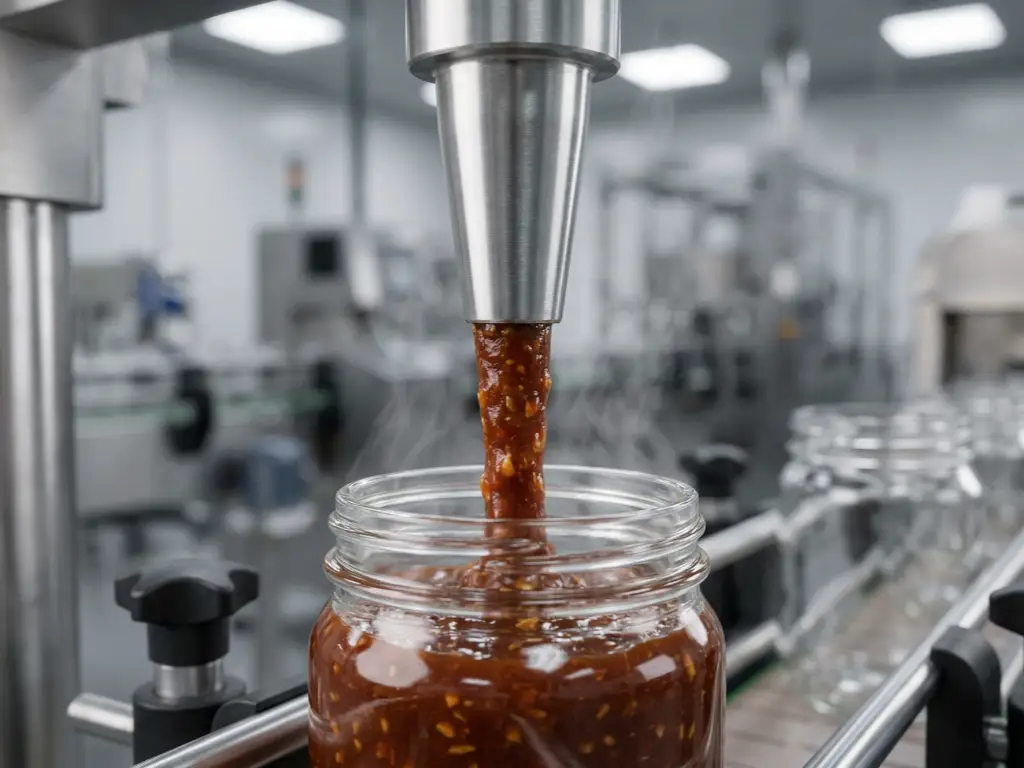
Poiché l'ambiente è altamente acido (a causa dell'aceto e del concentrato di pomodoro) e opera a temperature elevate, l'acciaio inossidabile standard 304 non è sufficiente. L'esposizione costante a cloruri e acidi caldi causerà nel tempo vaiolatura e corrosione. Pertanto, ogni singola superficie di contatto con il prodotto sulla vostra confezionatrice deve essere realizzata in acciaio inox di grado marino. Acciaio inox 316L per assicurare la conformità agli standard sanitari e garantire la durata nel tempo.
La logica è senza compromessi: la movimentazione di questo tipo di prodotto richiede una forza di pompaggio estrema, ma l'interruzione del flusso richiede una precisione assoluta per evitare sgocciolamenti e guasti alle guarnizioni. Ecco come le caratteristiche del fluido determinano direttamente i requisiti meccanici:
| Caratteristica del fluido | La sfida dell'imballaggio | Caratteristica della macchina richiesta |
|---|---|---|
| Alta viscosità (1.000 - 15.000 cps) | Il prodotto resiste al flusso, provoca un'estrema contropressione e si blocca sugli ugelli causando una formazione disordinata di corde e gocciolamenti. | Meccanismi di spostamento positivo (pompe a pistone/circonferenziali) e ugelli antigoccia a chiusura positiva. |
| Particelle in sospensione (Aglio, Cipolla, Semi di pepe) | Le valvole standard vengono bloccate da pezzi solidi, distruggendo la precisione volumetrica e causando continue perdite. | Valvole rotanti a grande cavità che tagliano attivamente i solidi anziché affidarsi alla pressione della molla. |
| Alta acidità e alto contenuto di zucchero | Corrosione delle parti metalliche; gli zuccheri agiscono come forti adesivi quando si raffreddano, bloccando i componenti in movimento. | Parti di contatto in acciaio inox 316L; robusti sistemi Clean-In-Place (CIP) con saldature sanitarie autodrenanti. |
Selezione della tecnologia di riempimento ottimale per i liquidi viscosi e pastosi
Questa è la zona tecnica più profonda della vostra linea di produzione. Quando si ha a che fare con la salsa BBQ, il tentativo di utilizzare un riempimento a gravità o un riempimento a sfioro porta a un fallimento immediato. La viscosità è semplicemente troppo elevata perché la gravità possa mantenere la velocità di produzione e il particolato intaserà immediatamente le linee di ritorno del troppo pieno. È necessario utilizzare la tecnologia a spostamento positivo. Quando si valuta un macchina per il riempimento di liquidi viscosiIn sostanza, avete a disposizione due scelte principali, adattate alla consistenza specifica della vostra ricetta. Tralasceremo le categorie irrilevanti e ci concentreremo esclusivamente su ciò che funziona, aiutandovi a fare un'esclusione accurata e basata sui dati.
Riempitrici a pistone con valvole rotanti per il trattamento del particolato standard
Per la stragrande maggioranza delle salse BBQ commerciali, la riempitrice a pistone dotata di valvola rotante è il campione indiscusso della produzione. Un riempitore a pistone funziona in base a un semplice principio volumetrico: un cilindro viene tirato indietro, estraendo un volume preciso di salsa dalla tramoggia nella camera, e poi lo spinge fuori nel contenitore. Poiché il volume del cilindro è fisso e controllato meccanicamente, l'accuratezza del dosaggio è eccezionalmente elevata, in genere entro +/- 0,5% del volume desiderato.
Tuttavia, il componente critico in assoluto è la Valvola rotanteche devono essere abbinati a ugelli antigoccia attivi. Molti riempitori a pistone economici utilizzano semplici valvole di ritegno a molla (valvole a sfera unidirezionali). Se un pezzo di aglio tritato o un seme di pepe schiacciato si incastra tra la sfera e la sede di una valvola di non ritorno, la tenuta si rompe. Il sugo ad alta pressione passerà oltre la valvola, causando bottiglie sottopeso e un disastroso pasticcio appiccicoso sul nastro trasportatore.
Una valvola rotante elimina questa vulnerabilità. Invece di affidarsi alla pressione del fluido e alle molle, una valvola rotativa è un nucleo azionato meccanicamente che ruota fisicamente per aprire e chiudere il percorso tra la tramoggia, il pistone e l'ugello. Pensate alla sua azione come a un paio di forbici industriali: quando ruota per chiudere il percorso, taglia in modo netto qualsiasi particella in sospensione. Non importa se c'è un pezzo di cipolla in mezzo: lo taglia e lo sigilla perfettamente ogni volta, assicurando una consistenza volumetrica assoluta e un taglio netto.
Pompe a pistoni circonferenziali per texture artigianali e a grana grossa
E se la proposta di vendita unica del vostro marchio fosse una consistenza altamente artigianale e rustica, con pezzi grandi e intatti di cipolle arrostite, semi interi o grandi pezzi di frutta? In questo caso, l'azione di taglio di una valvola rotativa standard potrebbe degradare l'aspetto del prodotto. Inoltre, le pompe a lobi rotanti standard, spesso vendute come upgrade premium, sono in realtà dannose in questo caso. Poiché le pompe a lobi rotanti hanno distanze incredibilmente ridotte tra i lobi e l'alloggiamento della pompa, esse schiacciano, frantumano e polverizzano i particolati duri, trasformando la vostra salsa a pezzetti in una purea omogeneizzata.
La soluzione ingegneristica per il trasporto a danno zero è la Pompa a pistoni circonferenziale (come l'architettura della pompa Waukesha, standard del settore) o un sistema personalizzato a pistoni di grande diametro. Queste pompe specializzate presentano cavità interne eccezionalmente grandi e funzionano a velocità di taglio molto basse. Il prodotto viene prelevato e trasportato attraverso l'alloggiamento della pompa in ampie tasche, anziché essere compresso tra ingranaggi stretti.
Per semplificare il processo decisionale, consultate la matrice tecnica riportata di seguito:
| Tecnologia | Ideale per | Metodo di manipolazione del particolato | Taglio relativo e degradazione del prodotto |
|---|---|---|---|
| Riempimento a pistone con valvola rotante | Salse da lisce a mediamente corpose, produzione standard al dettaglio. | Taglia le particelle per garantire una chiusura ermetica e precisa. | Taglio moderato. Può tagliare pezzi più grandi, ma è molto preciso. |
| Pompa a pistoni circonferenziale | Salse artigianali di prima qualità con pezzi grandi e fragili. | Trasporta le particelle in grandi cavità senza schiacciarle. | Taglio estremamente basso. Conserva l'esatta consistenza del lotto. |
Gestione della temperatura all'interno del collettore di riempimento a caldo
Uno dei punti ciechi più frequentemente trascurati nell'approvvigionamento delle linee di confezionamento è la gestione della temperatura. all'interno la macchina. Gli acquirenti sono ossessionati dal fatto che le bottiglie di vetro o PET scelte possano resistere al calore di 190°F senza deformarsi o frantumarsi, ma trascurano completamente il modo in cui l'apparecchiatura di riempimento stessa mantiene quel profilo di temperatura critico.
Considerate la realtà di una fabbrica affollata: I colli di bottiglia a valle sono inevitabili. Un'etichettatrice finisce il nastro, una tappatrice si inceppa o un operatore deve eliminare una bottiglia caduta. La macchina di riempimento si ferma per 15 minuti. Durante questa pausa, la salsa barbecue piccante che si trova inattiva nella tramoggia in acciaio inox e nei collettori interni inizia a perdere rapidamente calore ambientale.
Quando la temperatura scende al di sotto della soglia critica di 185°F (85°C), accadono due cose disastrose. In primo luogo, si perde la fase di abbattimento microbiologico, il che significa che qualsiasi salsa riempita a una temperatura inferiore viola i protocolli di sicurezza della FDA e deve essere scartata. In secondo luogo, poiché la salsa BBQ è ricca di zuccheri e pectina, il raffreddamento provoca un aumento esponenziale della viscosità. La salsa si trasforma essenzialmente in una pesante pasta adesiva. Quando la linea si riavvia, la salsa fredda e collosa provoca enormi picchi di pressione, stressando i motori delle pompe e distruggendo le guarnizioni.
Per eliminare questo rischio, i macchinari di livello professionale devono essere dotati di Tramogge rivestite e Loop di ricircolo. Una tramoggia a doppia parete fa circolare acqua calda o vapore per mantenere il prodotto di riserva a una temperatura esatta, controllata termostaticamente. Un circuito di ricircolo fa un ulteriore passo avanti: quando la macchina rileva una pausa della linea, devia automaticamente la salsa dagli ugelli di riempimento e la riversa continuamente nel bollitore principale. In questo modo si mantiene il fluido dinamico, si evitano picchi di viscosità e si assicurano temperature di pastorizzazione perfette.
Meccanismi di chiusura e sigillatura per l'integrità del prodotto
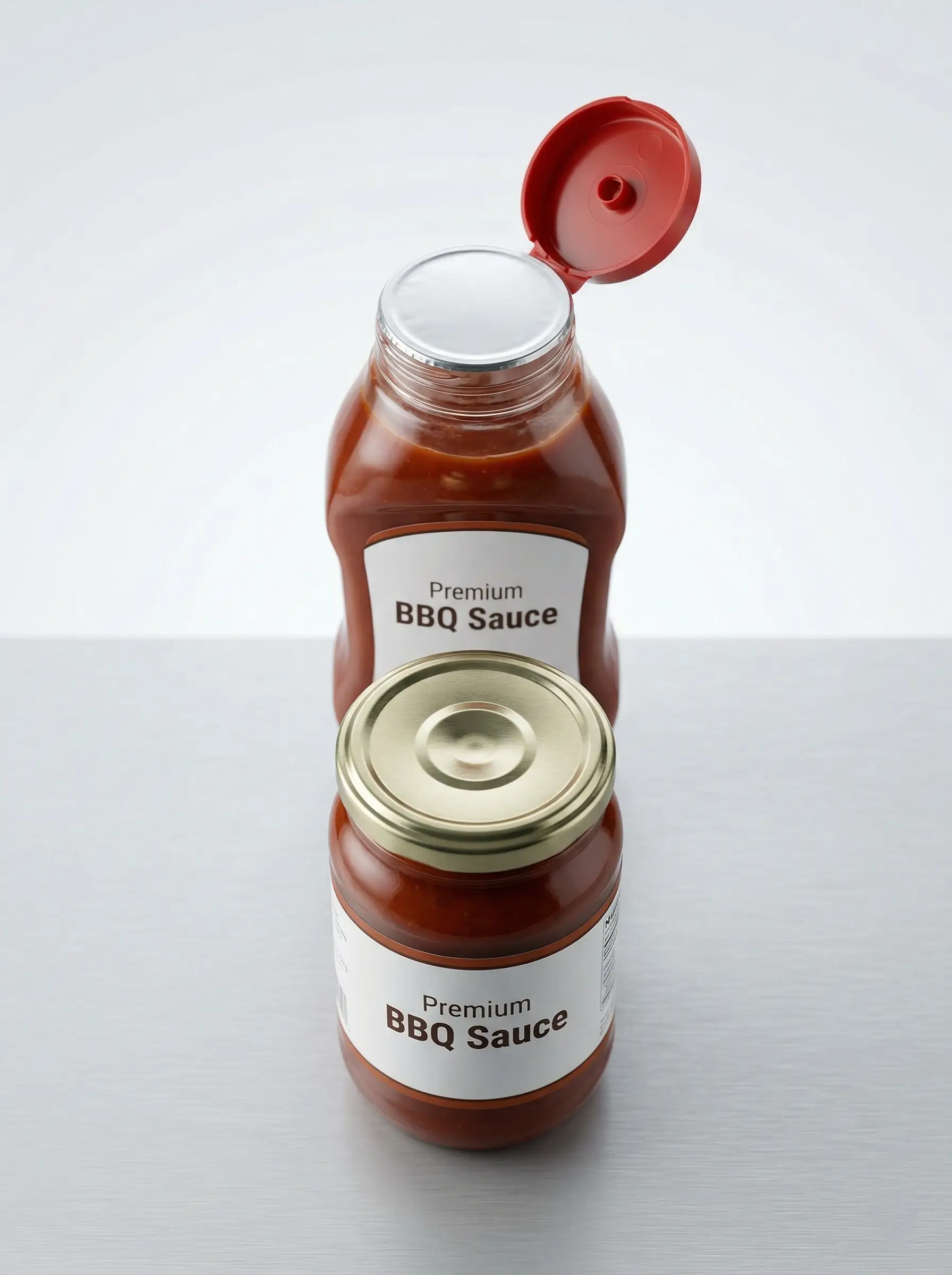
Una volta che la salsa è stata accuratamente depositata nel contenitore, la fase di sigillatura si assume la totale responsabilità della durata del prodotto, della sicurezza e della percezione del marchio. Per le applicazioni di riempimento a caldo, la sigillatura non consiste semplicemente nell'impedire la fuoriuscita del liquido, ma nel gestire l'intenso vuoto fisico che si genera quando la salsa piccante si raffredda e si contrae all'interno del contenitore chiuso.
Massimizzazione dell'OEE grazie a design sanitario e cambi rapidi
In definitiva, una macchina per il confezionamento è un bene finanziario e il suo valore si misura in base all'efficienza complessiva dell'apparecchiatura (OEE). Per i direttori di stabilimento e i CFO, l'ansia non deriva da come funziona la macchina quando è in funzione, ma piuttosto da quanto tempo perde quando non lo è. Nel settore delle salse BBQ, dove i confezionatori e i marchi a contratto passano frequentemente da un profilo di sapore all'altro (da una blanda salsa BBQ al miele a un'infuocata salsa al pepe fantasma habanero), i tempi di cambio e pulizia sono i killer silenziosi della redditività.
La salsa BBQ è fortemente pigmentata (concentrato di pomodoro, melassa) e altamente concentrata in zuccheri. Le apparecchiature tradizionali richiedono che gli operatori passino ore a usare chiavi e attrezzi per smontare manualmente le pompe, rimuovere i pesanti pistoni in acciaio inox e immergere i componenti in bagni chimici per evitare la contaminazione incrociata degli aromi. Questo processo manuale introduce l'errore umano, danneggia i costosi O-ring e comporta la perdita di migliaia di dollari di tempo di produzione alla settimana.
Per massimizzare l'OEE, la vostra infrastruttura deve essere caratterizzata da un design sanitario aggressivo. Ciò significa eliminare tutte le "gambe morte", ossia le sacche nelle tubazioni in cui il fluido stagnante può nascondersi dai prodotti chimici di pulizia. Il sistema deve essere dotato di saldature TIG sanitarie autodrenanti e senza giunture che non offrano alcun rifugio alla crescita batterica. Soprattutto, l'apparecchiatura deve essere costruita su un'architettura CIP (Clean-In-Place) automatizzata. Un vero sistema CIP consente all'operatore di collegare i tubi di ritorno e di avviare un flusso turbolento ad alta velocità di soluzioni caustiche e igienizzanti attraverso l'intero collettore con la semplice pressione di un pulsante.
Unitamente ai progetti di cambio formato senza utensili - in cui gli operatori utilizzano morsetti a sgancio rapido anziché chiavi per regolare le guide e le teste di tappatura in base alle diverse dimensioni delle bottiglie - il design sanitario trasforma l'incubo di quattro ore di smontaggio in una transizione automatizzata di 45 minuti. Investendo in apparecchiature progettate per l'igiene e la rapidità di esecuzione, si convertono le ore morte di manutenzione direttamente in tempo di produzione ad alto margine.
Siete pronti a ottimizzare la vostra linea di confezionamento di salsa BBQ?
Rivolgetevi agli esperti di Levapack'per scoprire come le nostre macchine possono aumentare la produzione, ridurre i tempi di inattività e diminuire gli scarti di imballaggio.
Esplora le soluzioni


 EN
EN  RU
RU  ES
ES  FR
FR  DE
DE  NL
NL  IT
IT  JA
JA  ID
ID  PT
PT  KO
KO  AR
AR  TH
TH  VI
VI  TR
TR  PL
PL