
To the common consumer, a tin can is just a food preservation container. It is a commodity that they dispose of without thinking, often contributing to municipal solid waste. But to packaging engineers, plant managers, and procurement officers, the answer to the question, what are tin cans made of, is not a trivia question. It is a very important specification that determines the whole architecture of a production line.
The mechanical properties of a can, its response to thermal stress, and its compatibility with filling and sealing equipment are all dependent on the material composition of the can. A production line that is calibrated to accept tin-plated steel will go out of control when it is changed to aluminum cans without any modification. In the same way, the transition of welded seams to seamless bodies necessitates a radical redesign of downstream handling and sterilization procedures.
This guide goes beyond the superficial definitions. We are going to study the metallurgy of modern canning, but more to the point, we are going to study how these metal cans respond to the physical stresses of industrial packaging.
Modern Reality: What Are Tin Cans Really Made Of?
The misnomer of tin can is a historical misnomer that has existed since the beginning of the 19 th century. When you examine a tin can in the modern world, you will discover that it has very little tin. In most instances, the weight of tin is less than 1 percent of the total weight of the container. It is only a micro-thin coating or layer of tin to inhibit rust.
We classify metal containers into three material substrates in the modern packaging industry. The first step in choosing the right machinery for your line is to understand the difference between these three.
| Material Feature | Tin-Plated Steel (TPS) | Tin-Free Steel (TFS) | Aluminum Alloys |
| Primary Use | Processed Food (High Acid) | Industrial/Dry Food | Beverage (Carbonated) |
| Seaming Method | Soldering / Welding | Bonding / Laser Welding | Seamless Body (DWI) |
| Maschine Kompatibilität | Standard Magnetic Conveyors | Specialized Welding Gear | Vacuum Conveyors / Nitrogen Dosing |
| Cost Profile | Hoch | Economic | Medium (High Shipping Efficiency) |
- TPS (Tin-Plated Steel)
This is the conventional criterion of processed food. It is made of a sheet of steel, which has been plated on both sides with a thin layer of tin. Steel gives tensile strength and structural integrity to support the can shape. The tin offers resistance to corrosion and, most importantly, lubricity.
In terms of manufacturing, TPS is still the leading one due to its solderability and weldability. The layer of tin enables high-speed electrical resistance welding, which enables the manufacture of 3-piece cans in a short time.
- TFS (Tin-Free Steel) / ECCS (Electrolytic Chromium Coated Steel)
TFS was created as an economic substitute for tinplate. The steel substrate is covered with a microscopic layer of chromium and chromium oxide instead of tin.
Although TFS has great adhesion of paint and corrosion resistance, it is not as lubricious as tin. More to the point, the equipment manager, TFS, cannot be soldered or welded conventionally. The layer of chromium serves as an insulator. Therefore, when your production line is using TFS cans, the can-making process should be based on bonding (with nylon adhesives) or special laser welding technologies. You can not just replace TPS with TFS without checking the compatibility of your side-seaming equipment.
- Aluminum Alloys
Aluminum is not commonly used in processed food that needs to be cooked at high temperature but it is the standard in the industry in beverage cans. These cans are not pure aluminum—extracted from bauxite ore—but alloys, usually of the 3000 series (manganese) in the body and the 5000 series (magnesium) in the lid. These alloying elements make the metal harder and stronger, and can be drawn into very thin metal shapes without tearing.
To the facility manager, the distinction of the material is binary: Steel (magnetic) and Aluminum (non-magnetic). This is a basic physical characteristic that determines the design of all conveyors, washers, and elevators in your facility.
Structural Design: 3-Piece vs. 2-Piece Construction
The structural design of the container is a direct result of the material choice. The industry separates can structures into two major categories: 3-piece and 2-piece. It is not merely an aesthetic difference, but a difference that determines the mechanical boundaries of the package.
3-Piece Steel Cans: Welded Seams for High Heat
The workhorse of the canned food industry is the 3-piece can. As the name suggests, it is made of three distinct parts: a rectangular body blank, a top end (lid), and a bottom end.
The process of manufacturing is to roll the flat steel blank into a cylinder. The edges are then glued together. This was traditionally performed using lead solder, but this has been phased out of use because of health regulations. In modern lines, electric resistance welding is applied to form a side seam that is, in fact, stronger than the rest of the metal.
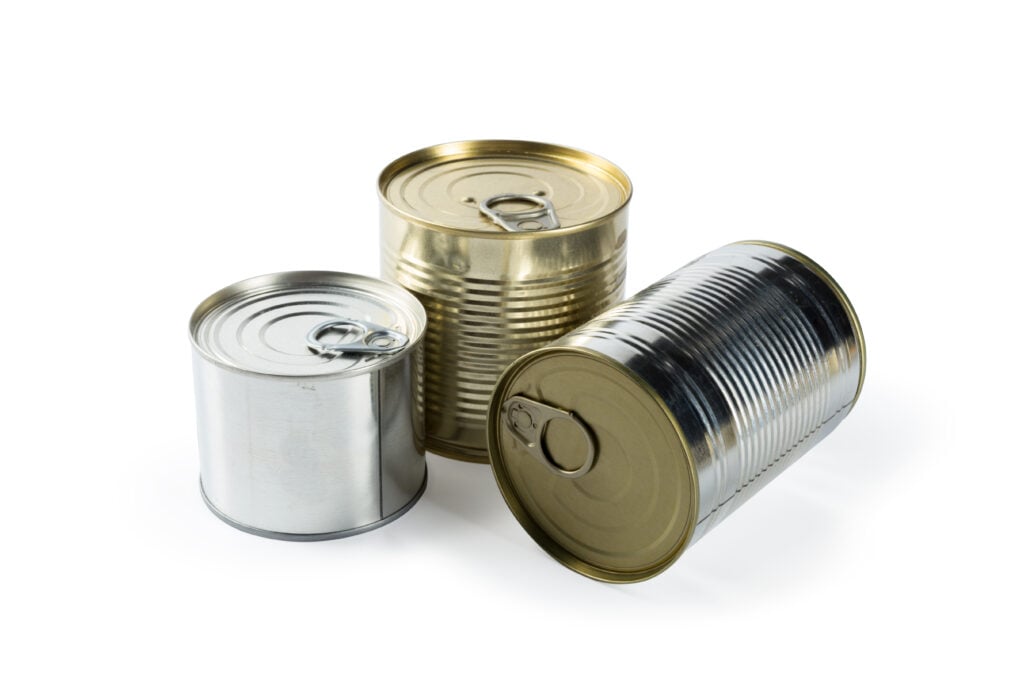
Rigidity is the main benefit of the 3-piece steel structure. A combination of the steel substrate, the welded seam and the reinforcing beads (ridges) rolled into the can body forms a structure that can withstand extreme pressure differentials.
Retort (Sterilization) Processes cannot compromise on this rigidity. A can of tuna or soup that is sealed is placed in a retort chamber where it is exposed to temperatures that are higher than 121 °C (250 °F). The can is sterilized and then cooled quickly. This cooling process leaves a vacuum in the can. A container that is flexible would collapse due to this negative pressure. The 3-piece steel can does not lose its shape and preserves the hermetic seal. Thus, when your product needs to be vacuum sealed or sterilized at high temperatures, the 3-piece steel structure is probably the only option available to you.
2-Piece Aluminum Cans: Seamless Bodies for Carbonation
The beverage market can be dominated by 2-piece aluminum beverage cans. It is made of one cup of metal, which makes the body and the bottom, and a lid is added afterwards.
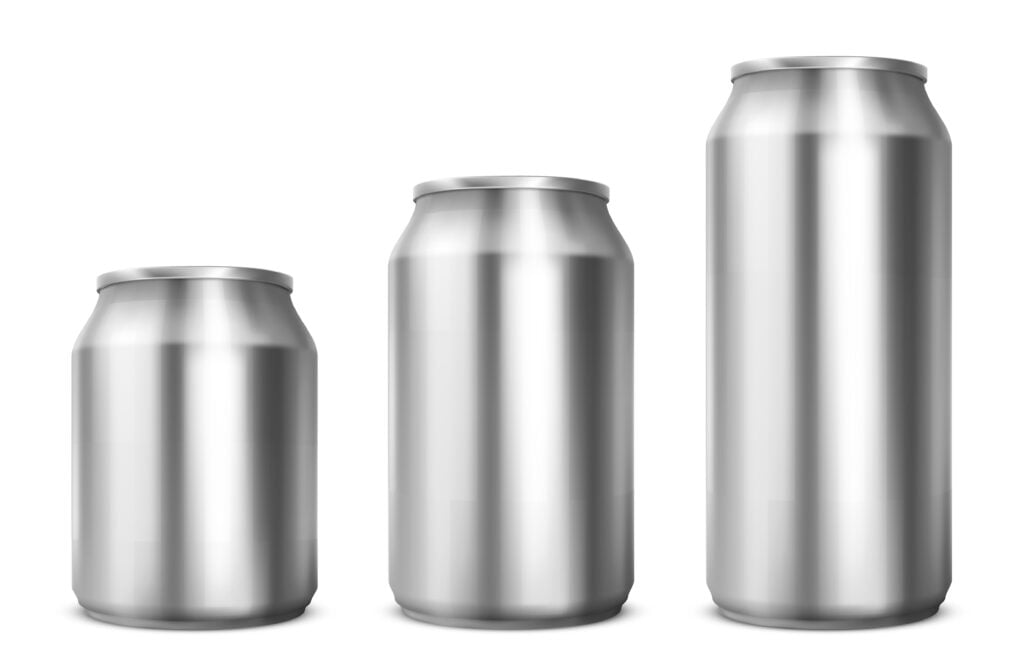
This building is built through a process known as Drawing and Wall Ironing (DWI). A cup is punched with a metal coil and then stretched and ironed out to a tall, thin cylinder. There is no side seam and no bottom seam, which means that the chances of leakage are minimized.
Although the 2-piece structure is graceful, its mechanical properties are totally different from the 3-piece can. The aluminum can walls are extremely thin- they are usually less than 0.1mm.
This building is an Internal Pressure structure. The gas pressure causes the thin walls to become stiff and tough (like an inflated tire) when they are filled with carbonated drinks. It is the default setup of sodas and beers. The weakness is, however, apparent: the can is structurally weak without internal pressure. Even empty cans are prone to damage. It is unable to resist the adverse pressure of vacuum packing or retort cooling and collapses. When you are going to use 2-piece aluminum cans to serve non-carbonated beverages (such as tea or juice), you will need auxiliary support systems to ensure the structural integrity of your production line.
Internal Coatings: Polymer Linings and Food Safety
We have talked about the metal substrate; however, in 90 percent of the uses, the food product does not actually come in contact with the metal. When steel is in contact with acidic food, it corrodes. When it comes into contact with aluminum, it may change the flavor profile.
To address this, contemporary cans are based on internal organic finishes. These are polymer coatings that are sprayed into the can body and dried in the manufacturing process.
Over the decades, Epoxy-phenolic coating was the standard in the industry because of its durability and chemical resistance. Nevertheless, the regulatory pressure and consumer demand are creating a huge transition to BPA-Non-Intent (BPANI) coating, avoiding BPA (Bisphenol A), including polyester or acrylic-based linings.
The packaging line has been challenged physically by this chemical shift. BPANI coating is usually less adhesive or brittle compared to its epoxy predecessors. They tend to micro-crack when they are exposed to mechanical stress.
This renders the accuracy of your Filling Nozzles very important. The filling nozzle is inserted into the can to spray the product in a high-speed line. When the nozzle scrapes the side of the can due to the machine vibration, it will damage the internal coating. A scratch that cannot be seen by the naked eye exposes the bare metal of the product. This causes rust, swelling, or spoilage over weeks of storage. Thus, the conversion to BPA-free cans may require a recalibration of filling head centering and stability to achieve a touchless operation.
Mechanical Strength: Why Steel Dominates Food Preservation
Strength is an imprecise term when it comes to choosing the packaging materials. Rigidity and Vacuum Resistance are the two terms we are referring to in the context of canning.
Why is steel the most common material in preserved food such as vegetables, meats, and ready-to-eat foods? It is not merely custom, it is physics.
To maintain the low-acid food, it is necessary to eliminate oxygen to avoid oxidation and aerobic bacterial growth. This is achieved through Vakuumversiegelung. During this process, the air is removed from the headspace of the can just before the lid is sealed. Alternatively, during hot-filling processes, the product is filled hot and as it cools, the headspace gas contracts, leaving a vacuum.
This vacuum causes a strong inward force on the can walls. The atmosphere is in a constant effort to squash the container.
Youngs Modulus (stiffness) of steel is high. It is able to withstand this crushing force inwards without deformation. This enables manufacturers to operate vigorous vacuum cycles to achieve maximum shelf life. When a manufacturer tried to use the same process with a regular aluminum can, the container would collapse (cave in) and destroy the aesthetic, and possibly the seal.
Moreover, the pressure dynamics are violent during the Retort Process. The can is heated, which leads to internal expansion, and then cooled, which leads to rapid contraction. The rigidity of steel serves as a shock absorber to these pressure variations. It enables the processor to concentrate on food safety parameters (time and temperature) without worrying about the failure of the containers all the time. In high-value products such as infant formula or high-quality meats, the only material that provides the required safety margin is steel.
Malleability: How Aluminum Enables Lightweight Beverages
If steel is so strong, why has the entire beverage industry shifted to aluminum? The answer lies in malleability and logistics.
Aluminum is much softer and more ductile than steel. This plasticity enables it to be pulled into very thin walls without breaking. A contemporary aluminum beverage can is a lightweight engineering wonder- it is made of the least possible material to hold the liquid. This translates to huge savings in shipping expenses and the use of raw materials.
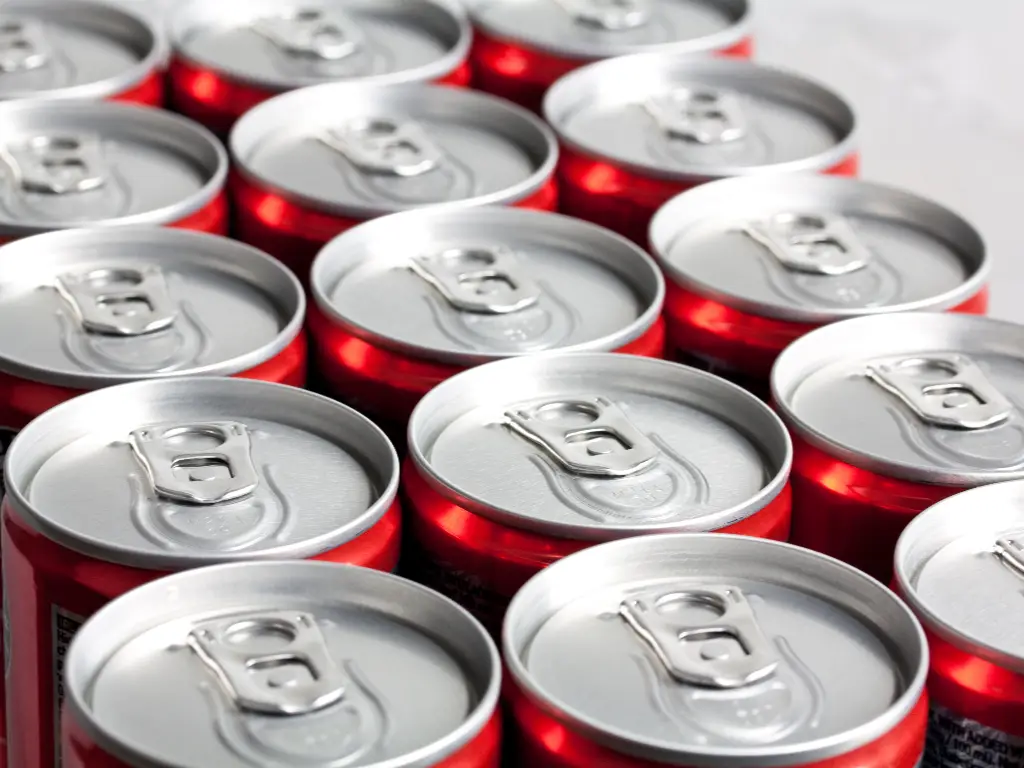
Nevertheless, this flexibility poses an issue in the production line. A can of aluminum is so tender that it can be crushed by a moderate squeeze of the hand, potentially turning valuable product into scrap metal. However, these cans are packed in pallets that have to carry thousands of pounds of weight when stacked and transported.
How do we solve this paradox? By using Liquid Nitrogen Dosing.
Since the material is not rigid enough to hold weight on its own (particularly with non-carbonated beverages), the packaging line has to provide structural integrity artificially. A very fine drop of liquid nitrogen is added to the drink just before it is sealed. The nitrogen immediately evaporates, increasing in volume 700 times.
This growth strains the can internally. It transforms the pliable, flexible aluminum shell into a hard, pressurized cylinder. This internal pressure overcomes the deficiency of material strength.
To the equipment purchaser, this sets a very simple guideline: When you are running aluminum cans of water, juice, or coffee, a Nitrogen Doser is not an accessory; it is an essential part of your structural integrity system. Your so-called malleable cans will fall under their own weight of distribution without it.
Corrosion Resistance: The Role of Tin and Chrome Layers
We have to go around to the tin in the tin can. Why then do we continue to use tin or chrome plating when we have internal polymer coating?
The solution is Redundancy and Electrochemical Protection.
Internal coatings can fail. They may contain microscopic pinholes or they may be damaged during the seaming process. Without a metallic barrier, the acidic nature of food (such as tomato paste or pineapple juice) would instantly attack the steel base. The rust (iron oxide) would be formed and this would contaminate the food and may lead to the swelling and bursting of the can.
Tin acts as a barrier. In certain acidic conditions, tin is sacrificial to steel. That is, it will corrode gradually in defense of the steel beneath. Chrome (in TFS) offers a passive oxide barrier that is chemically inert.
These protective layers are very thin. In fact, they are sometimes in microns. This puts a lot of strain on the filling and sealing equipment.
If a filling nozzle drips product onto the flange (the lip) of the can, it can trap food in the seal. When the seaming chuck (the tool that holds the lid) is too aggressive, it may crack the plating on the rim of the can. When that plating is violated, then the “Corrosion Resistance” is lost.
This is especially important in high-acid packaging lines. The equipment employed should be very delicate with the cans. Contact parts must be of non-abrasive material or hardened stainless steel with polished finishes to avoid micro-abrasions on the protective plating of the can. A machine that is running rough may not result in an immediate failure, but it will result in a spike in the number of leaks and spoilage weeks after the product has left the factory.
Conclusion: Adapting Production to Material Specs
The question, what are tin cans made of, is in effect a question of physics. It may be the hardness of TPS steel, the fragility of aluminum, or the special bonding needs of TFS, but each material dictates a certain number of rules to your production line. Failure to follow these guidelines results in the destruction of cans, damaged seals, and waste of product.
Success in packaging requires aligning your equipment capabilities with your material specifications. This is where Levapack distinguishes itself. With over 18 years of engineering experience and a presence in 100+ countries, we don’t just sell machines; we provide tailored solutions for precise material handling. Whether you need a vacuum seamer for rigid steel cans, a nitrogen-dosing line for lightweight aluminum, or a high-precision filler for sensitive powders and granules, our 4,000m² facility and expert assembly team deliver equipment that respects the metallurgy of your package. We ensure your line runs with the precision your materials demand.


 EN
EN  RU
RU  ES
ES  FR
FR  DE
DE  NL
NL  IT
IT  JA
JA  ID
ID  PT
PT  KO
KO