
Guia de tamanhos de latas padrão: Dimensões, volumes e códigos de indústria
A normalização é a infraestrutura invisível que permite o comércio global na indústria da embalagem. Para os fabricantes, proprietários de marcas e gestores de compras, o conhecimento de um tamanho de lata normalizado não é apenas a capacidade de volume. É a compatibilidade com as linhas de enchimento, a maximização da densidade das paletes e a utilização eficiente do espaço de armazenamento de uma forma económica.
A difference of a few millimeters in a can size specification may cause a lot of production downtime, seaming errors, or labeling errors. This manual offers a helpful breakdown of the different can size numbers, the rationale of identification codes and the actual use in food, beverage and industrial sectors.
Antes de entrar nos pormenores técnicos, eis um resumo dos tamanhos de latas mais utilizados atualmente no mercado global.
| Nome comum | Código do sector | Dimensões (Imperial) | Approx. Capacity | Aplicação típica |
|---|---|---|---|---|
| #300 Lata | 300 x 407 | 3″ x 4-7/16″ | 14-15 oz | Legumes, feijões, sopas |
| #2 Lata | 307 x 409 | 3-7/16″ x 4-9/16″ | 20 oz | Frutas, sumos, refeições RTE |
| #1 Piquenique | 211 x 400 | 2-11/16″ x 4″ | 10-11 oz | Sopas e pastas condensadas |
| #10 Lata | 603 x 700 | 6-3/16″ x 7″ | 96-109 oz (3L) | Restaurante/Abastecimento a granel |
| Cilindro #3 | 404 x 700 | 4-4/16″ x 7″ | 46 oz | Sumos de fruta grandes |
| Lata de atum | 307 x 113 | 3-7/16″ x 1-13/16″ | 6-7 oz | Atum, marisco para barrar |
| Padrão | 211 x 413 | 2-11/16″ x 4-13/16″ | 12 onças (355 ml) | Refrigerante, cerveja, água com gás |
| Magro | 202 x 504 | 2-2/16″ x 5-1/4″ | 250 ml (8,4 onças) | Bebidas energéticas |
Compreender os códigos de dimensão de latas padrão (Imperial vs. Métrico)
New arrivals to the canning business are frequently faced with a series of numbers, e.g. 307 x 409, and think that they are in millimeters or some sort of direct reading in inches. This supposition causes serious mistakes in sourcing raw materials and machine calibration. These figures are a standard industry code that is mostly used in North America and areas that adhere to the US Imperial standards, utilizing a conventionalized method.
O código não é uma medida direta. Trata-se de um valor composto que é uma combinação do número de polegadas inteiras e de polegadas fraccionadas (especificamente dezasseis avos de polegada). O passo inicial na comunicação com os fornecedores de latas e na criação de ferramentas de costura é compreender esta nomenclatura.
Descodificação do sistema de identificação industrial de três dígitos
The standard nomenclature has a three-digit format of both diameter and height. The initial number is whole inches. The second and third figures indicate the number of sixteenths of an inch.
Exemplo de análise: A lata 307 x 409
- Diâmetro (307):
- O "3" indica 3 polegadas. O primeiro dígito "0" indica 7/16 de uma polegada.
- The “07” indicates 7/16 of an inch.
- Total Diameter: 3-7/16 inches.
- Altura (409):
- The “4” indicates 4 inches.
- The “09” indicates 9/16 of an inch.
- Total Height: 4-9/16 inches.
Este sistema é aplicável à maioria das latas metálicas para alimentos. Ao traduzi-las para o sistema métrico para fornecedores internacionais, este valor deve ser calculado com exatidão. Um exemplo disto é o diâmetro 307 (3-7/16) traduzido para cerca de 87 mm, embora seja necessária tolerância em aplicações de mandril e rolo numa máquina de costura.
Como medir corretamente o diâmetro e a altura das latas
Precision is essential in establishing whether a can can fit in changing parts on a production line. One of the errors is the measurement of the wrong reference points on the cylindrical body.
- Diâmetro de medição: The industry standard is that the diameter is measured at the outside of the body and not at the rim. But in the case of double seaming, the critical reference point is usually the size of the top lid (e.g. a 202 end vs. a 206 end). In referring to the three-digit code (e.g., 307), it means the Nominal Body Outside Diameter.
- Altura de medição: The height of the can varies depending on its state, an empty can is different to that of a completed can.
- Altura total (aberto/ vazio): Esta é a altura da lata antes de a tampa ser colocada. A flange é alargada. Esta é uma medida crítica da estação de enchimento para garantir que a folga do bocal é correta.
- Altura da lata acabada (selada): This is the height of the can after the hermetic seal has been created. Seaming process takes away part of the flange and the bottom end hook,making the final shape slightly shorter.
Tamanhos de latas sanitárias padrão para alimentos por aplicação de mercado
Sanitary food cans are made to resist the thermal treatment needed to sterilize food products (retorting). This ensures food safety and extends shelf life. Although there are thousands of different versions, the market has narrowed down to a standard can size to maximize logistics and consumer recognition. These food can sizes are categorized by their end-user environment.
Dimensões das latas de retalho para frutas, legumes e sopas
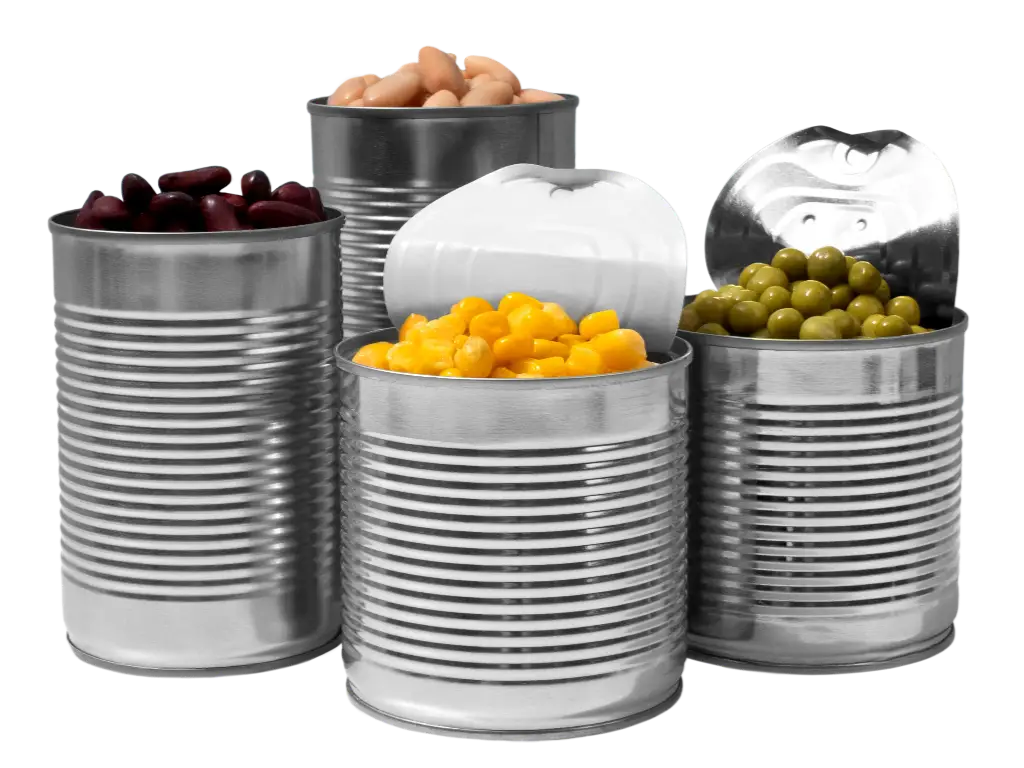
A categoria Retalho inclui latas que são vendidas diretamente aos consumidores nos supermercados. Estas dimensões maximizam o espaço nas prateleiras e oferecem porções que podem ser partilhadas por famílias ou indivíduos, garantindo ao mesmo tempo a qualidade dos alimentos. Estas dimensões são muito padronizadas para permitir que os co-embaladores operem diferentes produtos alimentares (por exemplo, milho, feijão, sopa) na mesma linha com um mínimo de mudança.
Principais tamanhos padrão:
- #300 Lata (300 x 407): This is the current standard of most vegetables and beans. It normally carries between 14 to 15 fluid ounces of product. It has mostly substituted smaller sizes with general pantry items because it has an effective height-to-width ratio. It offers excellent protection for fresh produce processed for long-term storage.
- #2 Lata (307 x 409): Esta lata é um pouco maior do que a #300 e tem capacidade para cerca de 20 onças. É normalmente aplicada a porções maiores de vegetais, fatias de ananás e certas sopas prontas a comer.
- #1 Piquenique (211 x 400): A smaller space container holding about 10 to 11 ounces. This is usually observed in condensed soups or concentrated foodstuffs such as acidic foods like tomato paste.
- 8 oz / Buffet (211 x 304): A dose única típica de cocktails de legumes ou fruta.
O peso líquido não é normalmente igual ao volume de onças fluidas. Uma lata de pêssegos (densidade superior a 1) terá um peso maior do que o mesmo volume de ervas secas ou produtos secos.
Tamanhos de latas institucionais para restaurantes e embalagens a granel
A indústria dos serviços alimentares preocupa-se com a eficiência do volume e a minimização do desperdício. Estas latas destinam-se a ser utilizadas em operações de cozinha comercial, cafetarias e catering, onde a velocidade e a consistência são importantes. A ideia é reduzir o número de latas que um chefe tem de abrir para preparar um serviço.
Principais tamanhos padrão:
- #10 Lata (603 x 700): Este é o padrão do serviço alimentar B2B. Tem um diâmetro de 6-3/16 polegadas e uma altura de 7 polegadas, que contém cerca de 96 a 109 onças (cerca de 3 litros).
- Logística: São normalmente carregados 6 por caixa.
- Máquinas: Sealing a #10 can require a heavy-duty seamer capable of handling the larger diameter and heavier gross weight without crushing the body.
- #3 Cilindro (404 x 700): Esta é normalmente conhecida como a lata de 46 oz. Este é o padrão dos sumos de fruta grandes (maçã, tomate, ananás) num ambiente comercial, num formato alto e mais estreito.
Tamanhos especiais para alimentos para animais de estimação e refeições prontas para consumo
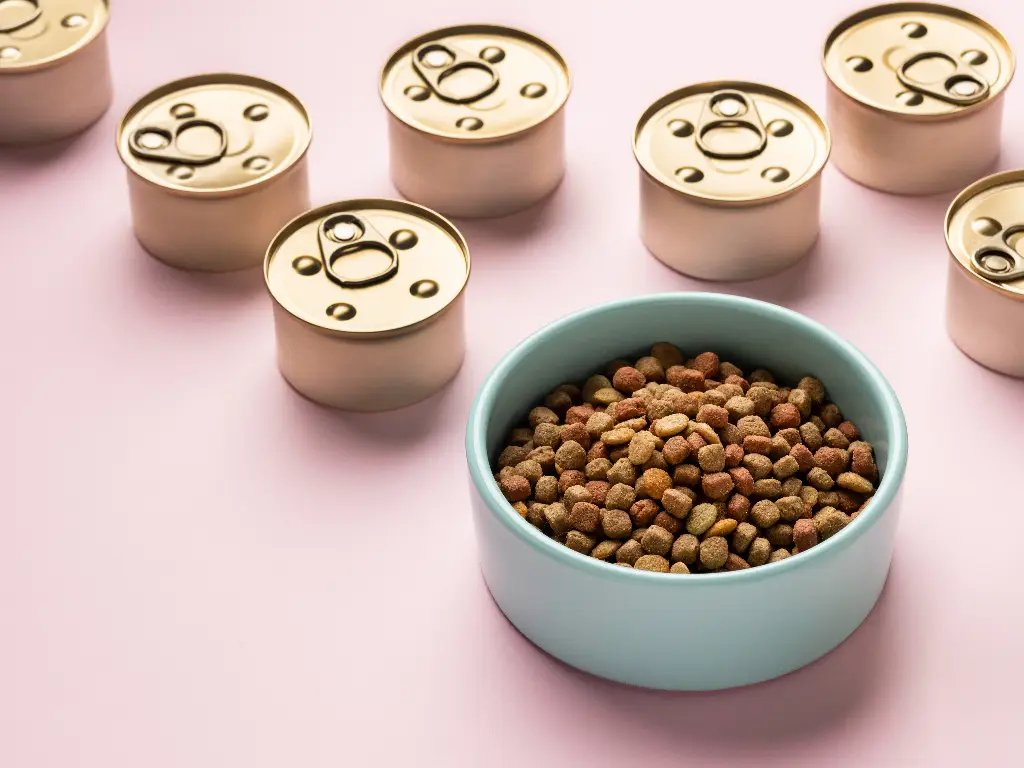
Special squat cans are used in the pet food and ready-to-eat (RTE) industries. The diameter of these cans is larger compared to their height. This geometry has two functions: it is easier to extract the product (wet pet food or luncheon meat), and due to fewer seams, it is easier to achieve rapid heat penetration during the retort process of dense meats.
Principais tamanhos padrão:
- 307 x 109 (plano/agachado): This is typically used in single-serve premium cat food or tuna spreads. The height is very low and this necessitates accurate lifter plates in the seaming station to make it stable.
- 300 x 308: Um tamanho normal de comida de cão.
- Latas rectangulares ou oblongas (tipo Spam): Latas de aço moldadas para carnes de almoço. Estas latas requerem técnicas específicas de soldadura de juntas laterais ou processos de desenho para formar as paredes laterais cilíndricas num retângulo.
Dimensões normais das latas de marisco: Atum e Sardinhas
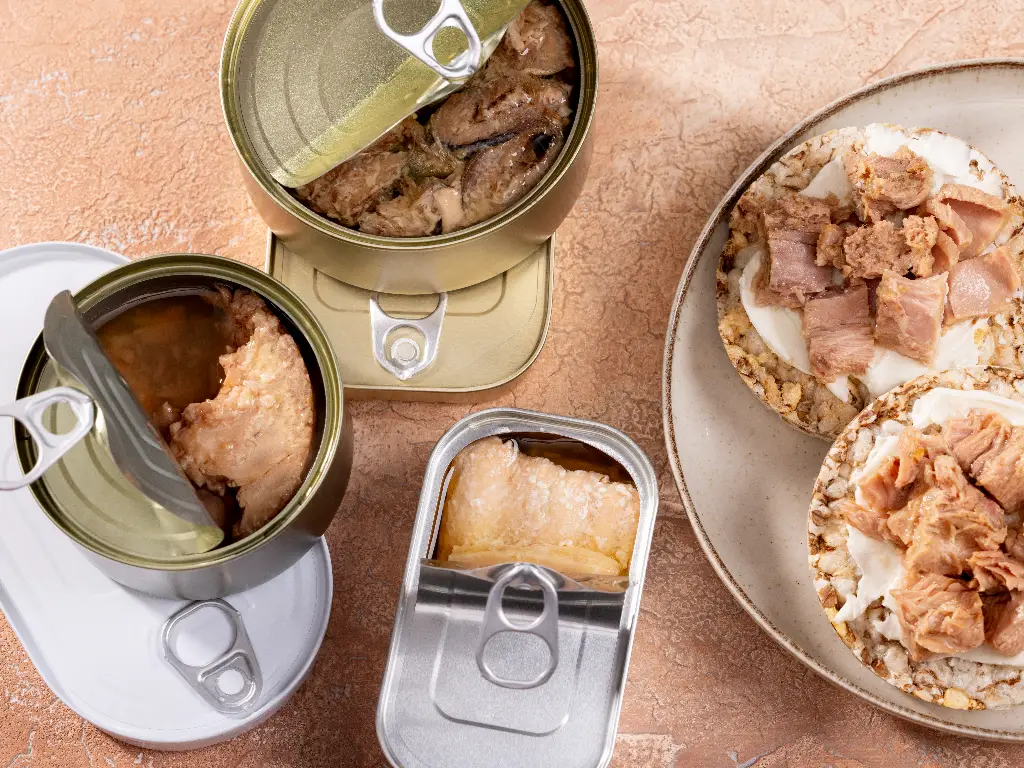
The packaging of seafood is not similar to the usual sanitary metal cans of fruits and vegetables. The product is high-end, costly and in many cases delicate, which predetermines shallow and wide containers. Also, the production of these cans frequently employs a 2-piece Draw-Redraw (DRD) technique as opposed to the conventional 3-piece welded body. This creates a smooth bottom and body, which removes one of the possible leak points.
Geometria e desafios únicos:
- A lata "Tuna" (307 x 113): Tem o mesmo diâmetro que a lata #2 (307), mas a altura é de apenas 1-13/16 polegadas. Esta falta de profundidade é o que faz com que o calor do processo de esterilização atinja o centro da carne espessa do peixe num curto período de tempo, sem cozer demasiado as camadas exteriores.
- Latas de clube: These are rectangular cans that are commonly used to store sardines or herring fillets. They are not round and therefore they do not use the standard 3-digit diameter code.
- Latas Dingley: Semelhantes às latas Club, mas normalmente cónicas ou com um rácio de aspeto ligeiramente diferente, utilizadas para marisco de qualidade superior.
- Latas ovais: Frequentemente utilizado para pilchards ou filetes de peixe maiores em molho de tomate.
Special irregular can seamers are needed to handle seafood cans. A typical rotary machine that is used to seal round cans with a diameter of 300 cannot seal a rectangular Dingley can. The seaming rollers have to take a cam-driven route to trace the non-round profile. Moreover, tuna cans are shallow and thus they tend to splash out during high-speed transportation and thus need a smoother transition between conveyors.
Dimensões e volumes de latas de bebidas comuns
The beverage business is governed by another set of standards. Aluminum cans are the most common materials here due to their light weight and the flexibility of aluminum during manufacturing. Beverage cans are made of lightweight aluminum 2-piece bodies, unlike food cans that are made of rigid steel. Structural rigidity is given by the pressure of the carbonated drink.
O mercado passou de um padrão para uma carteira de tamanhos que se destinam a indicar categorias de produtos (por exemplo, bebidas energéticas versus refrigerantes tradicionais).
| Tipo de lata | Volume (Imperial) | Volume (Métrico) | Diâmetro do corpo | Altura | Aplicação típica |
|---|---|---|---|---|---|
| Padrão | 12 oz | 355 ml | 211 (66 mm) | 413 (122 mm) | Refrigerante, cerveja, água com gás |
| Elegante | 12 oz | 355 ml | 204,5 (58 mm) | 602 (156 mm) | Água com gás, Bebidas energéticas, Cocktails |
| Magro | 8,4 oz | 250 ml | 202 (53 mm) | 504 (134 mm) | Bebidas energéticas (por exemplo, estilo Red Bull) |
| Garrafão | 16 oz | 473 ml | 211 (66 mm) | 602 (157 mm) | Cerveja artesanal, Cidra |
The changeover of the machinery is high, although the amount of a Standard and Sleek can may be the same (12 oz). To change a Standard 211 body to a Sleek 204 body, the star wheels, guides, and seaming chucks must be changed.
Normas para latas industriais, de tintas e de aerossóis
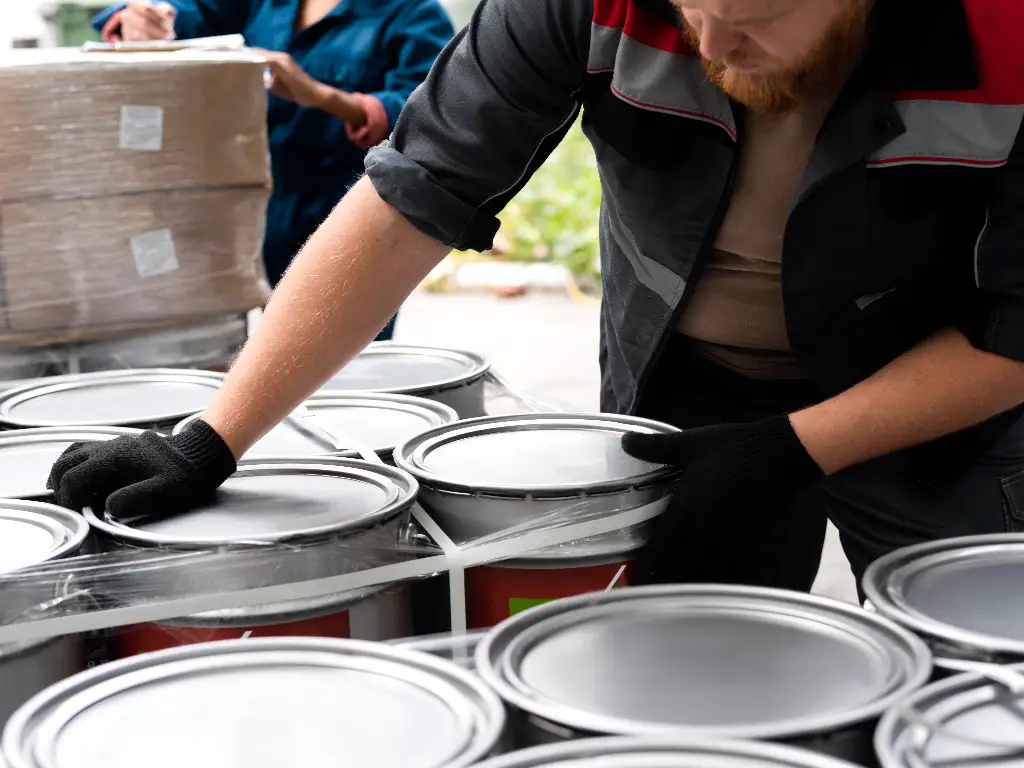
Outside the food and beverage aisles, there is the General Line of packaging which includes chemicals, automotive fluids, paints, and aerosol products. Although such containers might resemble food cans, the engineering requirements are different.
O equipamento de enchimento de latas industriais pode ser à prova de faíscas ou de grau químico, o que é bastante diferente em comparação com as linhas de embalagem sanitária de alimentos. A maquinaria alimentar é higiénica (aço inoxidável, capacidade de lavagem), enquanto a maquinaria industrial é compatível com produtos químicos e à prova de explosão (classificações ATEX/EX).
| Aplicação | Nome comum | Capacidade | Dimensões típicas (Dia x H) | Notas |
|---|---|---|---|---|
| Tintas/revestimentos | Lata de galão | 1 galão | 610 x 708 | Utiliza frequentemente tampas de encaixe por fricção (tampões) em vez de extremidades com costuras. |
| Tintas/revestimentos | Lata de um litro | 1 Quart | 404 x 414 | Padrão para a pintura de retalho ou para o verniz para madeira. |
| Aerossol | Série 45mm | Diversos | 45 mm de diâmetro | Parte superior com bocal para montagem da válvula. |
| Aerossol | Série 52mm | Diversos | 52 mm de diâmetro | Comum para laca para o cabelo e tinta em spray. |
| Aerossol | Série 65mm | Diversos | 65 mm de diâmetro | Pulverizadores industriais para trabalhos pesados. |
Such containers tend to use alternative closure systems. Whereas food cans have a double seam, paint cans have a triple tight friction ring and aerosols need crimping stations to the valve cup. Thus, a typical food canning machine is not usually applicable to such purposes.
Porque é que os tamanhos normalizados são importantes para a etiquetagem e a logística
To a production manager or an operation specialist, a standard can size is not only about compliance with regulatory codes, but also a plan of operational efficiency.
Mudança de máquina e ferramentas
Filling and seaming machines are fine machines. They work with cans by means of change parts, timing screws, star wheels, and guide rails, which are machined to the particular diameter of the can.
- Tamanhos padrão: Se utilizar uma lata padrão #300, as peças sobresselentes e as ferramentas estão facilmente disponíveis.
- Tamanhos personalizados: Se optar por um diâmetro não normalizado (por exemplo, 305), terá de enfrentar longos prazos de entrega para a criação de ferramentas personalizadas e custos mais elevados para cada alteração de formato.
Eficiência da rotulagem
Labeling is die cut to a certain size. Normal can sizes are related to normal die-lines of printing houses. One efficient way to label a standard 211 beverage can is to use shrink sleeves or pressure-sensitive labels which are already templated, saving prepress costs and possible design errors.
Paletização e Armazenagem
Standard footprints are optimized in supply chains. The design of the #10 can is such that 6 cans can fit into a corrugated case and that the cases can be stacked on a standard 40×48 inch pallet with no overhang. When standard dimensions are not followed, it leads to inefficient pallet use, more air in shipping and a greater likelihood of load instability during transit.
Conclusão
The choice of the right standard can size is a fundamental choice that will influence your whole production line, the filler to the pallet wrapper. Although marketing might require special shapes, the convenience of standard dimensions, such as reliability, speed, and compatibility, can be more beneficial than the innovation of new formats.
Porquê escolher a Levapack para a sua linha de conservas?
We know at Levapack that versatility is the pulse of the contemporary packaging. You can be filling standard 10 institutional cans, or the fragile 300 fruit cans, or the high-value nitrogen-flushed powder containers, our equipment is designed to fit. Our 4000m 2 plant and a team of engineers with more than 15 years of assembly experience provides strong, CNC-precision equipment that is used with solids, powders, granules, and liquids. With 16 months warranty and an international network of services in 100 plus countries, Levapack is the power that helps your business to conquer the complexity of can sizes with confidence and efficiency. Contact us today to customize your solution.
Perguntas mais frequentes
Existem diferenças nos tamanhos normais das latas para bebidas e para alimentos?
Sim, diferem fundamentalmente tanto na dimensão como na construção. As latas de alimentos são normalmente fabricadas em aço (DRD de 3 ou 2 peças) e são concebidas para resistir à pressão de vácuo e à alta temperatura do processo de esterilização por retorta. As latas de bebidas são virtualmente compostas na sua totalidade por alumínio leve (2 peças) e dependem da pressão interna da carbonatação para as manter unidas. Consequentemente, uma máquina que é utilizada para coser uma lata de aço rígido para alimentos não é normalmente compatível com as frágeis latas de alumínio para bebidas sem grandes ajustes.
Qual é o tamanho de uma lata de conserva normal?
Since standard is relative to the application, there is no one answer. The most common standard in a consumer grocery setting (soups and vegetables) is the #300 can (3″ diameter x 4-7/16″ height). The standard in a commercial restaurant setting is the #10 can (6-3/16″ diameter x 7″ height). In the case of beverages, the 12 oz can (211 diameter) is the global standard.
Posso utilizar latas de diferentes tamanhos na mesma máquina de embalamento?
Yes, but it needs change parts. The majority of modern seamers, such as the equipment of Levapack, are flexible. To change sizes, you usually have to change certain tooling parts, including the seaming chuck, turntable, and star wheels, which are of the appropriate diameter of the new can. Height adjustment is typically a less complicated procedure that does not necessarily involve new components, whereas a tooling changeover is always necessary when changing the diameter.
O que significam realmente números como "307" ou "409"?
These are not actual millimeter measurements, but industry codes using the Imperial system. The initial number is the whole inches and the remaining two numbers are the sixteenths of an inch. An example is that 307 diameter is 3 inches and 7/16ths of an inch. This coding is universal in food packaging specifications in North America.


 EN
EN  RU
RU  ES
ES  FR
FR  DE
DE  NL
NL  IT
IT  JA
JA  ID
ID  PT
PT  KO
KO