
Manufacturers in the food and beverage industry need to choose a packaging method and filling process that ensures the safety of the food product, prolongs the shelf life, maintains freshness, and ensures that the process remains operational. The choice between hot fill vs cold fill is not just a matter of preference, but a basic engineering decision that determines the overall production line structure, utility needs of the facility, and the material specifications of the containers. The use of incorrect filling technology results in spoilage of the product, deformation of the containers, and huge financial losses. This guide gives a technical comparison of the two techniques in detail, examining the physical requirements of the packaging materials and the operational realities that lie behind the running of these lines on the factory floor. The aim is to give the production managers and the facility engineers the information they need to come up with highly efficient and reliable packaging systems.
Core Differences Between Hot Fill and Cold Fill
The fundamental difference between hot filling and cold filling lies in the mechanism used to achieve commercial sterilization.
The hot liquid product itself is the major sterilizing agent in the hot fill process. The product is heated in a heat exchanger to high temperatures, typically ranging between 85°C and 95°C (185°F to 203°F). It is then injected at once into the packaging container. The inner walls of the container are sterilized by the heat of the product. Once the closure has been used, the container is usually inverted or placed at a high temperature over a certain period of time to make sure that the hot liquid also sterilizes the inside of the lid.
The cold fill process is done at ambient or chilled temperatures. Since the product does not have the necessary thermal energy to eliminate vegetative pathogens and spoilage microorganisms, the process will have to be dependent on other means to guarantee the safety of the product. This can include the use of preservatives or additives in the normal cold fill production. Aseptic cold fill packaging involves flash-pasteurization and cooling of the product, followed by sterilization of the containers and closures with chemical substances, e.g., hydrogen peroxide or peracetic acid. The sterile product and sterile packaging are then united in a highly controlled, sterile isolation chamber.
| Process Parameter | Hot Fill | Cold Fill (Aseptic) |
| Filling Temperature | 85°C – 95°C (185°F – 203°F) | Ambient or Chilled |
| Primary Sterilizing Agent | The heated liquid product itself | Chemical sterilants (e.g., hydrogen peroxide) |
| Container Sterilization | Sterilized by direct contact with the hot liquid | Sterilized independently prior to the filling stage |
| Environmental Requirement | Standard sanitary factory conditions | Pharmaceutical-grade sterile isolation chamber |
| Preservative Requirement | Naturally preserved by heat and vacuum seal | Requires chemical preservatives (standard) or strict asepsis |
The fundamental difference is simple: hot filling relies on continuous thermal energy transfer, while aseptic cold filling relies on independent chemical sterilization and strict environmental isolation.
Cold Filling Process: Ideal for Dairy and Carbonation
Cold filling, and especially aseptic cold filling, is used in particular market segments where high temperatures destroy the product or the packaging. This is a compulsory process for products that degrade easily when subjected to constant heat.
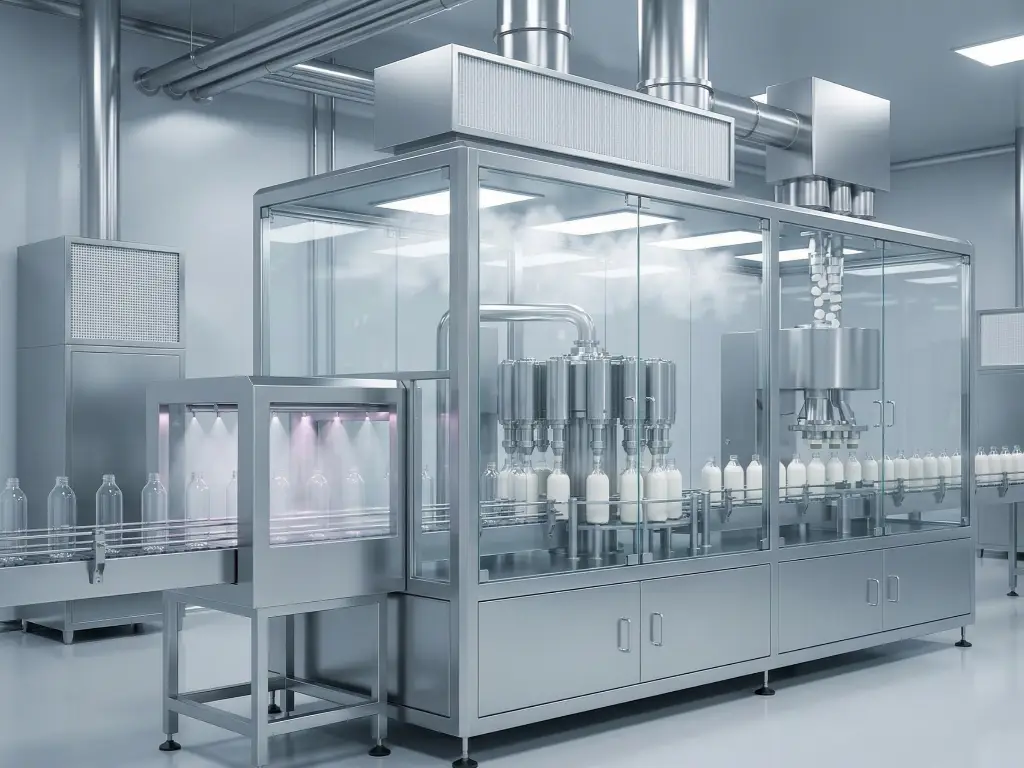
Complex proteins are found in dairy products, including fresh milk and yogurt drinks, and denature when exposed to the extended heat of a typical hot fill process. Plant milk substitutes have the same problem of thermal degradation. Moreover, carbonated drinks and beverage products, such as sodas, sports drinks, sparkling water, and beer, need low temperatures in order to keep the carbon dioxide gas dissolved in the liquid. Heating a carbonated liquid makes the gas violently expand, which makes it physically impossible to fill and destroys the carbonation profile of the product.
Cold filling enables the very lightweighting of plastic containers in terms of packaging engineering. Because the container does not need to withstand the 90°C thermal shock of a hot product, manufacturers can drastically reduce the wall thickness of Polyethylene Terephthalate (PET) bottles. This decreases the weight of plastic material by a substantial margin.
The cost of installing an aseptic cold fill line is, however, very high in terms of capital expenditure. Aseptic settings require clean rooms, complicated chemical sterilization units, sterile air filters, and strict monitoring of the environment. This cold-fill architecture requires investment by manufacturers of milk, carbonated drinks, or those who use ultra-thin bottles made of PET. Plants that are not within these particular parameters tend to be unnecessarily and inefficiently burdened by the huge financial outlay and complicated maintenance of cold fill infrastructure.
Hot Filling Process: The Standard for Sauces and Juices
Hot filling is the industry standard when dealing with products that are highly acidic, which is normally determined by a pH level below 4.6. This group covers a huge portion of the food and beverage market, such as fruit juices, fruit jams, tomato sauces, chili pastes, fruit purees, and heavy syrups.
The acidity of these acidic liquid foods makes the environment unfavorable to the reproduction of harmful microorganisms and dangerous bacterial spores, the most common of which is Clostridium botulinum. Consequently, applying high heat between 85°C and 95°C is entirely sufficient to destroy any remaining vegetative pathogens, yeasts, and molds. The hot product is effective in sterilizing the container when in direct contact.

This hot fill method does not require costly cleanroom conditions and chemical sterilants. Pharmaceutical-grade air filtration and complicated isolation chambers are not needed in the production area. Consequently, the initial capital outlay of a full hot fill line is much less than the capital outlay of an aseptic cold fill line.
Hot filling is also a natural extension of the shelf life of food products stored at ambient temperatures without the manufacturer having to add artificial chemical preservatives. The high-heat treatment combined with the vacuum seal creates a very strong barrier against oxidation and microbial contamination. Hot filling provides the optimum operational reliability and maximum equipment payback to manufacturers who fill thick sauces, dense pastes, and acidic liquids into rigid containers.
Container Performance: Metal Cans, Glass, and Plastic Jars
The high-temperature nature of the hot-filling process exerts severe stress on the packaging materials. Knowledge of the precise physical behavior of various containers when subjected to a 90°C product injection is a key step in the design of production lines.
Metal Cans: Coating Integrity and Headspace
Metal cans are made of tinplate or aluminum and are very good thermal conductors. This characteristic renders them very effective in the rapid cooling of water that follows hot filling immediately. Nevertheless, the injection process at high temperatures poses certain threats to the internal structure of the can.
High-acid products, such as tomato paste or fruit concentrates, combined with filling temperatures approaching 95°C, can attack and degrade inferior internal BPA-free coatings. If the nozzle of the filling machine scrapes the side of the can during the process, or the lining is damaged by the thermal shock, the acidic product will react with the metal substrate. This causes heavy metal pollution and spoilage of products.
Moreover, accurate headspace control is essential. The equipment should regulate the amount of fill to be used to enable the physical expansion of the hot product. This headspace should be sealed using steam injection or mechanical vacuum technology to push out the remaining oxygen in the headspace, and then the lid should be applied. This helps to avoid oxidation of the products and a tight and secure seal during the next cooling and contraction process.
Glass Jars: Preventing Thermal Shock
Glass is the high-end standard of high-quality jams, gourmet sauces, and preserves. It offers a very efficient oxygen barrier, is chemically inert, and offers maximum product visibility. Glass bottles and jars are, however, very prone to thermal shock.
When a 90°C liquid is rapidly injected into a glass jar resting at an ambient factory temperature of 20°C, the sudden temperature differential causes rapid, localized thermal expansion within the glass structure. This abrupt growth causes extreme internal pressure, which causes micro-fractures and disastrous glass fractures directly on the filling conveyor.
To remove this operational risk, a professional hot fill line architecture should include a pre-heating tunnel. The empty glass jars are passed through a regulated steam or hot water condition, slowly increasing the surface temperature to about 60°C prior to passing through the filling nozzles. This is a calculated process that lowers the temperature difference and removes the physical danger of thermal shock, and ensures continuous and safe high-speed production.
Plastic Cans: Avoiding Paneling with Ribs
Utilizing plastic containers, specifically wide-mouth PET jars, for hot filling operations introduces complex structural challenges. Standard PET or polypropylene polymer chains begin to deform and melt at temperatures above 60°C.
Manufacturers should indicate heat-set PET containers. These containers are manufactured in a special process that aligns the crystals of the polymer, enabling them to resist temperatures up to 95°C without structural breakdown. Nevertheless, the main engineering problem is after the filling process, during the cooling process.
The volume of the hot liquid product decreases as it cools down to room temperature. This heating contraction forms a strong internal vacuum within the closed jar. This vacuum force will cause the walls of a normal, smooth-walled plastic jar to be drawn inwards, forming a serious structural defect called paneling. To avoid paneling, heat-set plastic containers should have structural ribs, horizontal bands, or special vacuum panels designed directly into the side walls. These geometric design features absorb the vacuum force, which keeps the structure intact and the aesthetic look of the jar on the retail shelf.
Hidden Operational Costs and Engineering Realities
When assessing packaging equipment, one should not just consider the initial cost of purchase. The actual cost of a production line is determined by the operational cost and the daily engineering costs of operating the machine on the factory floor.
CIP (Clean-in-Place) and Maintenance Costs
Sanitation procedures severely determine production availability and overall output. The cold fill aseptic lines demand very complicated, multi-phase Clean-in-Place (CIP) and Sterilize-in-Place (SIP) processes. A changeover of a product in an aseptic line requires flushing the whole system with costly chemical sterilants, and then a lot of sterile water rinses. This is a required procedure that can easily take four to six hours, leading to huge production downtime.
On the other hand, hot fill lines provide very smooth cleaning procedures. Since the whole fluid route is designed to work with extreme temperatures, the equipment is usually washed and sterilized with the circulation of hot water and high-pressure steam. This is a thermal cleaning process that does not need a lot of chemical detergents and can be finished within less than two hours. The high level of savings in the recurring chemical purchasing and a tremendous improvement in the machine uptime offer a quantifiable operational cost benefit over the equipment life cycle and streamline post-production logistics.
Cooling Tunnels and Vacuum Seal Formation
The hot filling process is not completed at the capping station. The product should be chilled quickly. When a 90°C container of fruit preserve or tomato sauce is packed into a cardboard carton and allowed to cool at ambient temperature, the extended heat treatment serves as a long cooking period. This kills the nutritional profile, compromises the color, and changes the taste of the product.
Multi-stage step-down water cooling tunnels are used in professional packaging lines. These large conveyor systems spray the sealed containers with progressively cooler water, safely reducing the core temperature of the product from 90°C to below 40°C in a matter of minutes.
The vacuum seal is also triggered by this rapid cooling process. The metal closure is pulled downwards by the rapid contraction of the headspace gas. This is a physical act that creates the concave seal and creates the audible pop that is related to food safety and package integrity.
Filling Valve Design for Particulates
The thick sauces, chunky salsas, or fruit jam with solid particulates will need special mechanical engineering at the filling station. Normal gravity valves or mass flow meters employed in clear liquid cold filling processes will smash soft fruit particulates or result in serious clogs in the piping.
Hot filling machinery designed for highly viscous materials utilizes rotary valve piston fillers or specialized lobe pumps. These strong mechanisms attract an accurate volumetric measurement of the thick product and force it into the container without crushing or shearing the solid pieces. The internal valves and nozzles are cut with big open passages. This is to guarantee that products with large solids, like high-quality strawberry jam or diced vegetable soup, retain their precise physical integrity between the holding tank and the final container.
Choosing the Right Packing Equipment for Your Line
To choose the right equipment architecture, it is necessary to match the capabilities of the machinery with the physical characteristics of the product and the limitations of the manufacturing plant. The basic decision logic is simple: when the product belongs to the category of high-acid foods, thick pastes, or dry powders, and the target packaging is made of metal cans, glass jars, or heat-resistant plastics, hot filling or special vacuum sealing is the necessary operational architecture.
In order to conduct a systematic assessment of packaging machinery, production engineering teams have to examine a number of key factors prior to making a final purchase:
| Evaluation Criteria | Key Considerations | Engineering Impact |
| Product Properties | pH level, liquid viscosity, thermal sensitivity, and presence of solid particulates. | Dictates the core filling technology (hot vs. cold) and specific valve mechanics (e.g., piston valves for thick sauces). |
| Container Material | Glass jars, metal cans (tinplate/aluminum), or heat-set PET plastics. | Determines required structural handling, such as pre-heating tunnels for glass or vacuum control systems for metal cans. |
| Equipment Construction | 1.5mm to 2mm 304/316 stainless steel, universally recognized electronic and pneumatic components. | Guarantees extreme corrosion resistance against acidic hot liquids and ensures rapid local sourcing of replacement parts. |
| System Flexibility | Modular machine design, rapid tooling changeovers, and multi-container compatibility. | Maximizes overall equipment effectiveness (OEE) by allowing the production line to process different SKUs with minimal downtime. |
| Pre-Shipment Validation | Documented Factory Acceptance Testing (FAT), seam structure analysis, and vacuum degree testing. | Prevents costly installation delays and guarantees strict food safety compliance immediately upon factory deployment. |
Along with the process of core filling, the facility managers should carefully consider the flexibility of equipment. Single-item production lines are not common. The equipment should be designed with modular designs that can be easily changed to various container volumes and materials. A very efficient system will not need to undergo a huge retooling process or a long operational shutdown to move on to sealing metal tinplate cans, capping glass jars, or rigid plastic containers.
The sourcing of components has a direct effect on the long-term operation cost and overall machine life. Products that are processed at a high temperature of 90°C are very corrosive. Thus, production managers should ensure that high-grade stainless steel is used in all parts of the products that are in contact with the product and the main machine frames. Moreover, the electronic and pneumatic core systems must incorporate standard and globally accepted brands. The use of universal components will also guarantee that the maintenance staff can get the spare parts locally, eliminating the need to spend a long time in the facility when there is a major mechanical breakdown.
Lastly, procurement engineers should insist on strict pre-shipment verification. To ensure reliable equipment procurement, thorough testing under load must be done prior to delivery. In the case of canning and jarring lines, in particular, the equipment supplier should provide documented inspection of seal quality, such as analysis of seam structure, testing of vacuum degree, and analysis of remaining oxygen. Confirmation of these specific parameters prior to shipment will ensure that the equipment will comply with stringent food safety standards and output performance requirements as soon as it is installed in the final factory.
Next Steps for Your Canning and Jarring Project
Handling high-viscosity liquids, chunky fruit jams, or highly acidic tomato sauces at 90°C demands precision-engineered systems to prevent valve clogging, irregular volumetric dosing, and container deformation. Although standard equipment suffices for cold, thin liquids, complex hot sauces require specialized architecture to maintain continuous line efficiency.
Standard fillers often struggle with the severe thermal stress and particulate management required in hot filling. Levapack engineers specialized hot-fill liquid and sauce packaging solutions designed to eliminate these exact operational hurdles.
Utilizing robust piston-filling technology and heavy-duty 1.5mm to 2mm food-grade 304/316 stainless steel construction, our equipment effortlessly handles extreme temperatures and heavy particulates without shearing the product or clogging the fluid path. From custom nozzle configurations engineered to prevent splashing during high-temperature injection to precise servo-driven controls delivering sub-1% fill accuracy, the machinery is built to ensure uncompromising product integrity.
These automated systems adapt seamlessly across metal cans, glass jars, and heat-resistant PET containers. Combined with advanced vacuum sealing, double-seaming technology, and integrated multi-stage cooling tunnels, the complete line architecture guarantees extended shelf life and strict food safety compliance.
For production managers and facility engineers planning a new hot-filled sauce ou high-acid beverage line, consulting with an experienced engineering team is the most effective method to optimize facility layout and eliminate technical risks. Contact the Levapack engineering consultants today to discuss your specific viscosity challenges and receive a fully customized hot fill equipment sizing and operational layout proposal.


 EN
EN  RU
RU  ES
ES  FR
FR  DE
DE  NL
NL  IT
IT  JA
JA  ID
ID  PT
PT  KO
KO